Chimney Repair in New Jersey
Chimney repair fixes the parts of the chimney that keep weather out and combustion gases in: a cracked crown, a missing cap, lifted flashing, a damaged liner, open mortar joints. Catching these early protects the masonry, the roof and the rooms around the fireplace from the water damage that New Jersey's freeze and thaw winters turn from a hairline crack into a rebuild.
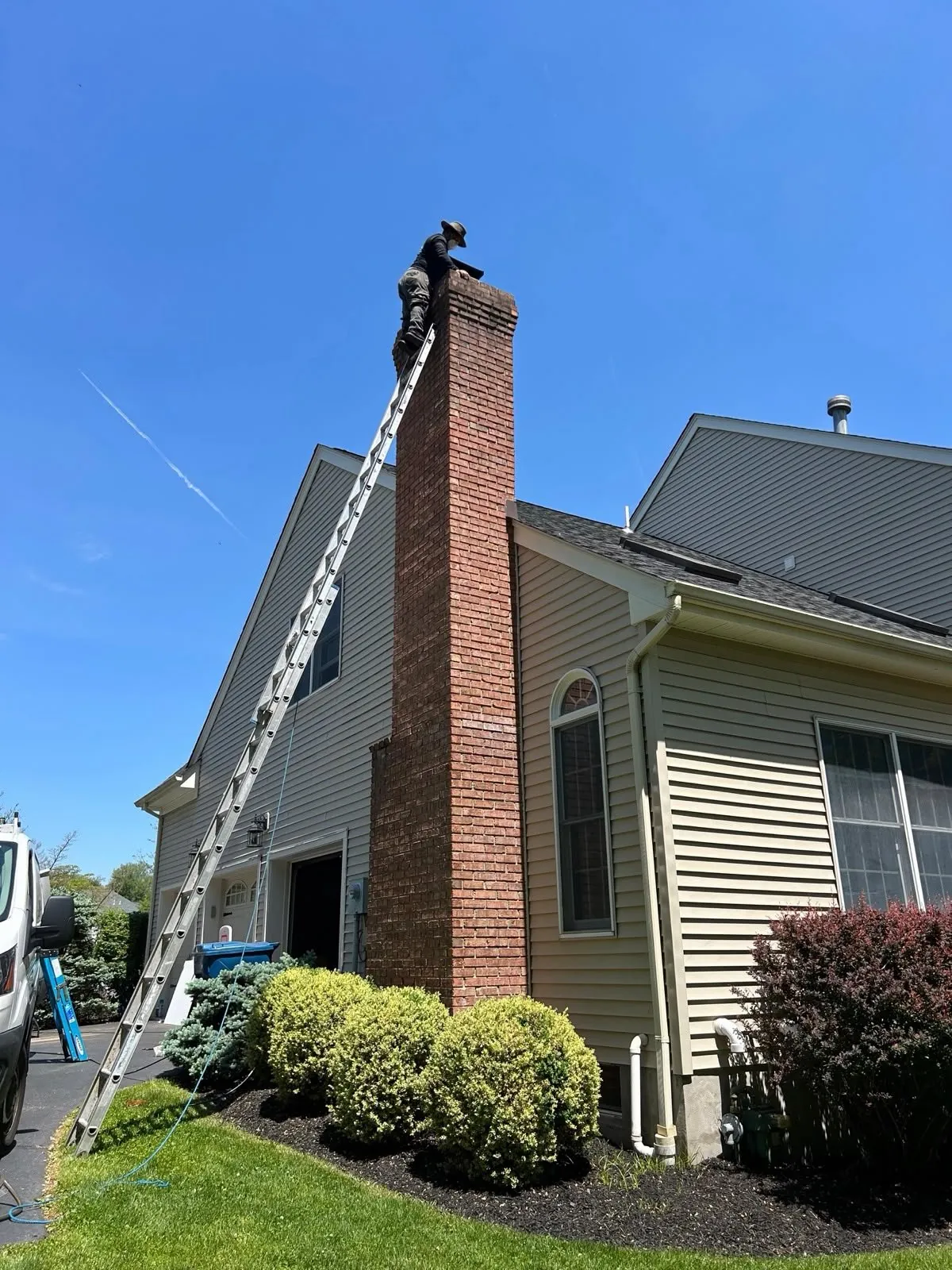
A chimney takes more weather than any other part of a house. It stands above the roofline through summer heat, every storm that crosses the state, and a winter of freezing and thawing that works on the crown, the mortar joints and the flashing a little more each year. On the prewar houses of Montclair, Summit, Ridgewood and Princeton, some of that masonry has been doing the job for a century, and on the shore in Monmouth County salt air corrodes caps and flashing faster than anywhere inland.
AMG Duct Cleaning repairs chimneys for homeowners across New Jersey, from the cap and crown on top to the liner and the firebox inside, and most of that work is found during a chimney cleaning, when the sweep can see what the flue and the top of the stack look like. This page covers the cap and the crown, the flashing, the liner and the masonry, the signs that water is already getting in, and how the evaluation runs before anything is quoted.
What do the cap and the crown do?
The cap sits on top of the flue and keeps rain, snow, birds and squirrels out; the crown is the sloped concrete or mortar surface that covers the top of the chimney structure around it. A missing or damaged cap lets water run straight down the flue every time it rains, where it soaks the smoke shelf and rusts the damper. A cracked crown lets water into the brick and mortar below it, which is where freeze and thaw does its worst work, and a crown that was built flat, with no overhang, has been shedding water into the masonry since the day it was poured.
The crew repairs or replaces caps and crowns so water is directed away from the chimney instead of into it. A sound cap and a properly sloped crown are the two simplest, most effective ways to avoid a far larger repair a few winters later, and they are the first things checked on every evaluation. Where several flues share one stack, a multi-flue cap covers all of them, including the idle ones that nobody thinks about until a nest falls into the firebox.
How do flashing, liners and masonry fail?
Flashing is the metal that seals the joint where the chimney meets the roof, and it is one of the most common sources of roof leaks in New Jersey houses. When it rusts, lifts or was never stepped properly into the mortar joints, water follows the chimney chase into the attic or the ceiling below, and the stain that appears in the bedroom is usually blamed on the roof. The crew reseals, re-steps or replaces flashing as the roof and the masonry allow.
Inside, the flue liner protects the masonry and the framing around it from heat and combustion gases, and a liner with cracked tiles or missing sections affects both safety and draft, on a gas flue as much as a wood-burning one. Liner repair covers those sections, or a new liner where the old one is past saving. On the outside, mortar joints that have cracked or fallen out from freeze and thaw are repointed, and spalled or loose bricks are replaced, so water stops working its way deeper into the stack. Where water has been getting in for years and the surrounding framing stayed damp, mold treatment and removal is sometimes the next call.
What are the signs of water getting into a chimney?
Water is the single biggest threat to a masonry chimney. It gets in through a cracked crown, failed flashing, a missing cap or open mortar joints, and once inside, winter makes it worse: water that soaked into brick or mortar freezes, expands and opens the crack a little further each cycle. Over a few seasons that turns hairline cracks into loose bricks, a leaning stack, and a liner that no longer holds together.
Watch for rust stains or damp patches around the fireplace, a musty smell from the firebox, white staining on the brick known as efflorescence, loose or flaking bricks, a chimney that looks like it leans, gaps around the crown, and rusted or lifted flashing at the roofline. Pieces of clay tile in the firebox mean the liner is breaking up, and a damper that has rusted stiff usually means water has been coming down the flue. Any liner damage found during a chimney cleaning is a repair that should not wait for the next season.
How does a chimney evaluation run?
Not every chimney problem is visible from the ground, so the evaluation covers the whole system, cap to firebox, before any repair is recommended, and the findings are explained in plain terms with photographs of what was seen from the roof. In most cases a chimney is repaired section by section, cap, crown, flashing, liner or masonry, without tearing down or rebuilding the stack; a full rebuild is reserved for a structure that has become unsafe, and the crew says so if that is what they find.
Every evaluation and estimate is free. AMG is licensed and insured (NJ HIC 13VH13654300) and veteran owned, and the phone is answered 24 hours a day, 7 days a week, so a chimney that dropped a piece of tile into the firebox on a Saturday can be looked at before the next fire. The crew repairs chimneys across the state, from Bergen County and Essex County to Mercer County and the Monmouth County shore.
What is included
- Full evaluation of the cap, crown, flashing, liner, and masonry
- Repair or replacement of a damaged or missing chimney cap
- Crown repair to stop water from soaking into the chimney top
- Flashing repair where the chimney meets the roofline
- Liner repair for cracked or deteriorating flue liners
- Masonry repair and mortar repointing for cracked or crumbling joints
- Clear explanation of what we find before any work begins
- Free estimate before any repair begins
Questions and answers
Who repairs chimneys in New Jersey?
AMG Duct Cleaning repairs chimneys across New Jersey from a base in Elizabeth, covering caps, crowns, flashing, liners and mortar joints. The company is licensed and insured as a New Jersey Home Improvement Contractor, number 13VH13654300, and veteran owned. Chimney cleaning and chimney repair are often handled on the same visit.
How much does chimney repair cost in New Jersey?
The price follows the part that failed. A new cap is a different job from a rebuilt crown, new flashing, or a relined flue, and some chimneys need more than one of them. AMG looks at the whole stack from the roof first, shows photographs of what it found, and gives the estimate free.
How do I know if my chimney has to be repaired?
Look for a damaged or missing cap, cracks in the crown, rusted or lifted flashing, white staining on the brick, loose or crumbling mortar joints, pieces of tile in the firebox, or water stains near the chimney inside the house. Any one of these points to water getting in, and the evaluation shows which part of the system is letting it.
What happens if I ignore a cracked crown or a missing cap?
Water keeps getting in every time it rains or snows. Through a New Jersey freeze and thaw winter that moisture opens the crack further, loosens bricks, rusts the damper and breaks up the liner, turning what would have been a small repair into repointing or a rebuild. A cap and a crown are the cheapest repairs on the list, which is why they come first.
Can a chimney be repaired without tearing it down?
In most cases, yes. Caps, crowns, flashing, liners and sections of masonry are all repaired individually, and repointing restores mortar joints without disturbing the bricks around them. A full rebuild is reserved for a stack that has become unsafe, and the evaluation says plainly whether that is the case.
Do you repair both the exterior masonry and the interior liner?
Yes. Exterior work covers caps, crowns, flashing and mortar repointing; interior work covers the flue liner, the damper and the firebox. Handling the whole chimney as one system means the water that damaged the liner is stopped at the crown or the flashing where it got in, rather than repaired one symptom at a time.
Will the chimney be swept as part of the repair?
Usually the sweep comes first, because a chimney cleaning is how most liner and crown damage is found in the first place. Where the repair and the sweep can be done in one visit, they are, and the walkthrough at the end covers both what was cleared from the flue and what was repaired above it.
More questions and answers about our work
Chimney Repair across New Jersey
We provide chimney repair in every New Jersey county. Choose your county or town for local details.
Ready for cleaner air?
Tell us about your home and get a free estimate.