Dryer Vent Cleaning in New Jersey
Dryer vent cleaning clears the lint that packs the full run from the back of your dryer to the termination cap outside, restoring the airflow a dryer is built to push and removing the most preventable fire risk in the house. AMG cleans the entire pathway, dryer to daylight, not the few feet that can be reached from the laundry room.
A dryer vent looks simple from the laundry room, but the duct that carries hot, moist air outside can run many feet through a wall, a ceiling, an attic or a shared chase before it reaches the cap. Lint does not stop at the lint screen. Fine fibers pass it on every load and settle inside the vent, thickest at every elbow and joint, until the dryer can no longer push moist air out. In Elizabeth and Westfield the laundry usually sits in a basement and the vent climbs and turns before it reaches a side wall; in the towers of Fort Lee it may run forty feet through a shared chase.
The symptoms arrive slowly: a second cycle to dry a load of towels, a dryer cabinet that is hot to the touch, a laundry room warmer and damper than the rest of the house, a faint burning smell during a cycle. This page covers how the cleaning works, what a full-run cleaning includes, the signs a vent is overdue, and why the fire risk changes how the crew approaches the job.
How does dryer vent cleaning work?
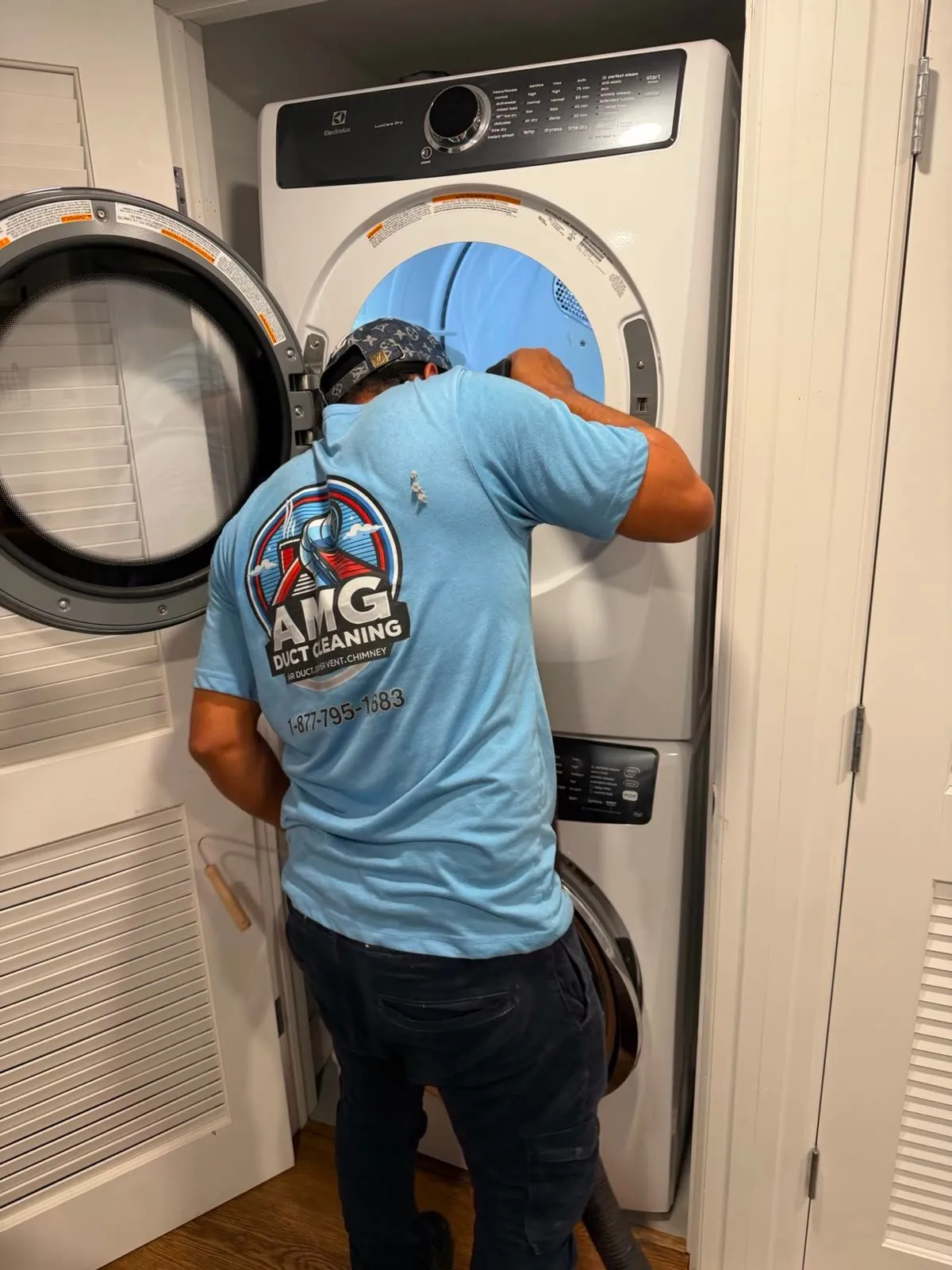
A dryer vent is cleaned end to end, and the crew starts at the dryer itself, pulling it out, disconnecting the transition hose and checking the connection for lint packed behind the machine, a spot most homeowners never see. From there they work the full length of the run with rotary brushes and vacuum equipment sized to the duct, breaking up compacted lint and pulling it out rather than pushing it toward the cap. The hose is reconnected with a proper clamp rather than tape, because a loose connection at the dryer is where moist air escapes into the wall.
The cleaning continues to the exterior termination, where the cap and the damper flap are checked and cleared. A run that looks clear at the dryer end can still be blocked at the cap by lint, a stuck flap, or a bird's nest, so the whole run, dryer to outside wall or roof jack, is treated as one system.
What does a full dryer vent cleaning cover?
A full cleaning covers the transition hose, the duct inside the walls, ceiling or attic, every elbow and joint where airflow slows and lint packs, and the exterior cap. The crew protects the floor and the space around the dryer while the work is underway, and the lint pulled from the line is bagged and hauled away rather than left for the homeowner. After the cleaning, airflow is confirmed at the exterior cap and the damper flap is checked for free movement, since a flap that sticks holds moisture and lint in the line and lets pests and cold air in.
The visit also answers a question cleaning alone cannot: whether the run should exist as it is. A foil or vinyl transition hose, a run with four elbows where two would do, a vent that ends in a crawl space or a basement rather than outside, or a cap corroded shut by salt air in Monmouth County are all things the crew points out plainly. Where the route or the material is the problem, dryer vent installation with rigid metal duct by the shortest path is the lasting fix.
What are the signs a dryer vent is overdue for cleaning?
Clothes that take two cycles, a dryer that feels hot on the outside of the cabinet, a burning or musty smell during a cycle, lint collecting around the door seal, and weak airflow at the exterior cap while the dryer runs are the clear signs of a restricted vent. A laundry room that feels warmer and more humid than the rest of the house points to the same problem, because moist air that cannot get out is going somewhere else.
Some houses reach that point sooner. Long runs from a basement laundry, second-floor laundry rooms that vent up through the attic to the roof, and split-levels where the vent climbs and turns before it exits all give lint farther to travel and more bends to settle on. Households with pets see buildup faster, because pet hair mixes with lint and packs tighter. A dryer that runs load after load between guests at a shore rental in Long Branch packs a vent faster than a family dryer does.
Why is a clogged dryer vent a fire risk?
Lint is dry, fine and flammable, and a dryer's heating element sits inches from where it collects. The U.S. Fire Administration lists failure to clean as the leading factor in home clothes dryer fires, which is why the crew treats the vent as part of the house's safety system rather than a quick add-on to a duct job. That means the whole run every time, the cap every time, and an honest word when the run itself is the hazard. A dryer that stopped heating is often a packed vent, and the phone is answered 24 hours a day, 7 days a week.
AMG is licensed and insured (NJ HIC 13VH13654300) and veteran owned, and every appointment starts with a free estimate. The crew cleans dryer vents from Union County to Bergen County and Essex County, and often pairs the visit with air duct cleaning, since the equipment is already in the basement, or with a chimney cleaning before the heating season. The 5.0 rating from 406 Google reviews includes a homeowner whose dryer had stopped getting hot and whose crew found a gas leak at the dryer connection while they were there.
What is included
- Full inspection from the dryer connection to the exterior vent cap
- Removal of compacted lint at every bend and transition
- Cleaning of the transition hose behind the dryer, reconnected with a secure clamp
- Clearing of the exterior vent hood and damper flap
- Airflow check at the exterior termination after cleaning
- Service for rigid metal, flexible, and semi rigid vent types
- Available for single story, two story, and basement laundry setups
- Free estimate before any cleaning begins
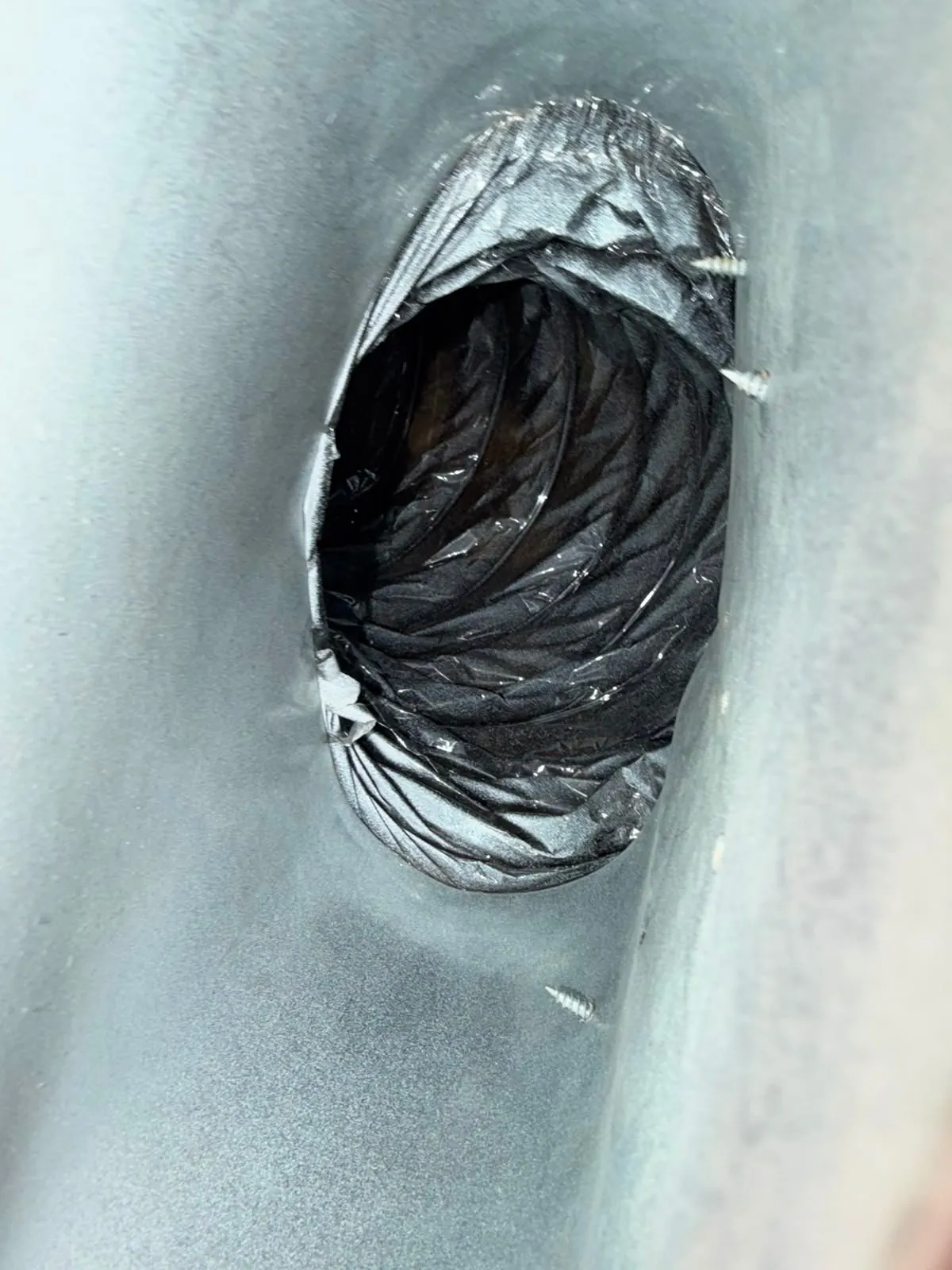
Before and after
Real AMG work in New Jersey homes.

Questions and answers
Who cleans dryer vents in New Jersey?
AMG Duct Cleaning covers dryer vents statewide from a base in Elizabeth, for houses, two-family homes, condos and small businesses. The crew works the full run, from the connection behind the dryer to the cap outside. Calls are answered 24 hours a day, 7 days a week at (877) 824-9359, and the estimate is free.
How much does dryer vent cleaning cost in New Jersey?
AMG prices a vent by the run rather than by a flat number over the phone, because a basement vent that exits three feet away and a second-floor laundry that climbs to a roof cap are different jobs. The estimate is free. Booking it alongside an air duct cleaning saves a second trip.
How often should a dryer vent be cleaned?
Most New Jersey homes are well served by a cleaning once a year. Households with heavy laundry loads, shedding pets, a long run with several bends, a second-floor laundry venting through the roof, or a rental that turns over between guests often need it sooner.
How do I know if my dryer vent is clogged?
Longer drying times, clothes that stay damp after a full cycle, a dryer that runs hot to the touch, a burning smell during a cycle, lint around the door seal, and weak airflow at the outside cap while the dryer runs are the clearest signs. A laundry room that feels warmer and more humid than the rest of the house points to the same thing.
Is a clogged dryer vent a fire risk?
Yes. Lint is flammable, buildup traps heat around the heating element, and failure to clean is the leading factor the U.S. Fire Administration lists in home clothes dryer fires. A dryer venting into a basement or a crawl space instead of outside adds a moisture problem to the fire risk.
Can you clean vents that run through a second floor or the roof?
Yes. Second-floor laundry rooms that vent up through the attic to a roof jack are common in the newer colonials of Marlboro, Bridgewater and Hillsborough, and the run is cleaned from the dryer end with equipment that reaches the attic section, with the roof cap checked from the roof when it is safe to walk. Where the run is too long for the dryer to push through, dryer vent installation by a shorter route is the fix.
Do you service both rigid and flexible dryer vents?
Yes. Rigid metal, semi-rigid and flexible transition duct are all cleaned, and the crew flags any section that should be upgraded: a foil or vinyl hose behind the dryer, a flexible run inside a wall where rigid duct belongs, or a cap with a flap that no longer moves.
More questions and answers about our work
Dryer Vent Cleaning across New Jersey
We provide dryer vent cleaning in every New Jersey county. Choose your county or town for local details.
Ready for cleaner air?
Tell us about your home and get a free estimate.