Dryer Vent Installation in New Jersey
A dryer vent installation routes a new or replacement vent from the dryer to the outside of the house by the shortest, straightest path the layout allows, in rigid metal duct, with a proper cap at the end. AMG plans the route, chooses the material, cuts and seals the opening, and finishes with a termination that lets moist air out and keeps weather and pests from getting in.
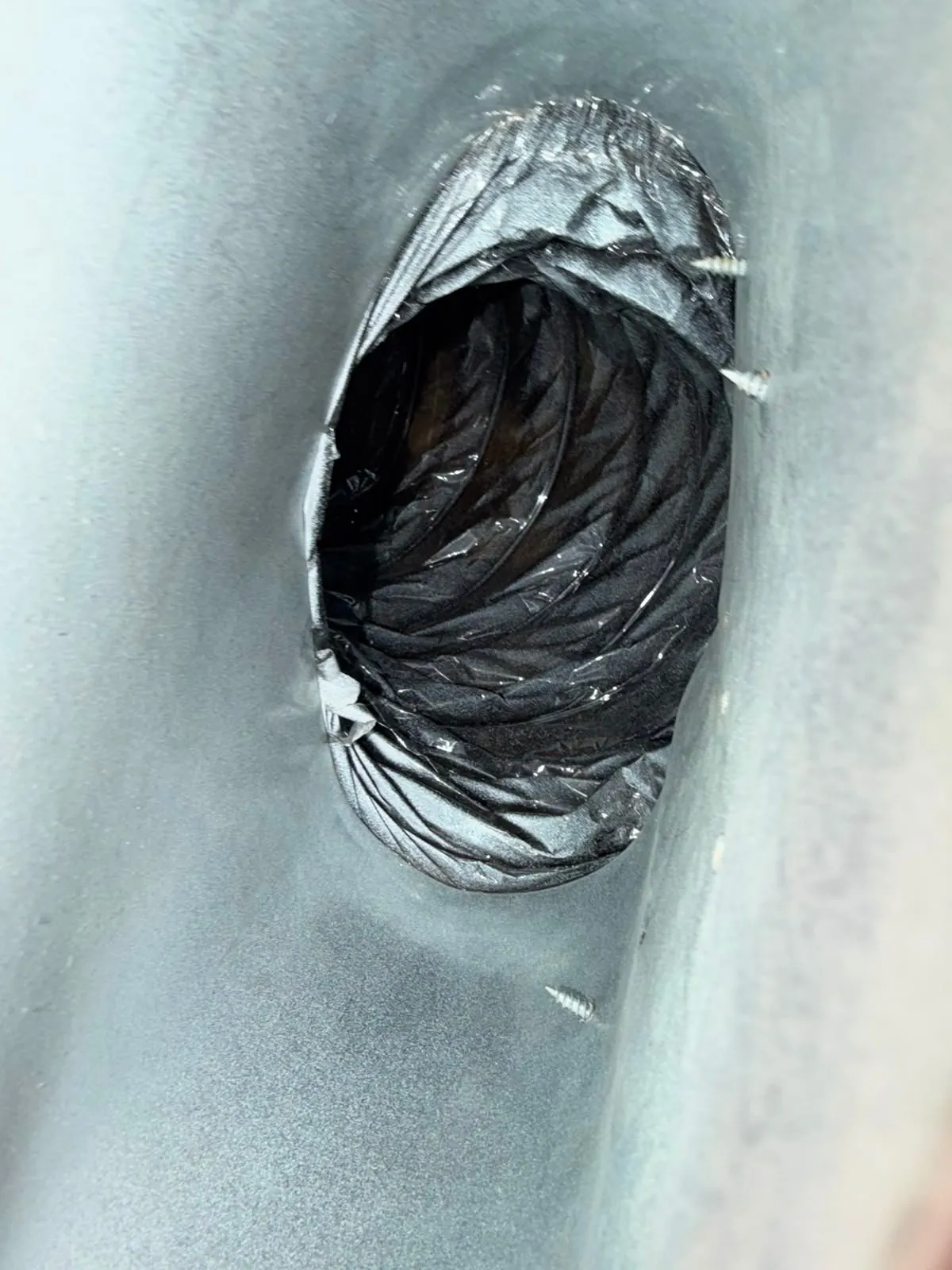
Not every dryer vent problem is solved by cleaning. A run with too many elbows, a run too long for the dryer to push through, a foil or vinyl hose inside a wall, or a vent that ends in a crawl space or a basement will restrict airflow however often the lint is cleared. That is common in older New Jersey houses where a laundry hookup was added decades after the house was built, in the two-family houses of Elizabeth and Newark and the walk-ups of Hudson County, where a vent was run with whatever duct was on hand toward whichever wall was nearest.
AMG installs dryer vents for new laundry rooms, remodels, relocated laundry areas and replacements of runs a previous installer got wrong. The aim on every job is the same: a short, direct run with as few bends as possible, smooth rigid metal duct, a secure connection at the dryer, and a termination placed where the exhaust can leave freely. Before anything is cut, the crew walks the planned path with the homeowner.
What is the right route and material for a dryer vent?
The shortest, straightest path from the dryer to an exterior wall or the roof is the most efficient one, and every elbow costs airflow. The route is planned to use the fewest turns the framing allows and to avoid doubling back through joists to reach a wall that happens to be closer to the street. Where the laundry sits in a basement, the run usually goes up through the rim joist and straight out; where it sits on an upper floor, it goes up through the attic to a roof jack or across to a gable wall.
Rigid metal duct is the material for a dryer vent because its smooth interior gives lint nothing to catch on and it does not sag or kink over time. Flexible duct has one place in the job, the last connection behind the dryer where rigid duct cannot make the turn, and even there the crew uses a semi-rigid metal transition rather than the crushable foil style that traps lint at every ripple.
How does a second-floor or long-run dryer vent get installed?
Laundry rooms on a second floor, common in the newer colonials of Marlboro, Bridgewater and Hillsborough, need a run that climbs through the attic to a roof termination, which is the longest path a dryer can be asked to push through. Basement laundries in capes and split-levels across Union County and Bergen County have the opposite problem: a run that climbs, turns twice, and exits through a garage or a side wall with a cap a few feet from the neighbor's fence. Both need support at regular intervals so the duct stays straight, and a route planned before drywall goes up or opened carefully when it is already there.
When a run is unavoidably long, the honest options are a shorter route through a different wall, a straighter route with fewer elbows, or, as a last resort, a booster fan sized for the run. The crew tells the homeowner which applies before quoting. A vent planned as part of a laundry-room renovation, rather than after the walls are closed, is the difference between a dryer that dries in one cycle and one that never does.
What kind of cap goes on the end of a dryer vent?
A dryer vent ends in a hooded cap with a damper flap, never a screened one, because a screen packs with lint within a season. The crew installs a termination with a damper flap that opens under the dryer's airflow and closes when the dryer is off, keeping rain, cold air, birds and rodents out. The termination is placed away from windows, doors, walkways and air intakes, and high enough on the wall that snow and leaves do not bury it. On a roof, a dryer-specific roof jack with a flap replaces the plumbing-style vent that some installers reuse.
The opening itself is cut with the wall or roof assembly in mind, sized for the duct, flashed or sealed so water stays out of the framing. On tight lots and attached houses in Hoboken, Bayonne and the Ironbound, the crew also considers how close the cap sits to a neighbor's window and whether the party wall allows the route at all. Where no path to the outside exists, the crew says so rather than installing a vent that ends indoors.
How does a dryer vent installation work in a condo or an attached house?
In condos and co-ops, the building sets the rules: whether a new penetration is allowed, which chase a run may use, and what paperwork the management office wants first. AMG works with the superintendent and the board, provides a certificate of insurance on request, and plans the visit around the building's access windows. In a two-family house the owner confirms which unit's dryer is being served and the crew makes sure each dryer has its own run.
Every installation starts with a free estimate that walks the planned route before any work begins. AMG is licensed and insured (NJ HIC 13VH13654300) and veteran owned, and the phone is answered 24 hours a day, 7 days a week. Where a dryer vent cleaning shows that the run itself is the problem, the installation is often scheduled from that visit, and where a laundry room is being added as part of a larger project, air duct installation for the new rooms can be planned at the same time so the framing is opened once.
What is included
- Route planning for the shortest, straightest path to the exterior
- Rigid metal duct installation for maximum airflow
- Support and secure fastening for long or multi story runs
- Exterior vent hood installation with a functioning damper flap
- Termination placed away from windows, walkways, and air intakes
- Code aware framing and sealing around the new vent opening
- Rerouting of vents that were installed with excess bends
- Free estimate that walks through the planned route before work begins
Questions and answers
How much does a dryer vent installation cost in New Jersey?
The price follows the route: the length of the run, the number of elbows, whether the termination goes through a wall or a roof, and what the framing or the building allows. AMG plans that route on site and gives the estimate free, before any duct is cut.
Can a dryer vent be moved to a different wall?
Often, yes. The crew looks for the shortest, straightest path the framing allows, closes the old opening, and fits a new termination with a damper flap. In a condo or a co-op the building decides whether a new penetration is allowed, so AMG checks with the superintendent or the board first.
What is the best material for a dryer vent?
Rigid metal duct, because its smooth interior gives lint nothing to catch on and it holds its shape for decades. Flexible duct belongs only at the short connection behind the dryer, and there the crew uses a semi-rigid metal transition rather than the foil or vinyl accordion hose that packs with lint at every ripple.
Can a dryer vent be installed for a second-floor laundry room?
Yes. The run usually goes up through the attic to a dryer-specific roof jack or across to a gable wall, supported at intervals so it stays straight. The crew keeps it as short and straight as the framing allows, and if the only route is too long for the dryer to push through, says so and discusses a different wall or a booster fan before anything is cut.
How many bends can a dryer vent have?
As few as the layout allows, because every elbow adds resistance and gives lint a place to settle. The crew plans the termination to reduce turns rather than adding them for convenience.
Does the installation include the exterior vent cap?
Yes. Every installation ends with a termination that has a working damper flap and no screen, placed clear of windows, walkways and air intakes and high enough to stay out of snow and leaves. On a roof, that means a dryer-specific roof jack rather than a plumbing vent reused for the purpose.
Will you replace a dryer vent that a previous contractor installed badly?
Yes. Runs with too many elbows, undersized or foil duct inside the walls, a cap that restricts airflow, or a vent that ends in a basement or crawl space are rerouted and rebuilt in rigid metal duct. A dryer vent cleaning visit often turns up these problems, and the estimate for the correction follows from what the crew saw.
More questions and answers about our work
Dryer Vent Installation across New Jersey
We provide dryer vent installation in every New Jersey county. Choose your county or town for local details.
Ready for cleaner air?
Tell us about your home and get a free estimate.