If a chimney is visibly leaning away from the house, treat it as unsafe until someone has looked at it. Stop using whatever furnace, water heater, or fireplace vents through that flue, and keep people and pets from walking or standing directly under the stack. A lean usually means something has shifted, and a shifted chimney can shed brick or move further before anyone plans to deal with it.
Two different problems hiding behind one word
Homeowners say chimney is leaning to describe two fairly different situations, and the fix for one is nowhere near the fix for the other. The first is a stack that bends only above the roofline, where years of wet mortar have let the brick above the flashing drift out of plumb while everything below stays put against the house. The second is the whole exterior chimney, foundation included, tipping away from the wall it was built against, which is a structural issue rather than a weathering one. Looking at only the top few feet will miss the second kind entirely.
Reading the lean from across the street
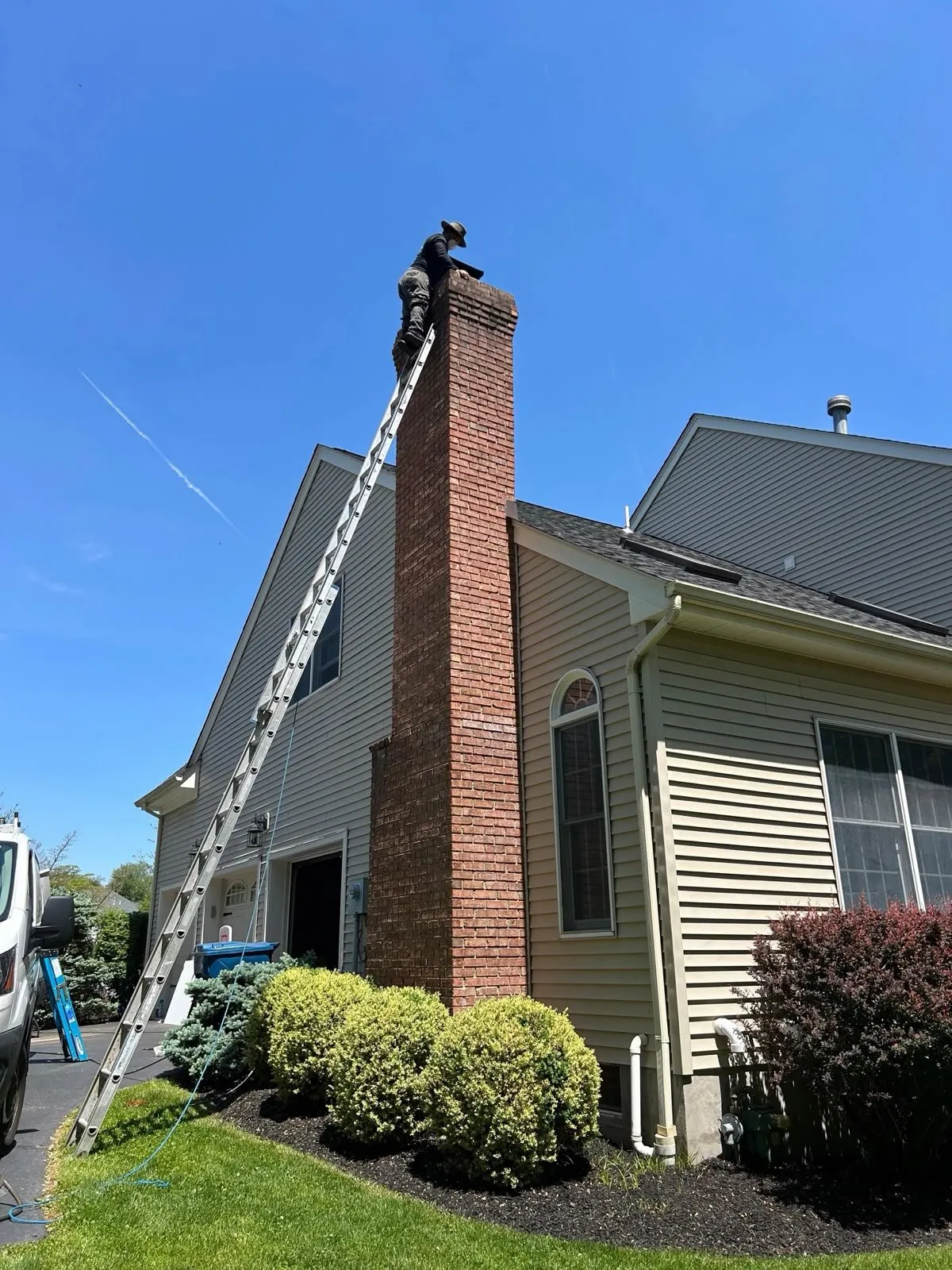
Before anyone climbs a ladder, stand across the street or in the yard and look at the chimney against a straight reference, the roofline, a downspout, the corner of the house. A lean confined to the portion above the roof, with the brick below sitting flush against the siding the whole way down, points toward the stack itself. If the gap between the chimney and the house widens as your eye travels down toward the ground, the whole structure is pulling away, not just the top courses. That single observation changes what kind of contractor and what kind of repair the job calls for.
The gap at the siding tells the real story
On an exterior chimney built against a house wall, the place to check is where the chimney meets the siding at the corners, top to bottom. A hairline gap that has been there for years and has not changed is one thing. A gap that is new, or one that is visibly wider at the bottom than it used to be, usually means the chimney is separating from the house rather than just leaning at the cap. Water finds that gap fast, and once it does, it works into the wall framing behind the chimney and into the foundation joint below, which turns a masonry question into a wider one.
This pattern shows up often on prewar exterior chimneys in Essex County, where a single-wythe brick stack was built tight against the house wall rather than inside it, and decades of freeze and thaw cycles have worked on that joint from outside. Along the Monmouth County shore, exposed stacks take a different beating, with wind-driven rain and salt air accelerating the same mortar breakdown from a different direction. The mechanism is the same either way: water gets into a joint that was never meant to flex, and the chimney starts moving relative to the house.
When repointing stops being the answer
Repointing, cutting out failed mortar and packing new mortar into the joints, works when the brick units themselves are still sound and the lean has not gone past what a mason can correct course by course. Past a certain point, the brick has shifted enough that repointing alone will not bring the stack back into plumb, and the plain answer is a rebuild of the affected section rather than another round of patching that will not hold. A technician looking at a leaning stack should be able to tell you which side of that line it falls on, and why, before any work starts. That distinction is part of what Chimney Repair covers, and it is also why a Chimney Cleaning visit is a reasonable first call if you are not sure which problem you have, since clearing soot and debris from the flue gives a clean look at the interior brick while the exterior gets assessed separately.
Why a footing question goes beyond masonry
A chimney that is pulling away at the base, rather than bending above the roofline, raises a question that masonry work alone cannot answer: what is happening under the footing. Soil that was never compacted properly, a footing poured too shallow for the frost line, or water pooling against the foundation over years can all let one side of a chimney settle while the house itself stays put. When that is the likely cause, the right next step is bringing in someone who can evaluate the foundation and the soil beneath it, not just the brick above grade. Rebuilding the visible stack on top of a footing that is still moving only buys a few seasons before the same lean comes back.
Calling the town before any work starts
Chimney rebuilds, and any work that touches the structure near a property line or a roofline, often fall under local permit rules that differ from one New Jersey municipality to the next. Rather than guessing at what applies to your house, call your town building department before work begins and ask what a chimney rebuild or structural repair requires in that town. A contractor can tell you what the work involves, but the town is the source for what paperwork that work needs to pass inspection.
A lean rarely appears overnight, and it rarely fixes itself either. The useful habit is the same one that catches most chimney problems early: look at the stack from the yard a few times a year, note whether the gap at the siding or the angle above the roofline has changed, and call in a technician as soon as something looks different from how you remember it. Waiting to see if it gets worse is how a repointing job turns into a rebuild.