Water does not usually enter a chimney through the brick. It gets in at the top, where the crown, the cap, and the flashing meet the roof, and on an older chimney in New Jersey one of those three has usually failed before anyone notices it. The crown is the exposed layer standing between the flue and every freeze and thaw cycle. A hairline crack this fall can be a chunk missing by spring, and what comes down through that gap travels into the smoke chamber and sometimes into the firebox below.
The crown is the roof of the chimney
The crown is the sloped cap of mortar or concrete that covers the top of the masonry, sealing the gap between the flue tile and the outer brick. It is built to shed water away from the flue, the same job a roof does for the rest of the house, and like a roof it takes direct weather every day the chimney stands. A crown poured thin, or poured flat instead of sloped, starts failing earlier than one built with the right pitch and thickness. Once water finds a way under the surface, it does not dry out between storms the way the top layer does.
Hairline cracks and freeze damage
A crack in the crown starts small, often invisible from the ground, and widens through a process that has nothing to do with the crack itself. Water settles into the opening, and when temperatures drop, that water expands as it freezes and forces the crack wider. The next rain fills a slightly bigger gap, and the next freeze widens it again. New Jersey winters run through enough freeze-thaw cycles that a hairline crack noticed in November can be a section of missing crown by March, exposing the flue tile directly to rain and snow with nothing between them.
A missing or rusted-through cap
The cap sits above the crown and covers the flue opening itself, keeping rain, snow, and animals out of the flue while still letting smoke draw properly. Caps at the Jersey Shore corrode faster than caps inland, since salt air works on the metal the way it works on anything else exposed to it, and a cap that has rusted through stops doing its job well before it looks obviously broken from the ground. Without a cap, water runs straight down the flue onto the damper, the smoke shelf, and eventually the firebox, and a chimney with no cap at all is an open invitation for birds and rodents looking for shelter from the next Monmouth County storm.
Flashing where the chimney meets the roof
Flashing is the metal seal running around the base of the chimney where it meets the roofline, closing the joint that would otherwise be the easiest path for water into the house. It does not have to fail completely to cause damage. Flashing that has pulled slightly away from the brick, or that was installed without stepping it properly into the roof shingles, lets water track down the side of the chimney chase and into the attic or the wall cavity next to it, which can look nothing like a chimney leak from inside the house until the stain spreads far enough to trace back.
Why these three repairs are usually discussed together
A technician looking at water intrusion rarely treats the crown, the cap, and the flashing as separate questions, because water that gets past one of them often shows symptoms that point at another. A stained ceiling near the chimney chase could be flashing, a cracked crown letting water run down the flue tile, or both working together, and a repair that fixes only the obvious crack while leaving a failed cap in place solves part of the problem and leaves the rest to show up again at the next heavy rain. Chimney Repair covers crown and crack repair, cap installation, and flashing work as part of the same visit, since the three sit within a few feet of each other and a thorough look at one usually means looking at all three.
What determines the scope of a crown or cap repair
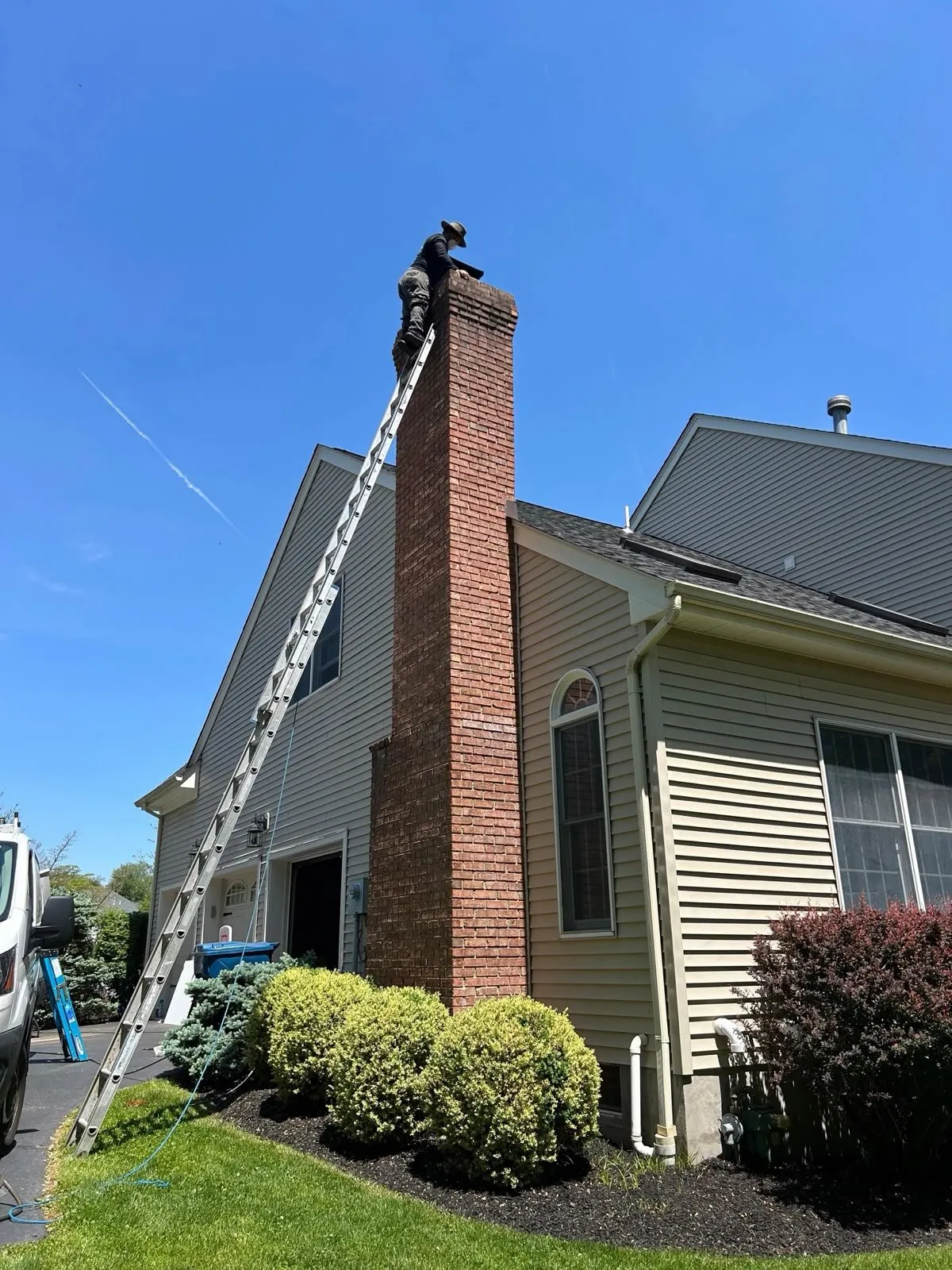
Two chimneys with the same crack can call for different repairs. A hairline crack caught early may only need a sealant coat across the crown, while a crown with several cracks or a chunk already missing usually calls for a full tear-off and repour. Access matters too, since a steep roof or a chimney rising well above the roofline takes more time and different equipment to reach safely than one at a low, walkable pitch. AMG walks the roofline, looks at the crown, cap, and flashing together, and puts the scope and the written estimate in front of the homeowner before any work starts, rather than guessing at the extent of the damage from the ground.
What an inspection looks for before repair
Before any repair, the chimney gets a visual check from the roofline, since this is where water intrusion starts. A technician looks for cracking across the crown, gaps where the crown meets the flue tile, a cap that no longer sits tight or shows rust coming through, and flashing that has lifted or separated from the brick. Chimney Cleaning often turns up the same clues from the inside, since soot patterns and standing moisture near the top of the flue point back to a water source above. Scheduling the two together, especially heading into a New Jersey winter, means a single visit can confirm what is happening at both ends of the flue at once.
None of these repairs need to wait for a visible leak inside the house. A crown with a hairline crack, a cap that has gone soft with rust, or flashing lifting at one corner are all easier and more contained to address before a winter of freeze-thaw cycles turns a small gap into a section of missing masonry. Catching it at the crown is almost always simpler than repairing what water damage does once it reaches the firebox or the framing around the chimney chase.