Fall is when New Jersey homeowners start thinking about the fireplace again, and it is when every chimney company in the state gets busy in the same two weeks. Knowing when to call, and what happens once a technician is standing on the hearth, takes the guesswork out of the season. This is the practical side of the subject, the timing and the visit, rather than the masonry.
Why booking early in the fall matters
Demand climbs fast once the weather turns, and it climbs all at once rather than gradually. Anyone who waits for the first cold week is calling at the same hour as the rest of the town, which stretches the wait for an appointment. Scheduling in September or early October, while the weather is still mild, means you are not chasing a fireplace into service the week you want to use it. The NFPA recommends having chimneys inspected and cleaned each year before the heating season begins, which puts early fall squarely in the right window.
There is a seasonal reason to move early as well. Birds and small animals that nested in an unused chimney over spring and summer are still clearing out through early fall, and a sweep before the cold sets in gets that nesting material out of the flue before it turns into a blockage over a lit fire.
What happens during a chimney sweep visit
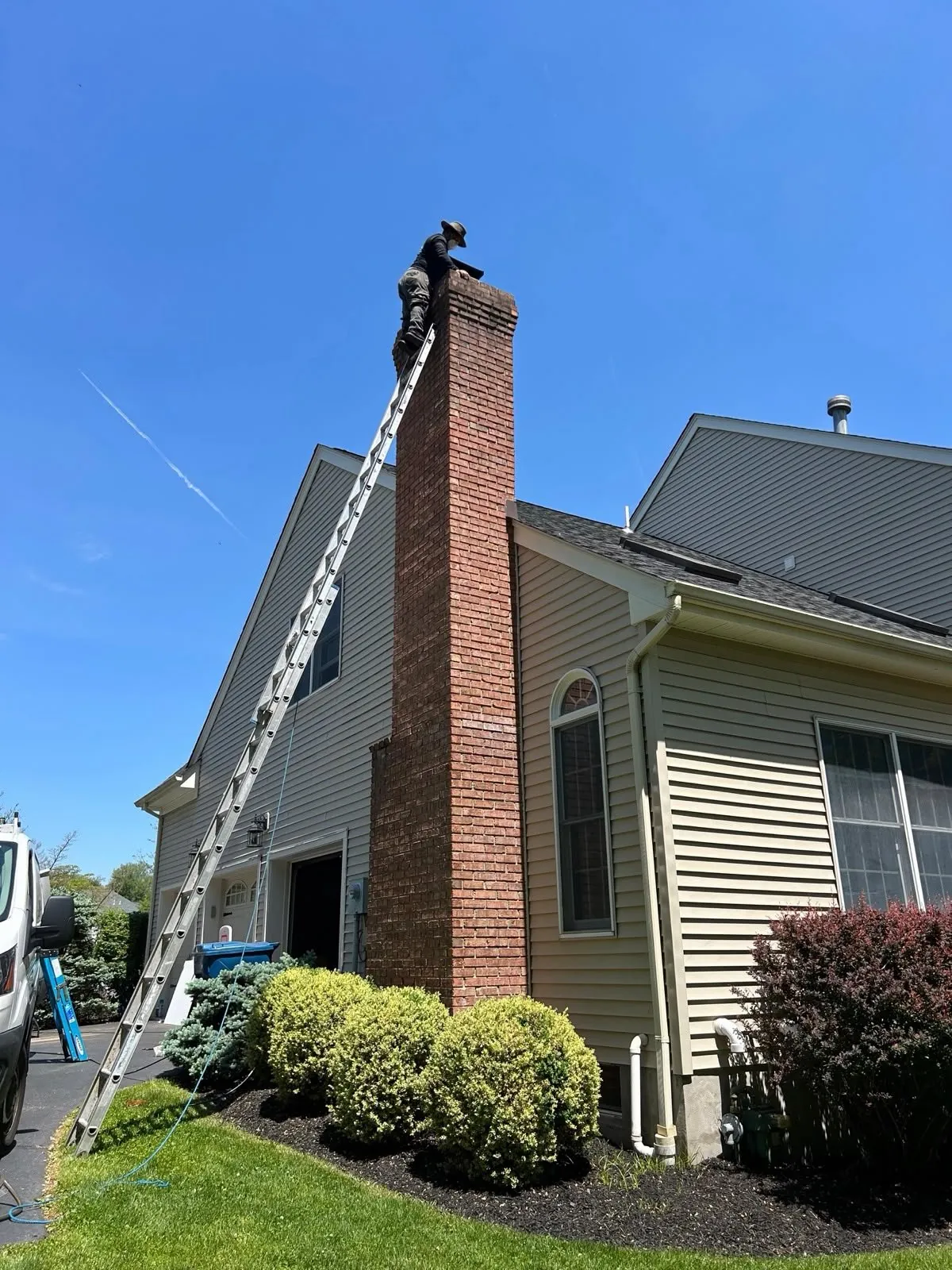
A visit opens with protecting the area around the fireplace, since the work loosens soot and creosote that has built up inside the flue. From there the technician works the flue, bringing down creosote, soot, and any nesting material that has collected since the last cleaning. Creosote is the residue wood smoke leaves behind, and it is what carries the fire risk in a chimney that goes too long between cleanings. The visit also covers the condition of the damper, the firebox, and the visible flue liner, with anything questionable flagged for a closer look. A chimney cleaning on a well kept chimney is a routine morning, and it still covers the whole system rather than a glance up from the hearth.
Getting your fireplace area ready before the appointment
A little preparation on your end keeps the visit short. Move furniture, rugs, and anything on the mantel away from the opening, which gives the technician room and keeps soot off your things. If the fireplace has been used recently, let the ashes cool completely and clear them out, though a light layer is no obstacle. Write down what you have noticed through last season: a damper that sticks, a smoky smell on humid days, a whistle when wind crosses the crown. Those notes are worth more to the technician than anything you will remember on the spot.
If the sweep finds something that calls for repair
Not every visit ends with a clean bill of health, which is the whole argument for fall timing. A cracked flue tile, a damper that will not seal, a loose or missing cap: caught in September or October, each of those leaves room to schedule the repair and still be ready before the cold. Homeowners who book in the first cold week and then learn a repair is due end up choosing between a fireplace that is not ready and a winter without it.
Chimney repair covers a wide range, and the scope follows what the sweep turns up. Some items close out in a single visit. Others take planning, a mason, and a dry week. Either way, knowing in October leaves options that the same news in January does not.
Scheduling with AMG this fall
AMG handles chimney cleaning and chimney repair for homeowners across New Jersey, and the schedule fills from the first cold snap onward. Put the sweep on the calendar while the weather is still mild, and bring your list of last season's oddities to the visit. A chimney that gets cleaned and looked over in October is one you can light in November without wondering what is up there.