Indoor air quality gets talked about a lot, but for most New Jersey homeowners the real question is simpler: why does the air in my house feel stale, dusty, or hard to breathe, and what can be done about it. The answer usually comes down to a handful of things that work together, your ductwork, your humidity levels, and what is circulating through your HVAC system every time it runs. None of this requires guesswork. It requires looking at the actual sources in your home.
Why do New Jersey homes have specific air quality problems?
New Jersey's climate swings from humid summers to cold, dry winters, and both extremes affect indoor air in different ways. Summer humidity, especially in homes closer to the shore in Monmouth and Ocean-adjacent parts of Middlesex County, creates conditions where dust and moisture combine inside ductwork. Winter heating season, when homes in Morris, Somerset, and Bergen counties are sealed up tight against the cold, means whatever is already circulating in your air ducts gets breathed in and out far more than it does in spring or fall, when windows tend to stay open.
Older housing stock is also a factor. Many towns across Essex, Union, and Hudson counties have homes built decades ago, with duct systems that have never been cleaned and additions or renovations that changed how air moves through the house. That history sits inside the ductwork, out of sight of anyone standing in the room.
Start with the ducts themselves
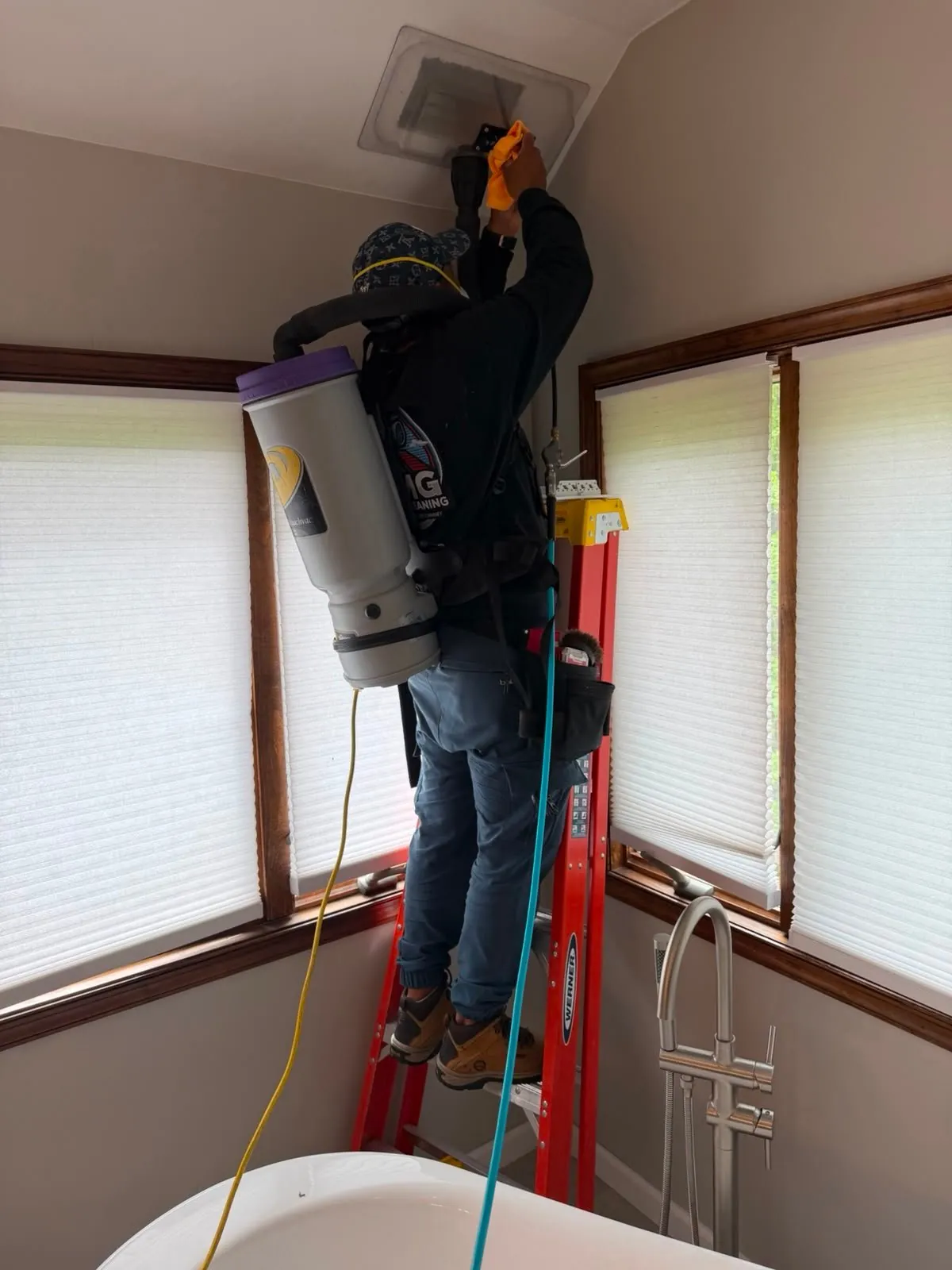
Air ducts are the delivery system for every bit of air that moves through your home's heating and cooling. Dust, pet dander, and debris settle inside the ductwork over years of normal use, and every time your system runs, some of that gets pushed back into your living space. This is the most overlooked piece of indoor air quality because it is out of sight. Air duct cleaning removes what has built up and gives the system a clear path to move air through, rather than pushing it past years of settled dust. Set expectations with the EPA's position in mind: duct cleaning has not been shown to prevent health problems, and the agency advises having ducts cleaned when there is visible mold inside them, evidence of vermin, or debris heavy enough to blow into the room.
Homes with pets, homes that recently finished a renovation, and homes that have not had ductwork looked at in several years are the ones where this makes the most noticeable difference.
Manage humidity and moisture
Moisture is one of the biggest drivers of poor air quality because it creates the conditions mold and mildew need to grow, often in places you cannot easily see, like inside ductwork, around basement window wells, or behind finished walls near plumbing. New Jersey's humid summer stretches keep it live well past August. A musty smell, spotting on walls or ceilings, or condensation that never dries points to a moisture source rather than a passing spell of weather. Mold treatment and removal deals with the growth once the water feeding it has been found and stopped, rather than masking the smell.
Consider what is running through your HVAC system
Beyond dust and moisture, an HVAC UV light installation places a lamp in the air stream, where it treats what passes the coil. The EPA's guidance on HVAC ultraviolet germicidal irradiation is to use it with filtration, not instead of it, and that is the right way to think about the lamp in a house as well. It is one part of an approach, paired with clear ducts and controlled humidity, and it is not a substitute for either.
Do not overlook your dryer vent
Dryer vents are easy to forget when thinking about indoor air quality, but a restricted vent forces the dryer to push more heat and moisture back into the home with each cycle, and in some layouts that moisture ends up near the same basement or utility space where humidity already tends to collect. Keeping the dryer vent clear is a small piece of the larger picture, but it is one that directly affects both humidity and the load on your HVAC system, especially in homes across Middlesex and Somerset counties where the laundry room shares space with mechanical equipment.
How does AMG approach indoor air quality?
Air quality behaves like a system rather than a single service, so the order of work matters. A dusty house points at the ductwork. A musty basement points at moisture. A laundry room sharing a mechanical closet points at the dryer vent. Handle the sources in that order, largest first, and see what the house feels like before adding equipment on top. That sequence is how AMG works a home in Bergen County or Mercer County, and it is the reason a lamp or a filter upgrade is the last item on the list instead of the first.