Indoor air quality is a phrase that gets used constantly and explained rarely. Most homeowners know it matters but could not say exactly what determines it inside their own house. In practice, indoor air quality is shaped by a small set of factors working together: what pollutants are present, how much moisture is in the air, how well the home ventilates, and what is circulating through the ductwork every time the heating or cooling system runs. Knowing each of them makes it easier to tell a real air quality problem from a passing annoyance.
What is in the air inside a house?
Indoor air carries a mix of dust, pet dander, pollen that made its way inside, dust mite debris, and in some homes, mold spores. None of this is unusual on its own. Every home has some amount of all of it. The question is concentration: how much of each is building up and how effectively your home's systems are removing it versus recirculating it. A home where dust and dander settle in the ductwork and get pushed back into every room each time the system runs will hold a different mix than one where the same particles are filtered out or vented away.
Why New Jersey's climate complicates the picture
New Jersey does not have one climate condition to plan around, it has two extremes. Humid summers, especially in towns closer to the shore like Long Branch and Red Bank, create moisture that can combine with dust inside ductwork and around air handlers, conditions where mold and mildew find a foothold. Cold winters push the opposite problem: homes get sealed up tight to hold in heat, which keeps ventilation low and lets whatever is already indoors, dust, dander, and even cooking or cleaning byproducts, recirculate for months with far less outdoor air exchange than in spring or fall.
The role of housing age and construction
Older homes across Essex, Union, and Hudson counties often have ductwork and building envelopes that were never designed around current thinking about air quality. Gaps around ductwork joints can pull in dust from attics or crawl spaces. Newer construction has its own version of the same problem, since drywall dust and insulation fibers from a recent build or renovation commonly end up inside the ductwork and take time to fully clear out through normal use.
Ventilation matters as much as filtration
Many New Jersey homes have been weatherized over the years, with better windows, added insulation, and sealed gaps, all of which help with heating and cooling costs and also cut how much outdoor air exchanges with the air already inside. Bathroom and kitchen exhaust fans help remove moisture and odors at the source, but they only run for short periods and do not address the air moving through the ductwork the rest of the day. In a tightly sealed home, whatever is already circulating, whether that is dust from the ducts or humidity from a shower, has fewer natural ways to leave the house compared to a home with more airflow.
How to tell when air quality has become a problem
A few patterns are worth paying attention to. If dust reappears on surfaces quickly after cleaning, if a musty smell shows up when the HVAC system starts, or if anyone in the household notices more sneezing, congestion, or eye irritation indoors than outdoors, those are signals worth acting on rather than ignoring. Visible spotting on walls or ceilings, or a persistent damp smell in a basement or utility area, points toward moisture rather than dust, and that distinction matters because the fix is different.
How AMG approaches indoor air quality
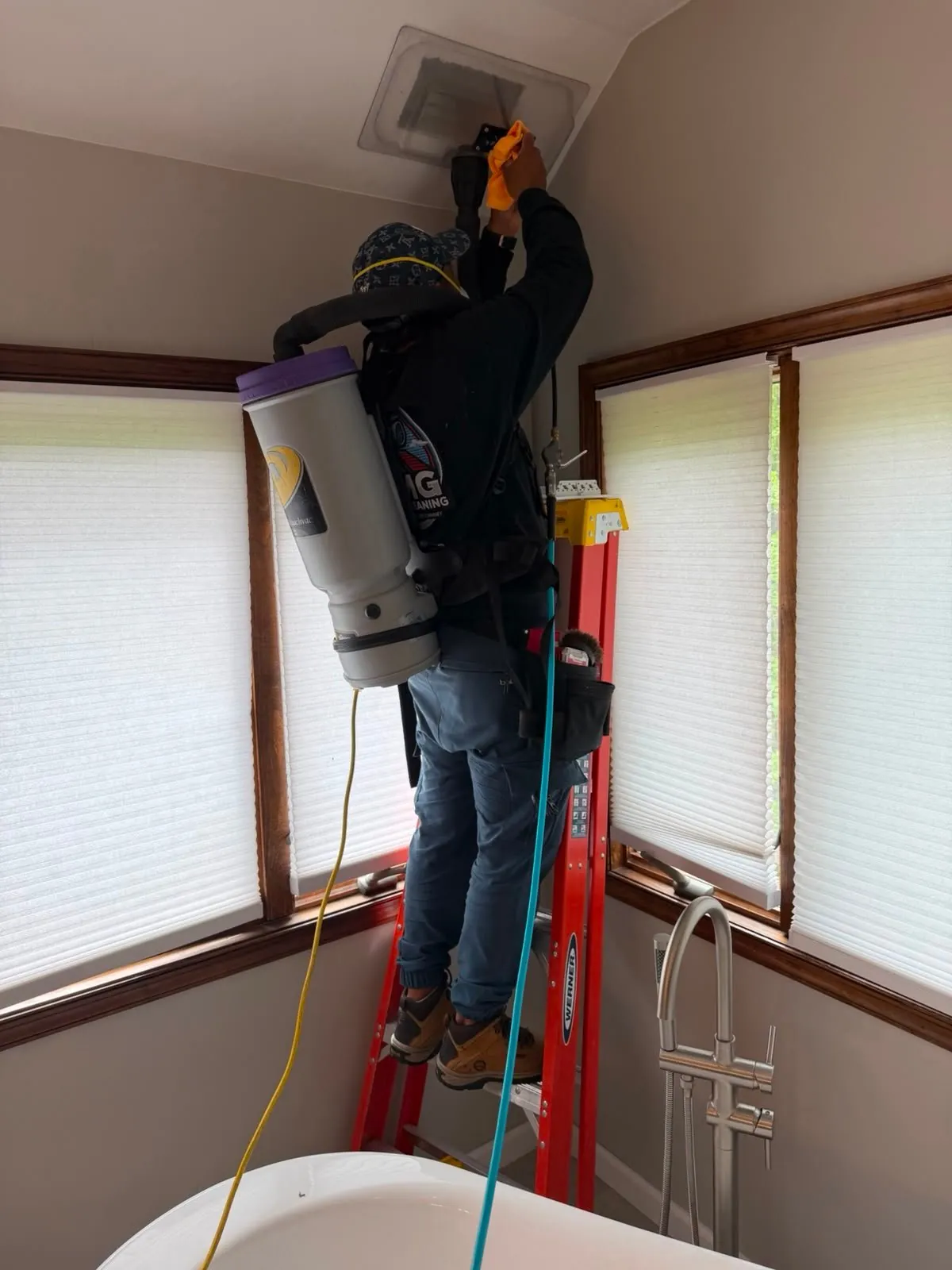
Because indoor air quality comes from several sources rather than one, AMG reads a home's ductwork, moisture conditions, and HVAC system together instead of treating them as separate jobs. A dust heavy house usually points to air duct cleaning. A musty basement points toward mold treatment and removal. A home with older equipment and thin filtration may add an HVAC UV light installation alongside what is already there.
The EPA puts source control first, ventilation second, filtration third, and that order is worth borrowing at home. Find what is making the dust or holding the damp and deal with it. Open a path for outdoor air. Then spend on equipment, if any is still called for. A homeowner in Union County who works the list in that sequence usually finds out which of the three was the real problem, which is more than any single service can tell you on its own.