A homeowner usually spots this the same way: a dark ring around a supply vent, a musty smell that gets stronger when the system runs, or a patch of discoloration on the inside of a return grille when it comes off for a look. The growth itself is a symptom. Somewhere along that duct path, or at the equipment it connects to, something has stayed damp long enough for mold to take hold, and that source is the part that decides what happens next.
Where growth starts inside a duct system
The evaporator coil is the most common starting point, since condensation forms on it every time the air conditioner runs and any drainage fault leaves that moisture sitting against metal and insulation instead of draining away. The drain pan underneath is a close second, especially once it develops a hairline crack or a clog that lets water pool instead of running to the drain line. Insulation inside the plenum, the box just off the air handler where supply runs originate, holds moisture differently than bare sheet metal and can carry growth across a larger area once it starts.
A return duct running through a damp basement or crawlspace is its own category. If that space holds ground moisture or gets humid in warmer months, the return pulls that air into the system every time it cycles, and the duct surface along that stretch stays damp far longer than anything upstairs. In basements across Union County and Essex County, this pattern shows up often in homes where the return run passes along an exterior wall that sweats during humid stretches.
Why the moisture source has to be fixed first
Treating what has already grown without addressing what kept that surface wet is a short-term move. A cracked drain pan that keeps weeping, a coil that never drains properly, or a crawlspace that stays damp will bring growth back on roughly the same timeline, regardless of how thorough the first visit was. The EPA's guidance on mold and moisture is direct about this: the underlying moisture problem has to be corrected, or any cleanup is temporary. That is why a proper visit starts with tracing the moisture back to its source, not with treating the visible spots first.
What mold treatment and removal covers
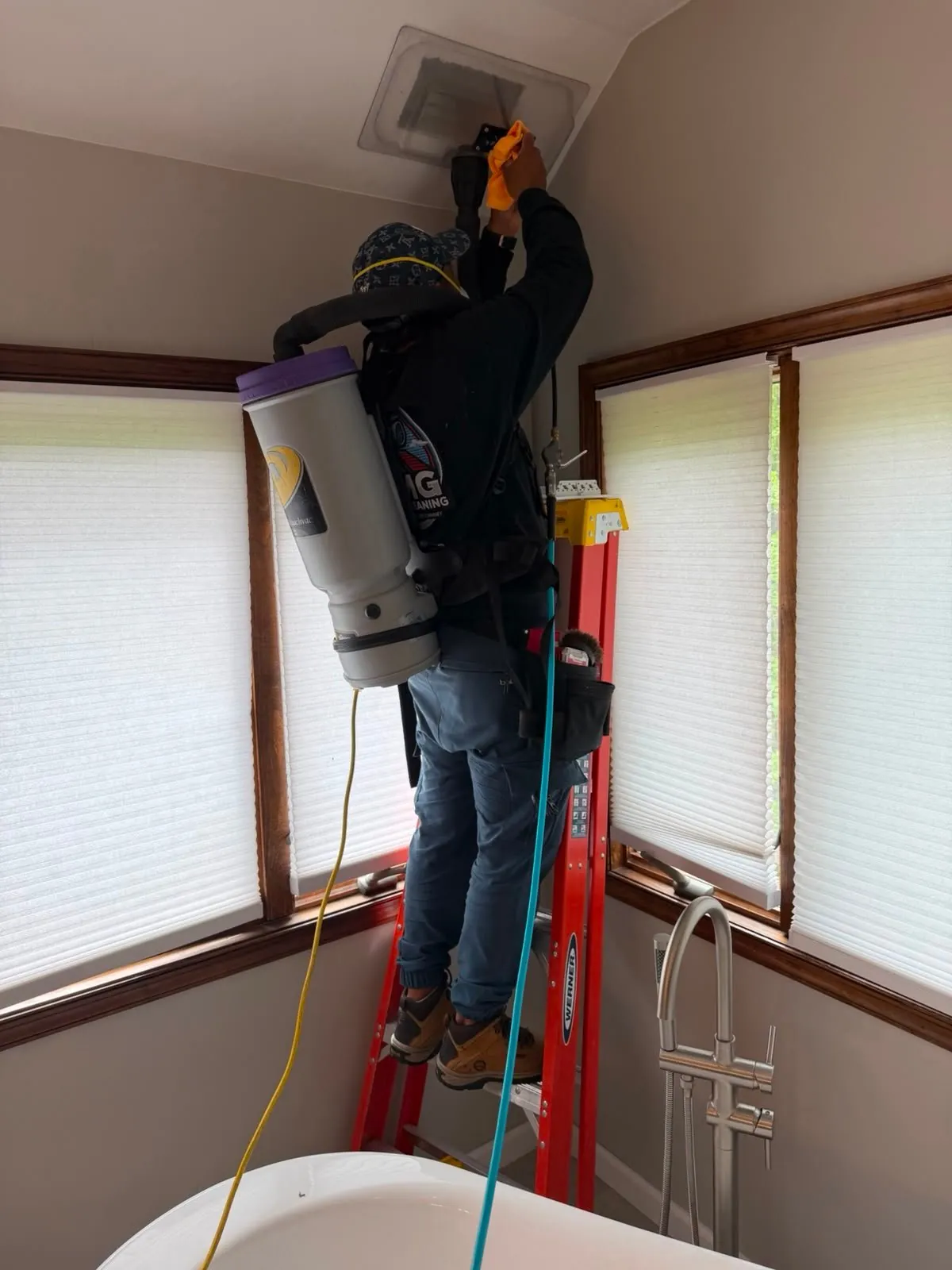
Mold Treatment and Removal, as AMG performs it, covers the duct system and the HVAC equipment connected to it: supply and return runs, the coil, the drain pan, the air handler cabinet, and any insulation inside the plenum that has taken on growth. The process removes what has developed on those surfaces and addresses the contaminated dust that travels through the system once mold is present, rather than leaving spores to circulate through every register in the house.
This pairs naturally with Air Duct Cleaning in cases where the growth is limited and the surrounding ductwork just needs the debris and residue cleared once the affected sections are treated. A technician walking the system before starting can usually tell within a short inspection whether the growth is confined to one area, like a single return run, or whether it has spread further along the path.
What falls outside a duct-focused treatment
Growth on drywall, framing, subfloor, or insulation behind a wall is a different job with a different scope. A duct system runs through a house, but treating the ducts does not reach mold that has taken hold on building materials themselves, even when that growth started from the same damp basement or the same leaking pipe. If an inspection turns up mold on a wall cavity or framing near the ductwork, that gets called out separately, since it calls for its own remediation rather than a duct-side fix stretched to cover more than it should.
The same line applies to the moisture source itself. A cracked drain line gets flagged, a sweating foundation wall gets flagged, but repairing plumbing or waterproofing a basement sits outside what duct-focused treatment does. The estimate should say plainly what falls inside the visit and what does not, so a homeowner can line up whatever outside repair the moisture source requires before or alongside the duct work.
Where UV light fits into the picture
HVAC UV Light Installation adds a layer between cleanings by targeting growth on the coil surface where a lamp is positioned, and it is worth considering in a system that has had recurring coil moisture. It is not a stand-in for fixing drainage, and it does not replace filtration or address a damp return run on its own. Framed as one part of a system that also has its moisture source under control, a UV lamp is a reasonable addition. Framed as the only step taken, it leaves the underlying cause untouched.
What an inspection and estimate involve
A visit starts with tracing where moisture has been sitting, not just where growth is visible, since a coil that stays wet three feet from a stain can still be part of the same problem. From there, the estimate lays out what gets treated, what the moisture source turns out to be, and what outside repair, if any, has to happen for the treatment to hold. AMG provides a free estimate for this kind of visit, and the phone is answered around the clock if a musty smell or visible growth turns up and a homeowner wants a walkthrough scheduled.