A house closes down for a duct cleaning visit for a few hours and nobody minds much. An office, a dental practice, or a small retail space cannot do that. The phones still ring, patients still show up, and desks stay covered in paper and equipment that cannot move itself out of the way. Commercial air duct cleaning works around a building that is still running, and that changes almost every part of the visit compared with a residential job.
Scheduling around the business, not the crew
Most commercial clients want the work done before the first appointment, after the last one, or on a day the office is closed anyway. That means confirming building access ahead of time, who holds keys or badges after hours, and whether an alarm system has to be disarmed and reset on a schedule someone can walk through in advance. A practice with a packed morning does better with an evening or early visit than trying to squeeze the work between patients, and that timing should get worked out before a crew shows up with equipment, not after.
Covering desks, equipment and finished space
A home has furniture and carpet to protect. An office has computer monitors, printers, exam chairs, and paper files that do not do well under a layer of dust shaken loose from a supply run overhead. Before equipment runs, desks and counters near the registers get covered, and anything that cannot be moved, a server rack, a reception desk, specialized equipment in a clinic, gets flagged during the walkthrough so it gets worked around rather than discovered mid-job. A short list of what stays put and what gets protected, agreed on before the visit starts, saves time for everyone once the work is underway.
Rooftop units and drop ceilings
A lot of commercial buildings run packaged rooftop units feeding duct that travels through a drop ceiling rather than an attic or a basement. That layout changes how a technician reaches the system. Ceiling tiles come up section by section to expose the duct runs and diffusers, and access to the rooftop unit itself has to be arranged with whoever manages the roof, since not every building lets a crew up there without separate clearance. Shared duct runs serving multiple tenants in the same building add another layer, since cleaning one suite's branch can mean coordinating with a neighbor or the building manager so nobody is surprised by equipment noise or an open ceiling tile down the hall.
Working with a building manager and a certificate of insurance
Commercial properties, particularly multi-tenant office buildings and medical suites, often require proof of insurance before a crew sets foot on site. A licensed and insured company should be able to provide a certificate of insurance to a building manager or property office without back and forth, and that document is worth requesting ahead of the visit rather than on the day of, especially if the building has its own sign-in process or a freight elevator reservation that has to happen in advance. Office parks around Union County and Essex County tend to have this kind of building management layer even for smaller suites, so it pays to ask early what the property requires rather than assume a residential-style walk-in will work.
What changes in a system that runs all day with more people in it
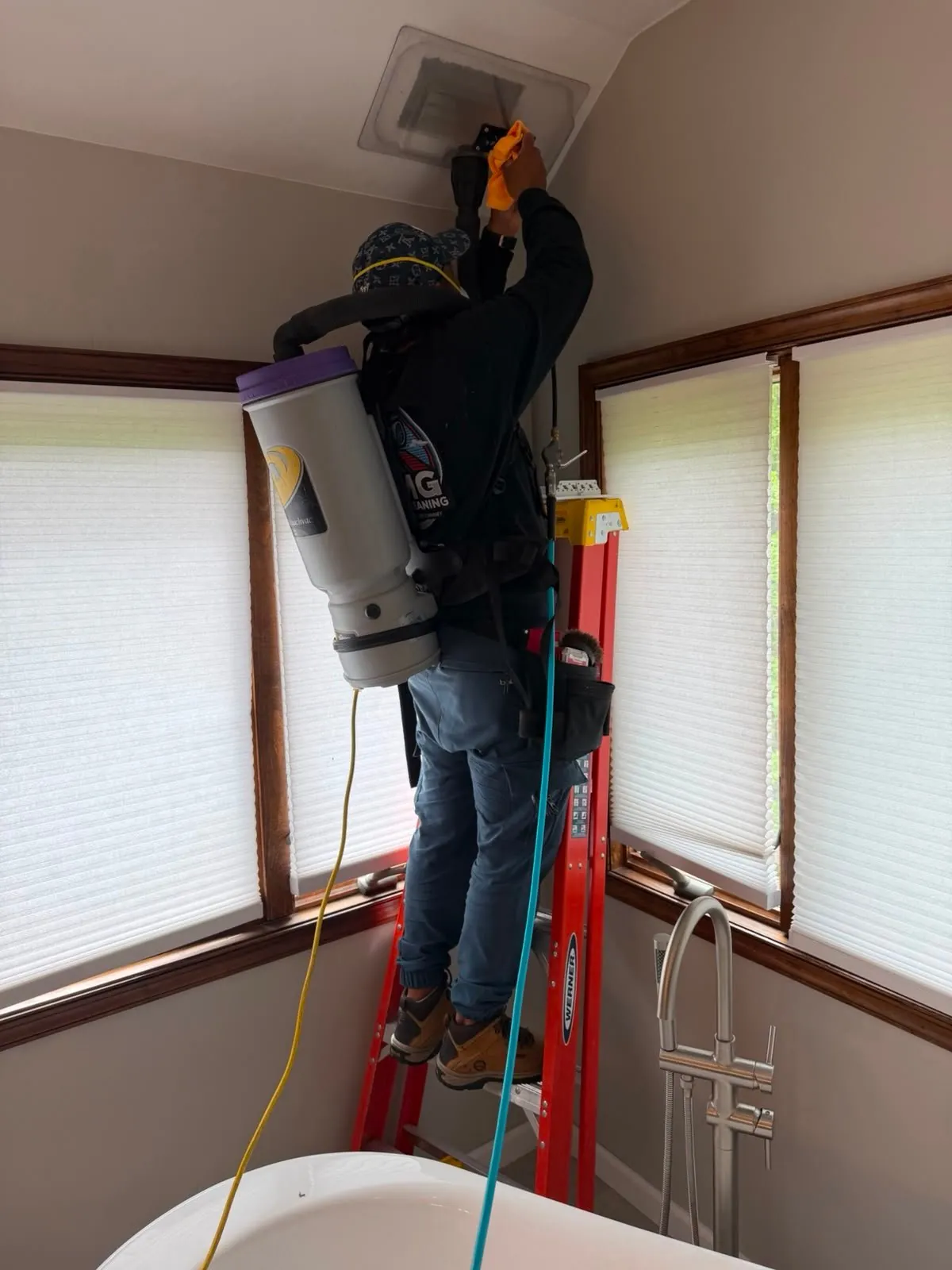
A commercial HVAC system usually runs longer hours than a home system and moves air for more occupants per square foot, which means filters load faster and duct interiors pick up dust, paper fiber, and whatever tracks in off the floor at a faster pace than a house with a few residents. Air Duct Cleaning in a busy office setting is addressing that higher-turnover environment, not a different kind of dirt, but the volume and the schedule both look different from a single-family job. A dental clinic that left a review mentioned the crew working before patient hours so the waiting room and equipment stayed covered and the schedule was not disrupted, which is the kind of logistics point that matters more in a commercial setting than the cleaning method itself.
Where mold and UV fit into a commercial system
Commercial buildings with a history of moisture, a roof leak, a slow plumbing issue near ductwork, or a basement mechanical room that stays damp, sometimes carry growth inside the duct system or on nearby equipment. Mold Treatment and Removal covers the duct system and connected HVAC equipment, and it is worth raising with a technician if a space has a musty smell that shows up when the system cycles on rather than all the time. Some offices and clinics also add HVAC UV Light Installation as a layer inside the air handler, which works alongside regular filtration and duct cleaning rather than replacing either one. None of this changes how often the duct system itself needs cleaning, since dust and debris still accumulate on their own schedule.
A walkthrough before the estimate is where most of this gets sorted out. A technician who sees the drop ceiling, the rooftop unit access, and the layout of desks and equipment can give a written estimate that accounts for the actual job rather than a generic residential price applied to a commercial space. That estimate should also spell out what gets covered, what access is needed on the day, and roughly how the crew plans to stage the work around the hours the business keeps.