The first cold night of October arrives and the heat comes on for the first time since the furnace last ran in the spring. Within a minute or two there is a faint, slightly burnt smell drifting out of the registers. In most houses that smell is gone within an hour, and the system runs clean from that point forward. In other houses it does not fade. A day later, a week later, it is still there every time the blower kicks on, and that is a separate problem with a separate cause.
Two different smells, two different causes
A smell that shows up the moment the heat starts and tapers off over the next hour or so is almost always dust burning off a heat exchanger that has sat cold and unused all summer. A smell that stays through the first full heating cycle, and the one after that, points to moisture sitting somewhere in the duct system or the equipment feeding it. The first case needs nothing more than a little patience. The second one is worth tracking down before the furnace runs every day of the season on top of it.
The smell that burns off
Dust settles on every horizontal surface of a furnace cabinet and heat exchanger over a summer when the system sits idle, and the first heat of fall is the first time that dust meets a hot surface in months. The smell that results is sharp, a little like warm electronics, and it usually fades on its own as the layer burns away. It should not return on later cycles the way it showed up on the first one. If that first-run smell is still present on the third or fourth cycle, it has stopped being a dust issue and started pointing at something else.
The smell that stays
A musty smell that does not fade is moisture, somewhere. That could be a duct run sitting in a damp crawl space or basement corner, a condensate drain pan that holds standing water longer than it should, a humidifier pad that never fully dried over the summer, or insulation inside the ductwork that absorbed moisture and never got a chance to dry before the system started pushing warm air through it again. Warm air moving across a damp surface carries that smell straight into every room the duct serves, which is why it often reads as a whole-house problem rather than something tied to one register.
Where to sniff first
Three spots tell most of the story. Put your hand and nose near the supply register closest to the furnace or air handler first. A strong smell there, stronger than anywhere else in the house, points toward the equipment itself or the first few feet of ductwork leaving it. Check the return grille next. A musty smell pulled in at the return, rather than pushed out at a supply, usually means the air coming back into the system is picking up moisture before it ever reaches the furnace, often from a damp basement or a crawl space the return duct runs through. Last, pull the filter and smell the slot it sits in. A damp or moldy smell right at the filter track often means water has been sitting near the blower compartment longer than anyone noticed.
What a damp crawl space does to the return air in fall
Plenty of older homes across Bergen County run return ductwork through a crawl space, and that crawl space holds onto summer humidity well into October. The first cold night pulls return air across that damp space at the same time the ground is still releasing moisture from months of warm weather, and the duct carries that smell straight to the air handler before distributing it through every supply in the house. A sealed, dry crawl space does not create this problem. A vented one with bare earth underneath, or a sump that has been running all summer, almost always does, and the smell shows up every October until the moisture source gets addressed.
When the smell points to mold treatment and removal
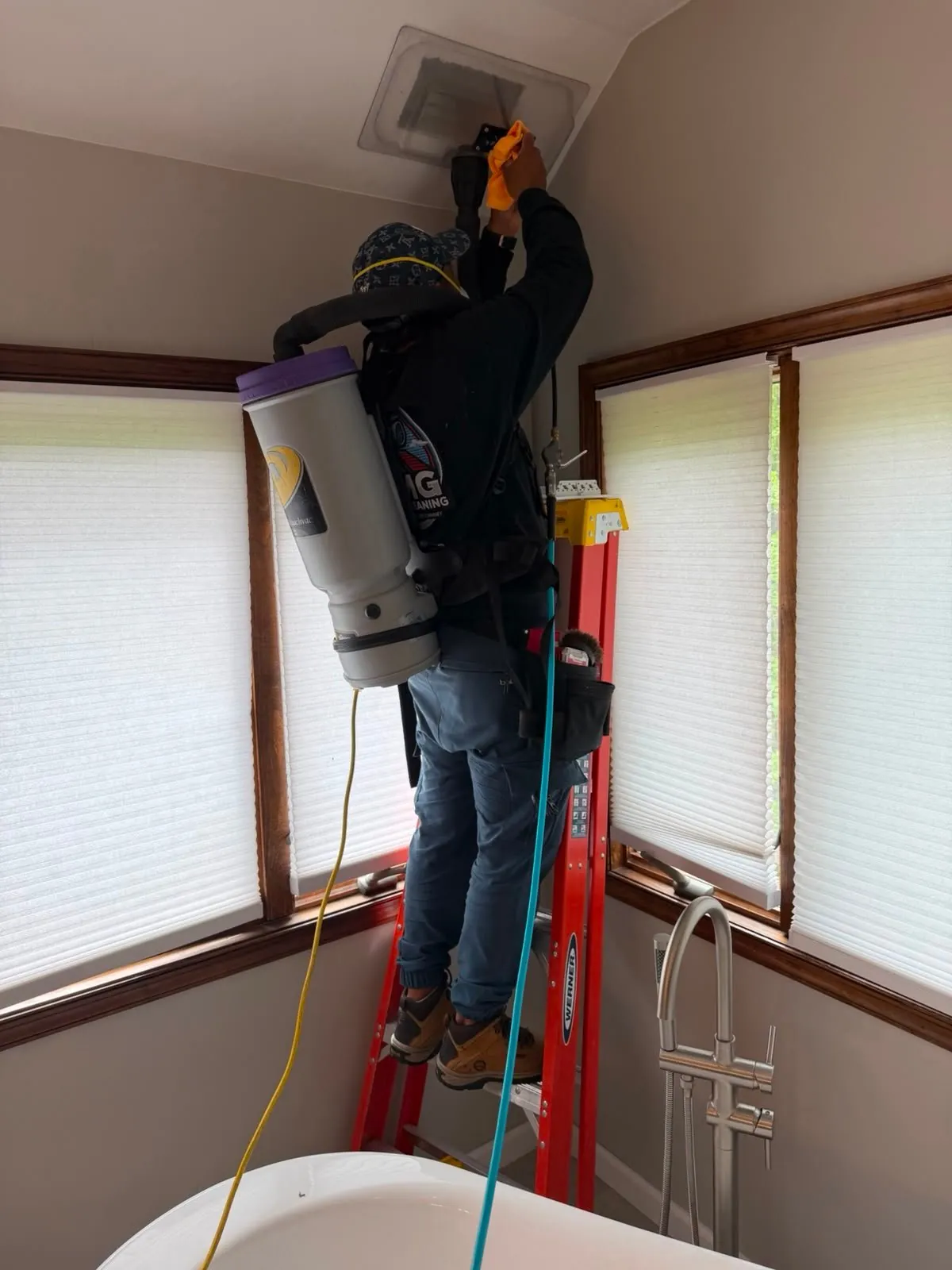
A smell that lingers past the first few cycles, especially one paired with visible staining on a duct interior, a coil, or a drain pan, calls for a closer look than a filter change can give. Air Duct Cleaning clears out the dust, debris, and buildup that collect in a system over a season of disuse, and it is the right first step for a smell that is tied to accumulated dirt rather than active growth. When a technician finds discoloration or growth during that inspection, Mold Treatment and Removal addresses it directly, covering the duct system and the connected HVAC equipment it touches. Removing dust and debris through duct cleaning is a maintenance step, not a cure for anything beyond the dust and debris themselves, and the value of it is a cleaner system, not a health outcome.
A dehumidifier or a UV lamp placed in the ductwork can help manage moisture and limit regrowth between service visits, but neither one replaces the underlying fix. HVAC UV Light Installation works as a layer that sits between cleanings, not a stand-in for drying out a crawl space or sealing a leak that keeps feeding moisture into the system in the first place.
What to do with what you find
If the smell fades within a day of the first heat cycle, there is nothing to act on beyond noting that it happened. If it is still there after a handful of cycles, trace it with the three-spot check, supply, return, and filter slot, and note which one carries the strongest smell. That single detail, more than anything else, tells a technician where to start looking and whether the fix is a cleaning, a repair to a leaking or damaged section, or a closer look at moisture in a crawl space or basement feeding the return side of the system.