
A dryer vent fails slowly, which is what makes it dangerous. Nothing breaks. The line narrows a little each month, the machine works a little harder, the household adjusts, and by the time anyone notices, the run has been restricted for a year or more.
These are the signals, roughly in the order they appear.
Clothes take two cycles
This is the first and most reliable sign. A dryer works by moving hot air through the drum and carrying the moisture out. If the air cannot leave, the moisture stays, and the machine simply runs longer trying to reach the same result.
The test is the change, not the absolute time. If a load of towels used to finish in one cycle and now needs two, the line has narrowed enough to matter, whatever the calendar says.
The laundry room gets hot
Heat that cannot leave through the vent stays in the room. If your laundry area is noticeably warmer than the rest of the house during a cycle, or the top of the dryer is hot to the touch rather than warm, air is not moving the way it should.
Lint appearing where it should not
Lint around the door seal, on the floor behind the machine, or on top of the dryer means it is coming back out rather than going down the line. The trap is catching some of it; the rest is looking for somewhere to go.
A burning smell
Stop the machine. A hot or scorched smell during a cycle means lint is in contact with something hot enough to bake it, and lint is highly combustible. This is the one symptom on this list that should not wait for a convenient appointment. Unplug or switch off the dryer, and do not run it again until the line has been cleared and checked.
Clothes dryers are a well-documented cause of house fires in the United States, reported thousands of times a year, and failure to clean is the leading contributing factor. The material that burns is the lint.
The exterior hood is not opening
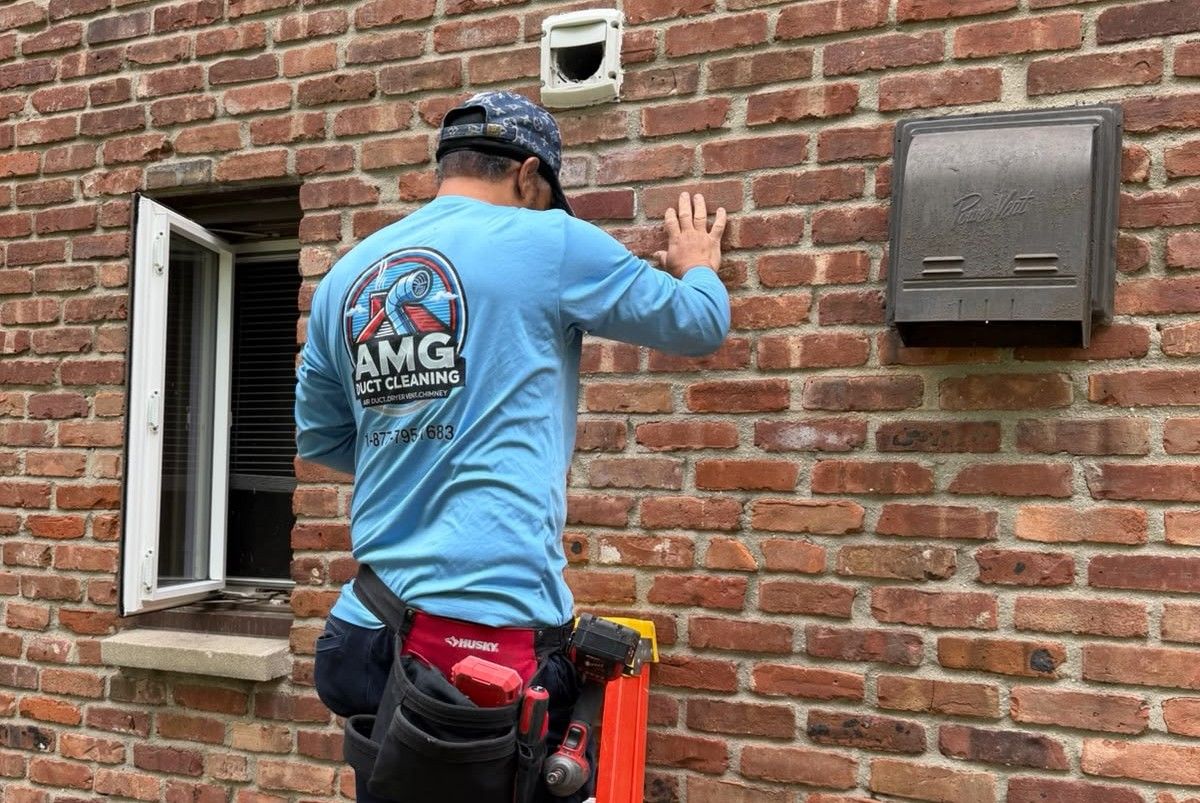
This is the check almost nobody does, and it is the most informative. Run the dryer, walk outside, and look at the exterior hood.
The flap should be open and you should feel a strong flow of warm, moist air. If the flap is shut, barely lifting, or you can see lint packed around it, the last few feet of the line are blocked, and that is where blockages concentrate.
Lint does not spread evenly along a run. It builds where the air slows: at every elbow, at low points where condensation collects, and above all at the termination, where the damper adds resistance. A line can be clear for the first six feet and solid at the hood, which is exactly why reaching behind the machine with a brush kit is not a substitute for opening the outside end.
The worst blockages we have photographed were bird nests built on top of a stuck damper: a complete stop at the one point where the heat and moisture are supposed to leave the building.
The dryer shuts itself off mid-cycle
Modern machines have a thermal cut-out. If yours is stopping partway through and restarting once it cools, it is protecting itself from a heat build-up it cannot vent. That is a late-stage symptom.
Gas dryers carry an extra risk
Both gas and electric machines push the same lint down the same pipe and need the same cleaning. The difference is what a restriction does. An electric dryer overheats, and the lint is the fuel. A gas dryer has combustion at the back of it, so a blocked vent can also push exhaust gases toward the laundry room instead of out through the hood.
That is why our crews check the gas connection and the exhaust path on a gas machine rather than only clearing lint. One of our customers had a gas leak at the dryer connection found during what was booked as a routine cleaning.
What you can do yourself, and where it stops
Pulling the machine out and vacuuming the first stretch is worth doing and better than nothing. What a consumer brush kit cannot reach is the termination, and the termination is where the problem is. Doing the accessible part while never opening the exterior hood is how a line ends up fully blocked at the only point that matters.
A professional clean works the run from both ends, checks that the damper opens under airflow, and runs the machine to confirm delivery before packing up. That is the job, and on a typical residential run it takes about an hour.
If you have a burning smell, do not wait for the appointment. Switch the dryer off first.


