Instead of guessing at a calendar interval, start with a check you can run yourself, then adjust for the kind of home and laundry setup you have. New Jersey homes vary widely, from single-family houses with a basement laundry room to condos sharing a single vent chase, and each setup tends to need a different rhythm.
Is there a test I can run at home?
Run a load of towels, a fabric that typically takes a bit longer to dry, and time how long a full cycle takes on your dryer's normal setting. Compare that to how long the same load took when the dryer was newer, or right after the last time the vent was cleared. If the time has crept up, or the towels come out warm rather than dry, that tells you more than any fixed number of months, because it reflects how your own run is performing now.
Write the result down somewhere you will see it again, a note on the fridge or a reminder on your phone, so you have something to compare against the next time you run the same test. Most homeowners never repeat this kind of check because there is nothing to compare the result to, which is exactly what makes drying times creep up unnoticed over a year or two.
How often for a single-family home with basement laundry?
This is one of the most common laundry setups in New Jersey, especially in older colonials and cape cods across towns like Randolph, Denville, and Dover, where the laundry area was often added to a basement well after the home was originally built. These setups usually mean a longer vent run with at least one or two turns before reaching an exterior wall, so lint has more places to settle along the way. Once a year is a reasonable starting point for a home like this, moving to every six to eight months if the household does several loads of laundry most weeks.
How often for a condo or apartment on a shared chase?
Multi-unit buildings often route dryer vents into a shared vertical chase that serves several units on the way to the roof or an exterior wall. Because that chase is shared, lint from every connected unit can contribute to a blockage, even if your own laundry habits have not changed. If your unit is served by this kind of shared system, it is worth checking with the building or property manager about whether the chase itself gets serviced on a schedule, since a blockage further down the line can affect airflow in your unit even right after your own vent was cleaned.
How often for an upper floor laundry room?
Newer New Jersey homes increasingly place the laundry room on a second floor for convenience, which usually means the vent runs a shorter horizontal distance but has to travel through more framing and sometimes through an attic space before reaching the roof or an exterior wall. These runs can be harder to inspect without the right access, so if your laundry room is on an upper floor, it is worth having the full run checked on a set schedule rather than waiting for symptoms, since a problem partway through an attic run is not something you are likely to notice on your own.
How much do household size and laundry volume matter?
Whatever your home type, the number of loads run each week shifts the interval within it. A household running one or two loads a week can often stretch toward the longer end of the range for its home type, while a larger household running a load most days may want to move toward the shorter end. New pets, a new baby with the extra laundry that comes with it, or a household member moving in are all reasonable moments to reassess how often the vent should be checked, rather than sticking with a schedule set years earlier under different circumstances.
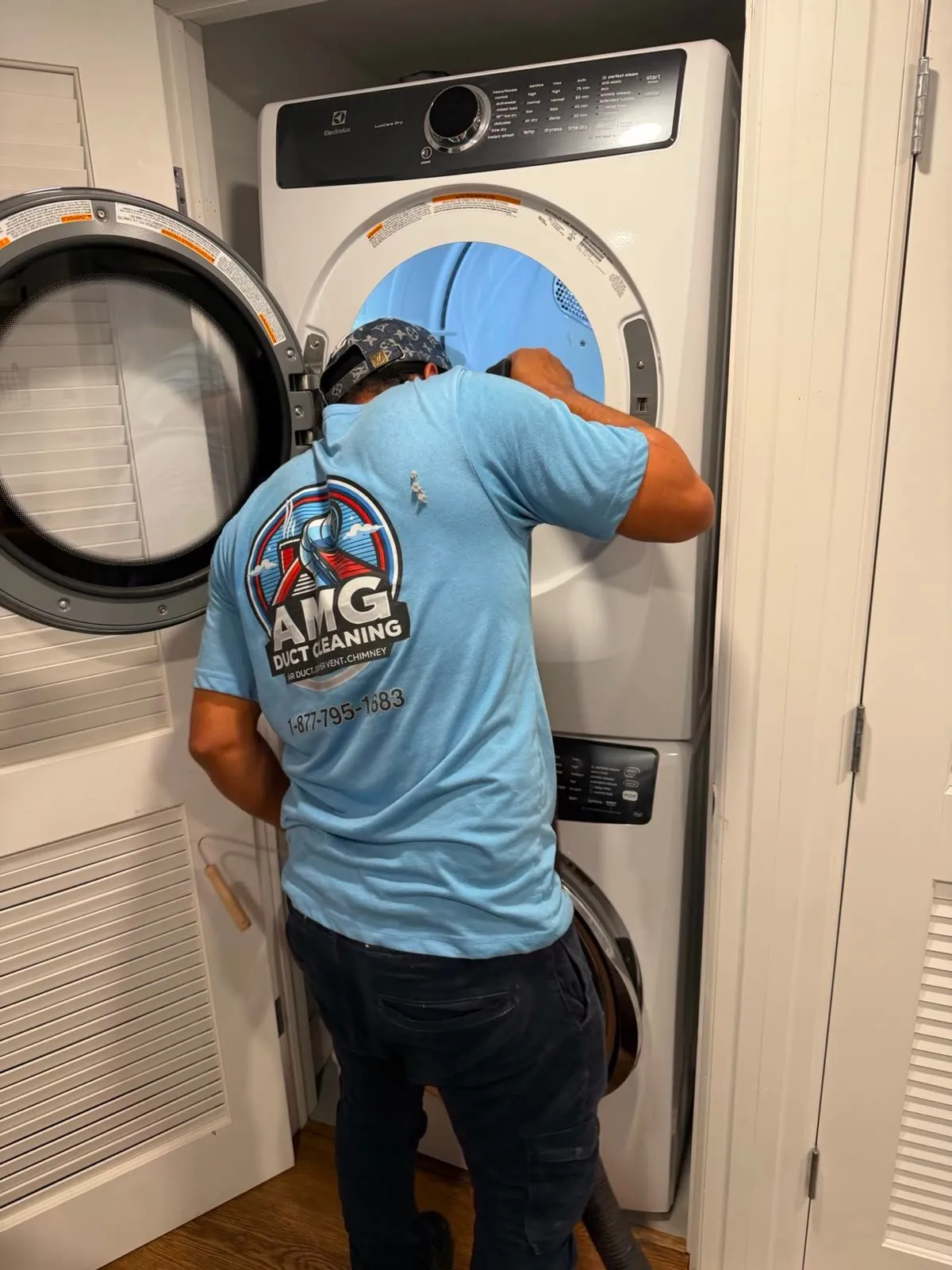
Set the interval from the run, not the calendar. A basement run with two elbows in a Randolph colonial and a second floor run crossing an attic are different jobs, and the towel test tells you which way yours is drifting. The U.S. Fire Administration reports that failure to clean was the leading factor, at 31 percent, in home clothes dryer fires from 2018 to 2020, so the interval is worth setting rather than guessing at. AMG's dryer vent cleaning covers the full run from the transition hose behind the drum to the termination cap, and the technician can tell you where your own home falls.