Most homeowners do not think about their dryer vent until something goes wrong, clothes that take two cycles to dry, a laundry room that feels warmer than it should, or a burning smell that was not there before. By the time those signs show up, lint has been building inside the duct for a long while. Knowing roughly how often to have it cleared, and what shifts that timeline for your own home, keeps you ahead of the problem instead of reacting to it.
How often should a dryer vent be cleaned?
For most households, once a year is a reasonable baseline for dryer vent cleaning. That covers a typical family's laundry volume and a vent run of average length. It is a starting point rather than a rule that fits every home, because the right interval depends on how much laundry you do, how long and how crooked the run is, and what kind of house it passes through.
What changes the timeline for your home
A large household doing several loads a day builds up lint faster than one doing a couple of loads a week, and may want to move to a shorter interval. The physical layout of the vent matters as much. A run that takes a short, straight path to the outside clears lint more easily than one with several turns or a long horizontal leg, which is common in New Jersey homes where the laundry room sits in a basement or an interior space far from an exterior wall. Homes across Union County and Hudson County, where older housing stock often means laundry was added to a basement long after the house was built, tend to have longer and more indirect runs that hold lint at every bend.
Homes with pets also see faster buildup, since pet hair combines with lint and packs the duct more quickly than lint alone. If you use dryer sheets on every load, residue from them collects on the lint screen and the duct walls over time, adding to what a cleaning has to remove.
What are the signs the vent is due now?
A few signs mean it is time to have the run looked at regardless of when the last cleaning happened. Clothes coming out hotter than usual, or still damp after a full cycle, is one of the clearest, since it means air is not moving through the system the way it should. A burning smell while the dryer runs is another, and that one should not wait. If the exterior flap barely moves or stays shut while the dryer is running, airflow is restricted somewhere along the line. A laundry room that turns noticeably warmer or more humid than the rest of the house during a cycle is worth attention too.
Why does this matter beyond drying time?
A clogged vent does more than slow down laundry day. Restricted airflow makes the dryer work harder and run hotter, and packed lint inside an enclosed duct sits in the path of a heat source every time a cycle runs. The U.S. Fire Administration lists failure to clean as the leading factor in home clothes dryer fires, which puts this maintenance item in a different category from wiping down the machine. It is worth keeping on the calendar rather than pushing to another season.
How do I set a reminder that sticks?
Because a dryer vent is not something you watch fill the way you watch a lint screen load up, it is easy to let one year slip into two. Tying the job to something already on a schedule, like swapping HVAC filters at the start of a season or booking chimney cleaning before winter, makes it easier to remember than tracking it on its own. For a larger household or a long run, marking it every six months rather than every twelve is a fair adjustment once you know your own laundry habits and layout.
How does AMG handle a dryer vent cleaning?
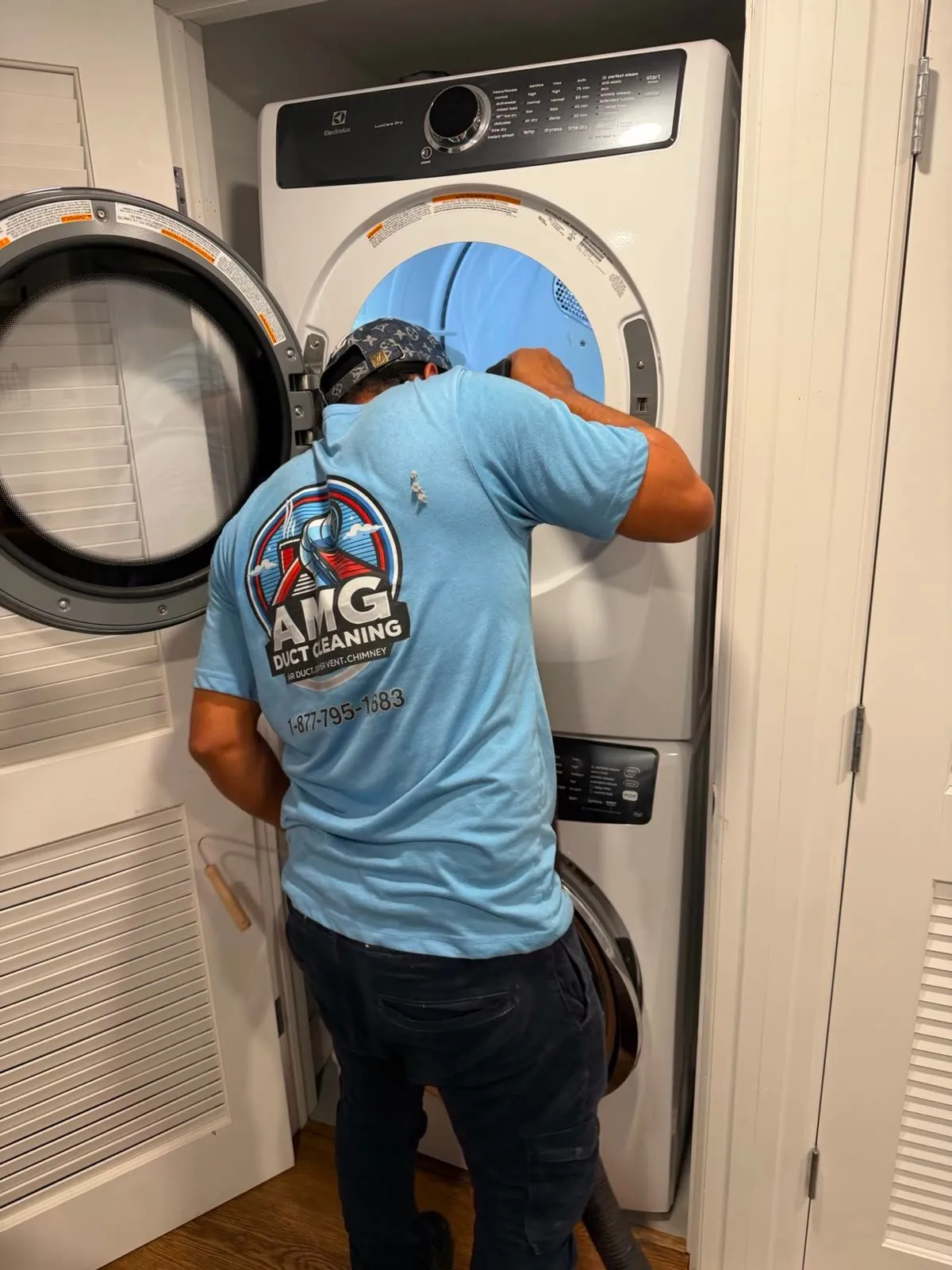
We clear the full length of the run, not only the stretch reachable from behind the dryer, so lint held at the bends and near the exterior hood comes out with everything else. If we find a fault in the vent itself during that work, damage, a joint that was never sealed, or a route that was put in wrong, we can take it up as dryer vent installation and explain the scope before any of it starts. What you get at the end of the visit is a clear path from the dryer connection to the termination cap and a damper flap that swings freely again, which is the state the run should be in every year.