A renovation changes the air in a house long before the paint dries. Sanding drywall, cutting trim, and running the HVAC system to keep a crew comfortable all put fine dust into motion, and if the return grilles were open and the blower was cycling during any part of the work, that dust had a straight path into the duct system. Homeowners in Elizabeth and across Union County often call after the crew leaves and the shelves have been wiped down, only to find the ducts carried a heavier load than the visible surfaces ever did.
Why renovation dust ends up in the ductwork
A return grille does its job by pulling room air toward the blower, and it does not know the difference between ordinary household dust and the fine gray powder that drywall sanding produces. Sawdust and joint compound dust are made up of particles small enough to slip past a standard filter, especially once that filter is already partly loaded from earlier stages of the project. If a plastic sheet or a taped-off vent kept the return closed during the messiest cutting and sanding, the system was spared a good part of the load. If it ran freely, the return duct, the blower housing, and everything downstream picked up dust with every cycle.
What that dust does to the blower, coil, and filter
The blower wheel is usually the first place a heavy dust load shows up. A coating of fine drywall dust on the fan blades reduces the volume of air it can move, and an uneven coating can throw the wheel out of balance, which shows up as a new hum or a mild vibration at the unit. Past the blower, the coil takes the next hit. A film of dust on the coil fins acts like a layer of insulation, cutting into the heat transfer the coil is built to do, so the system works harder to reach the same temperature. The filter is doing what it is supposed to do when it loads up fast during a renovation, but a filter that goes from clean to visibly gray in a matter of days is telling you the duct system upstream is also carrying more than it usually does.
Signs the duct system took a real load
A few patterns point at the ducts rather than just the rooms. Dust that drifts back onto wiped-down surfaces within a day or two, even with no active work going on, often means it is still working its way out of the registers. A fine grit felt at a register when you run a finger across it, rather than the softer dust found on a shelf, is a strong indicator that construction debris, not household dust, is the source. A musty or chalky smell when the system first kicks on after weeks of renovation work can mean debris trapped some moisture along the way, which is worth mentioning to a technician rather than covering with an air freshener.
Why the order of operations matters
Timing the cleaning matters as much as doing it. Scheduling Air Duct Cleaning too early, while sanding or painting is still underway, means the crew is cleaning a system that is about to get dirty again. The better sequence is to wait until the dust-producing work on the punch list is finished, the floors are swept, and the painters are done, but before furniture, rugs, and belongings move back in. That window gives a technician full access to registers and returns without working around boxes or furniture pushed against a wall, and it means the household starts using the space with air that has already had the renovation debris pulled out of the path it travels every time the system runs.
What a post-renovation duct cleaning covers
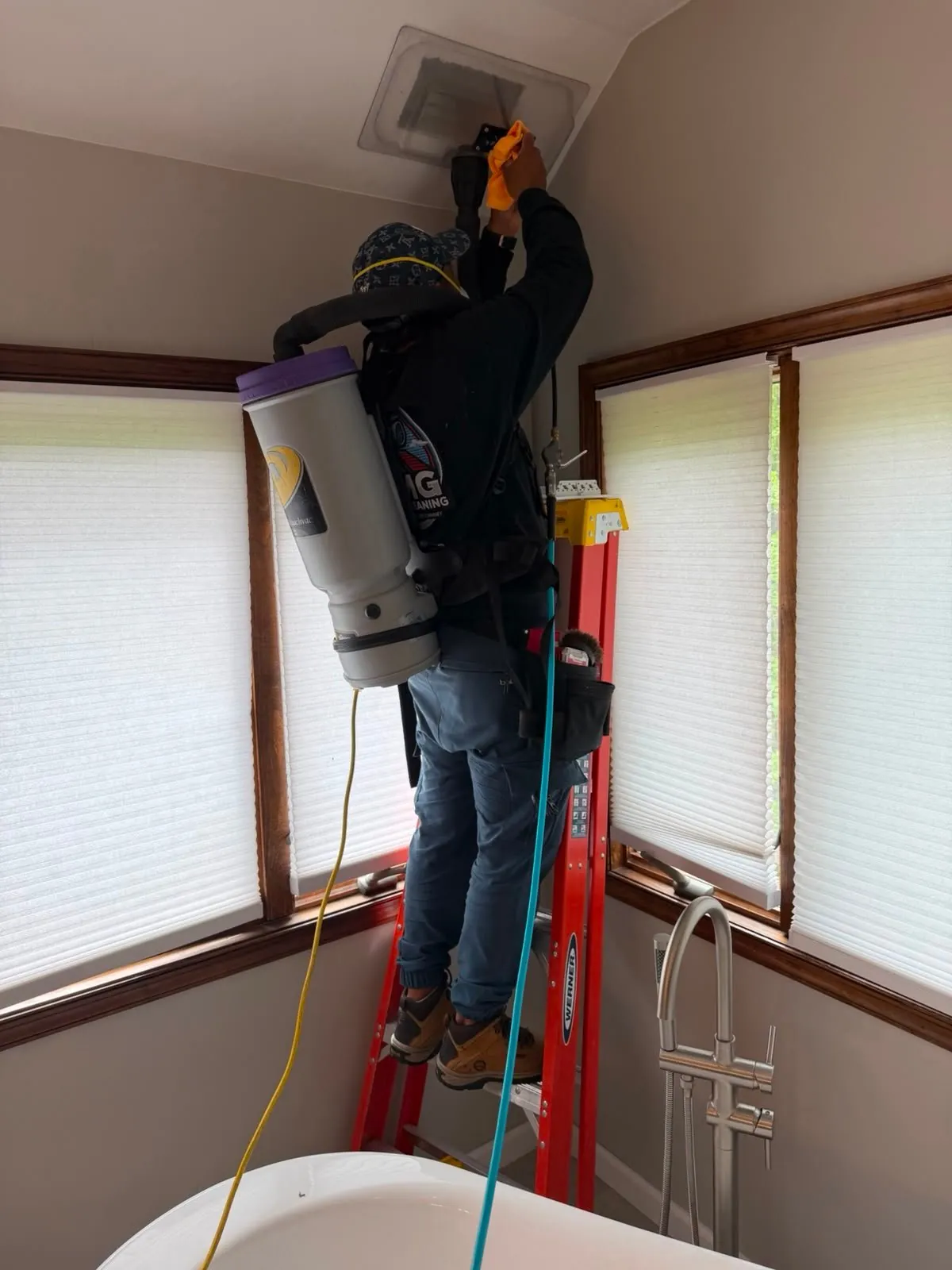
A cleaning after a renovation follows the same run of ductwork as a routine visit, but the technician is watching for a few extra things along the way. Heavy dust settled in horizontal runs and at elbows gets pulled loose and vacuumed out rather than just brushed further along. Connections and joints get a look too, since foot traffic, ladders, and tools moved through a work zone sometimes knock a duct loose or crush a flexible run without anyone noticing at the time. If that turns up, Air Duct Repair is the separate step that follows, addressed and priced on its own before it gets folded into the cleaning. Once the system is clear, some households in Essex County add HVAC UV Light Installation as another layer inside the equipment, though a UV lamp works alongside filtration and moisture control rather than replacing either one.
Duct cleaning removes the dust and debris that built up during the work. It does not treat allergies or any other condition, and it will not undo dust that settled on furniture, in carpets, or inside cabinets elsewhere in the house. What it does address is the load sitting inside the path that conditioned air travels every time the system runs, which is the part of a renovation cleanup that nobody can reach with a vacuum and a rag.
The EPA notes that duct cleaning is one piece of good indoor air quality rather than a full answer on its own, and that holds true after a renovation as much as any other time. Clearing the ducts is the step that gets the system back to moving clean air instead of recirculating the last of a job the crew already finished.