Most homeowners do not think about their dryer vent until something feels off. Unlike a leaky faucet or a squeaky door, a clogged dryer vent builds up slowly, so the warning signs are easy to miss at first. Catching them early matters, both for how well your dryer works and for the safety of your home.
Your clothes take longer to dry than they used to
This is usually the first sign homeowners notice. A load that used to finish in one cycle now takes a second run, or clothes come out warm but still damp at the seams and in pockets. When lint and debris build up inside the vent, the hot, moist air from the dryer has a harder time escaping outside, so the machine has to work longer to do the same job.
The dryer or the laundry room feels unusually hot
Touch the outside of the dryer during a cycle. If it feels hotter than usual, or the laundry room itself feels warm and a little humid even with the door closed, that heat and moisture are not making it outside where they belong. Instead, they are backing up into the room and into the machine.
You notice a burning or musty smell
A burning smell near the dryer should never be ignored. Lint is highly flammable, and when airflow is restricted, the dryer runs hotter than it is designed to, which can overheat trapped lint inside the vent. A musty smell is a different warning sign, pointing to moisture sitting inside the vent instead of escaping outside, which can lead to mold given enough time.
Lint shows up where it should not
Check behind and around the dryer for stray lint that has worked its way out of the vent connection. Outside, look at the exterior vent hood for lint collecting around the opening. Either one is a sign that lint is not making it all the way through the vent and out of the house the way it should.
The outside vent flap barely moves
Step outside while a load is running and watch the exterior vent flap. A clear vent pushes it open with a steady, noticeable flow of warm air. If the flap barely moves, or only opens partway, airflow is being blocked somewhere between the dryer and the outside wall.
Your energy bills have crept up
A dryer fighting against a clogged vent has to run longer, and sometimes at a higher heat setting, to get the same load dry. That extra run time uses more electricity or gas with every load, and it tends to happen gradually enough that most homeowners do not connect it to the vent at all. If your laundry habits have not changed but your utility costs have crept up, a restricted vent is worth ruling out.
Why are New Jersey homes prone to clogged vents?
Many New Jersey homes, including classic colonials and cape cods found in towns like Morristown, Parsippany, and Ridgewood, have dryers set up in basements or interior laundry rooms. That means the vent often has to travel a longer path, through walls, ceilings, or even up through an attic, before it reaches the outside. Longer runs with more bends give lint more places to settle along the way.
Older homes are also more likely to still have flexible foil or vinyl accordion style venting instead of smooth rigid duct. The ridges in that kind of venting catch lint far more easily, which is part of why some homes seem to clog faster than others even with similar laundry habits.
What should you do when you notice these signs?
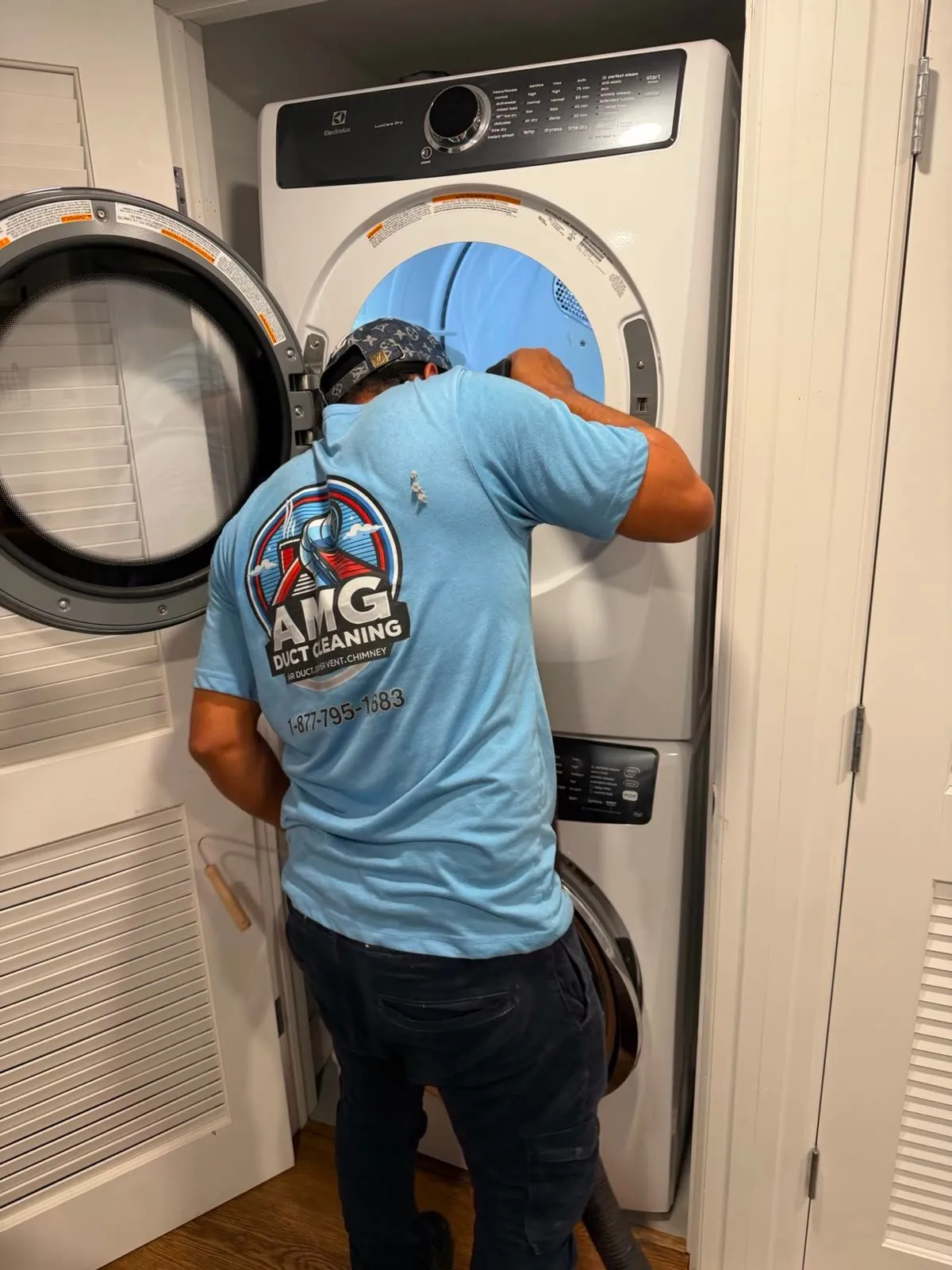
If you are seeing one or more of these signs, do not wait for the situation to get worse. Cleaning out the lint trap before every load is important, but it only catches a small part of the lint that a dryer produces. The rest travels down the vent itself, and that is the part most homeowners cannot see or reach. A full dryer vent cleaning clears the entire run, not only the section you can reach by hand, and a technician can check the exterior vent hood and the connection points while the machine is pulled out.
The lint trap catches a fraction of what a dryer sheds. The rest lands somewhere in the run. The U.S. Fire Administration reports that failure to clean was the leading factor, at 31 percent, in home clothes dryer fires from 2018 to 2020, which is the plainest argument for reading a slow cycle as information rather than an annoyance. AMG's dryer vent cleaning takes the run from the transition hose behind the machine out to the termination cap, and checks that the damper flap swings freely before the crew leaves a house in Morris County.