A dryer vent can be cleaned from outside, and that pass does real work on the last stretch of duct near the termination hood. What it does not reach is the stretch that clogs first: the elbow directly behind the dryer, where the airstream makes its first turn and lint drops out of the moving air before it ever gets close to the exterior wall. A rod and brush worked in from outside rarely travels the full length of a typical run, especially one with two or three bends, so the packed section right behind the machine is often left untouched while the outside of the vent looks clear.
Why the elbow behind the dryer clogs first
Lint rides out of the dryer on warm, moist air moving at a decent speed. The first bend in the run is where that speed drops the most, because the air has to change direction before it has traveled far enough to slow down on its own. Lint that was suspended in the airstream settles out at that turn and sticks to the metal, and each load adds another thin layer on top of the last one. By the time a homeowner notices longer drying times, that first elbow is often the most restricted point in the whole run, well before the straight section that leads to the hood.
What a rod and brush reach from each end
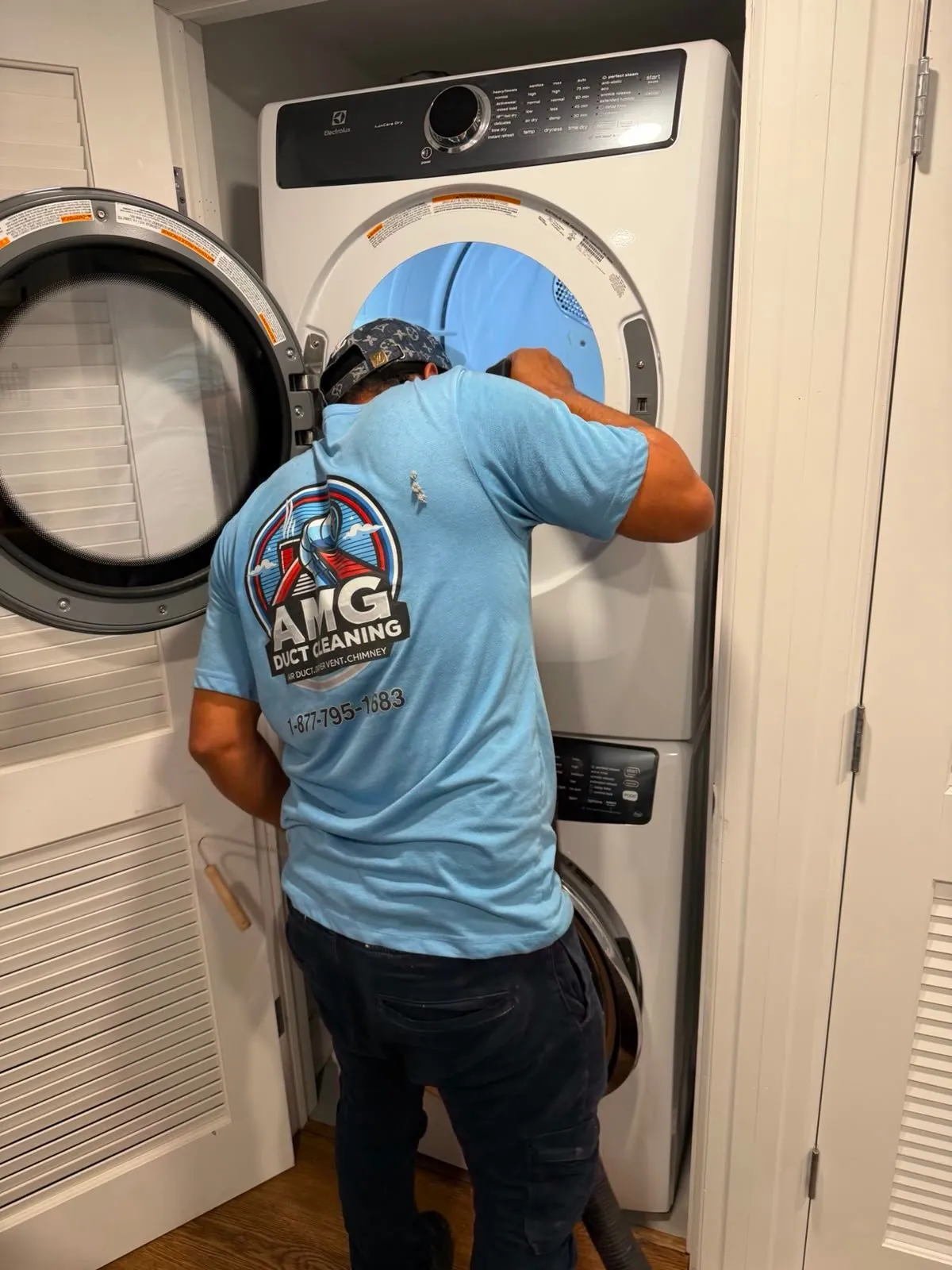
A thorough cleaning works the duct from both directions. From the exterior hood, a rod and rotary brush clear the straight run and the final turn near the termination cap, which is the section an outside-only pass does well. From the dryer connection inside the house, the same tools go in the other direction to reach the first elbow and any bends behind the machine that the outside brush cannot reach on a long or offset run. On a short, straight path, one direction might clear the whole thing. On anything with multiple turns, which describes most laundry setups built into a closet or a tight utility space, both ends have to be worked and the tools have to meet somewhere in the middle for the run to be fully open.
What an outside-only visit leaves behind the wall
An outside-only service can leave a house looking done. The hood is clear, air moves when the dryer runs, and from the yard everything appears normal. Behind the wall, the packed elbow keeps narrowing the path air has to travel, which means the dryer works harder and runs longer to finish a load even though the symptom that prompted the call, weak airflow at the hood, seems to have improved. Lint buildup in a dryer vent is a recognized fire hazard, which is part of why the full length of the run, not only the visible exterior section, is the point of a proper cleaning (CPSC: Overheated Clothes Dryers Can Cause Fires).
Bergen County closets and high side-wall hoods
This pattern shows up often in Bergen County houses where the dryer sits in a closet off a hallway or kitchen and the termination hood is mounted high on a side wall rather than at ground level. The high placement makes the exterior end easy to reach with a ladder and a rod, so a technician working from outside can clear that section without much trouble. The elbow behind the machine, tucked into a closet with little room to maneuver, takes more effort to reach and is the part most likely to get skipped if the visit only addresses what is accessible from the yard.
How a crew confirms the run is clear instead of assuming it
A proper visit does not stop once lint stops coming out of one end. After both directions have been worked, the technician runs the dryer and checks airflow at the hood, confirming that the exterior flap opens fully and stays open rather than fluttering against weak pressure. On runs with more than one bend, a camera or a direct look at each joint from the dryer connection confirms the first elbow is clear, not just assumed clear because the exterior end tested fine. That check is what separates a finished Dryer Vent Cleaning from a partial one, and it is worth asking about directly before the technician packs up.
What to ask before booking
Before scheduling, ask whether the visit works the duct from both the dryer connection and the exterior hood, or only from outside. Ask how many bends the run has and whether that changes the approach, since a straight path and a run with three turns are not the same job. If an inspection turns up a crushed section or a joint that has pulled apart behind the wall, that is a repair question separate from the cleaning itself, and in some cases a full Dryer Vent Installation is the more sensible fix than patching a run that keeps failing at the same point.