Laundry habits shift once the weather turns. Heavier sheets, towels, and winter coats mean longer dry cycles and more loads run back to back, and all of that warm, moist air has to move through the same vent run that sat mostly idle over the summer. A vent that handled light loads without trouble in August can start showing its limits once the cold settles in, which is why a check before the season gets busy catches trouble while it is still small and easy to fix.
How winter laundry changes what the vent handles
Wet towels, comforters, and outdoor gear hold more moisture than a load of t-shirts, and that moisture has to travel the full length of the vent before it clears the house. Longer cycles mean the motor and heating element run longer per load, and more loads per week mean the vent gets less time to dry out between uses. A run that was already narrowed by lint from the fall season carries less airflow into winter than it did coming out of summer, so the same clog that was a minor slowdown in September can turn into a real restriction by January.
What a pre-season check covers
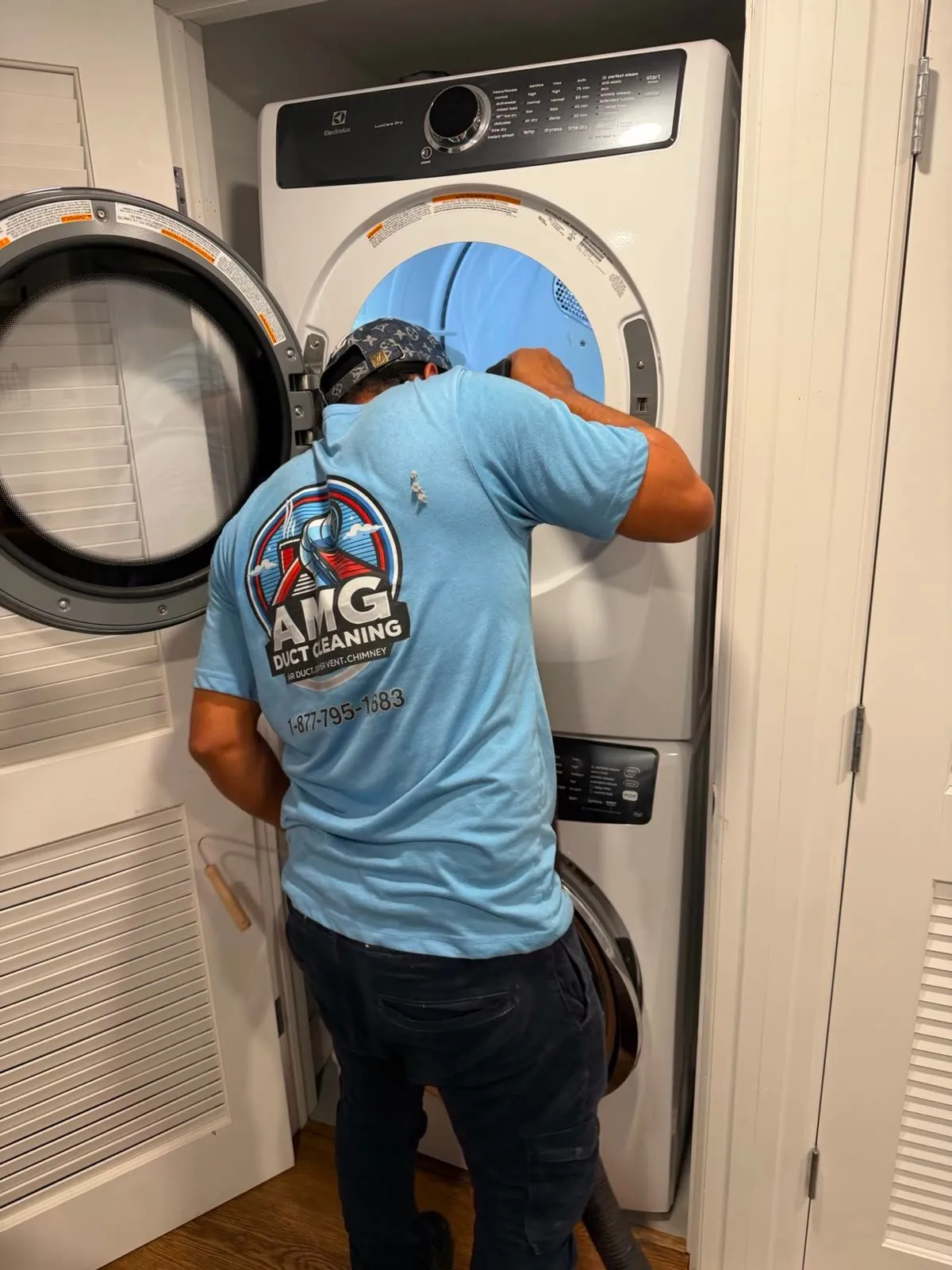
A proper check walks the entire path, not just the flexible section behind the machine. That means the connector hose, the wall or floor opening, the full duct run, and the exterior termination all get looked at and cleared as one system. Technicians also check the damper flap for free movement, since a flap that sticks open lets cold air and pests into the house, and a flap that sticks shut traps hot, moist air right where the fire risk is highest. Dryer Vent Cleaning covers all of this in one visit, and it is the service most homeowners book ahead of the season.
Long runs through a basement or crawl space
Homes with the dryer set up away from an exterior wall, common in split-levels and older colonials across Morris County and Union County, route the vent through a long horizontal run under the floor joists before it ever reaches outside. Lint settles fastest on the low side of a horizontal run and at every joint where the duct changes direction, and a long run gives it more distance and more joints to collect in. These runs are also the hardest to judge from inside the laundry room, since a homeowner pulling lint out of the trap has no way to see what has built up ten or fifteen feet down the line.
Cold walls, condensation, and packed lint
Warm, moist air moving through a duct that runs along an uninsulated exterior wall or through an unheated crawl space meets a cold surface, and some of that moisture condenses on the duct wall. Lint that would normally blow through as loose fluff sticks to that damp surface instead, and each load adds another thin layer until a section that once passed air freely is packed solid. This pattern shows up most in homes built before insulation standards tightened, where the vent run passes through spaces that were never meant to stay warm.
A termination cap on an exposed wall
The exterior hood where the vent exits the house takes the brunt of winter weather, and a cap mounted on an exposed north-facing wall sees the least sun and the most wind-driven moisture of any part of the system. Damp lint at the flap can freeze the hood shut overnight, and once the flap will not open, every load pushes hot, moist air back into the duct with nowhere to go. A restricted or blocked vent is one of the conditions fire safety agencies point to when they describe how clothes dryer fires start, which is one more reason the termination point deserves a direct look before the coldest stretch of the season arrives.
When a check turns up more than lint
Most pre-season visits end with a cleared run and a working damper, but some turn up a duct that has separated at a joint, crushed flat behind the machine, or was undersized when the house was built. Those conditions are not something a cleaning alone fixes, and they call for Dryer Vent Installation to replace the damaged or undersized section with a properly sized run and a solid termination. Flagging that during the pre-season check means the fix happens on your schedule now, rather than as an emergency call once the weather turns and the laundry room backs up with warm, humid air.
Getting a check on the calendar
A written estimate for a pre-season check accounts for the length of the run, how many turns it makes, and whether the termination sits somewhere hard to reach, such as a second-story wall or a roof cap. Booking before the holidays means the visit happens while the schedule is still open, rather than during the stretch when every household in Passaic County and beyond is running the dryer twice as often. A short call with the layout of your laundry setup, including where the machine sits and roughly how far the vent travels to the outside, is enough to get a visit on the books.