Ask where pet hair and dander end up in a forced air system, and the answer is simpler than most homeowners expect. They collect at the return grille, pile against the filter, and build up on the coil long before anything reaches the supply runs that carry air into each room. That is also where an Air Duct Cleaning visit should focus first, since the supply side usually stays cleaner than the return side ever does in a house with a dog or cat shedding into the air stream.
Why the return pulls harder than the supply pushes
A return grille is the single opening pulling air from a room, a hallway, sometimes an entire floor, back toward the air handler. Supply registers spread that same volume of air across several rooms, so the air moving through any one supply duct is a fraction of what passes through the return on its way back. Hair and dander ride that air stream, and the return is where the stream narrows and slows against the filter, so that is where the material drops out first and in the largest amounts.
The coil holds more than the filter catches
Even a well-fitted filter lets some of the finest material slip past the edges and through the fibers themselves, and what gets through lands on the coil sitting just behind it. A coil coated with hair and dander across its fins does not move air the way a clean coil does, and in cooling season that buildup also holds moisture, since the coil runs cold and damp for hours at a stretch while the system is working. A coil check is part of a full Air Duct Cleaning visit for exactly that reason, since it is often the one part of the system nobody has looked at in years.
Filter choice changes with a shedding household
A filter rated for a household without pets often runs too open for one with a shedding dog or a cat that grooms constantly, letting more material through than a tighter filter would. Moving up a step or two in MERV rating usually helps, but only if the furnace or air handler can handle the added resistance, since a filter too restrictive for the blower chokes airflow the same way a clogged one does. That tradeoff is worth raising with a technician rather than guessing at a filter aisle, because the right rating depends on the equipment behind it, not only on how much hair is in the house.
One return, a whole floor, in Morris County homes
Houses across Morris County and Essex County with two or three zones often run one return per floor rather than one return per room, which means every bedroom on that floor feeds hair and dander through a single grille and a single filter. That setup works fine for temperature control, but it concentrates what the return side has to catch, and a filter sized for one room's worth of shedding ends up handling a whole floor's worth instead. Checking the return grille and filter housing against what the household produces is part of setting a cleaning and filter schedule that fits the house rather than a generic chart.
What a cleaning changes and what it does not
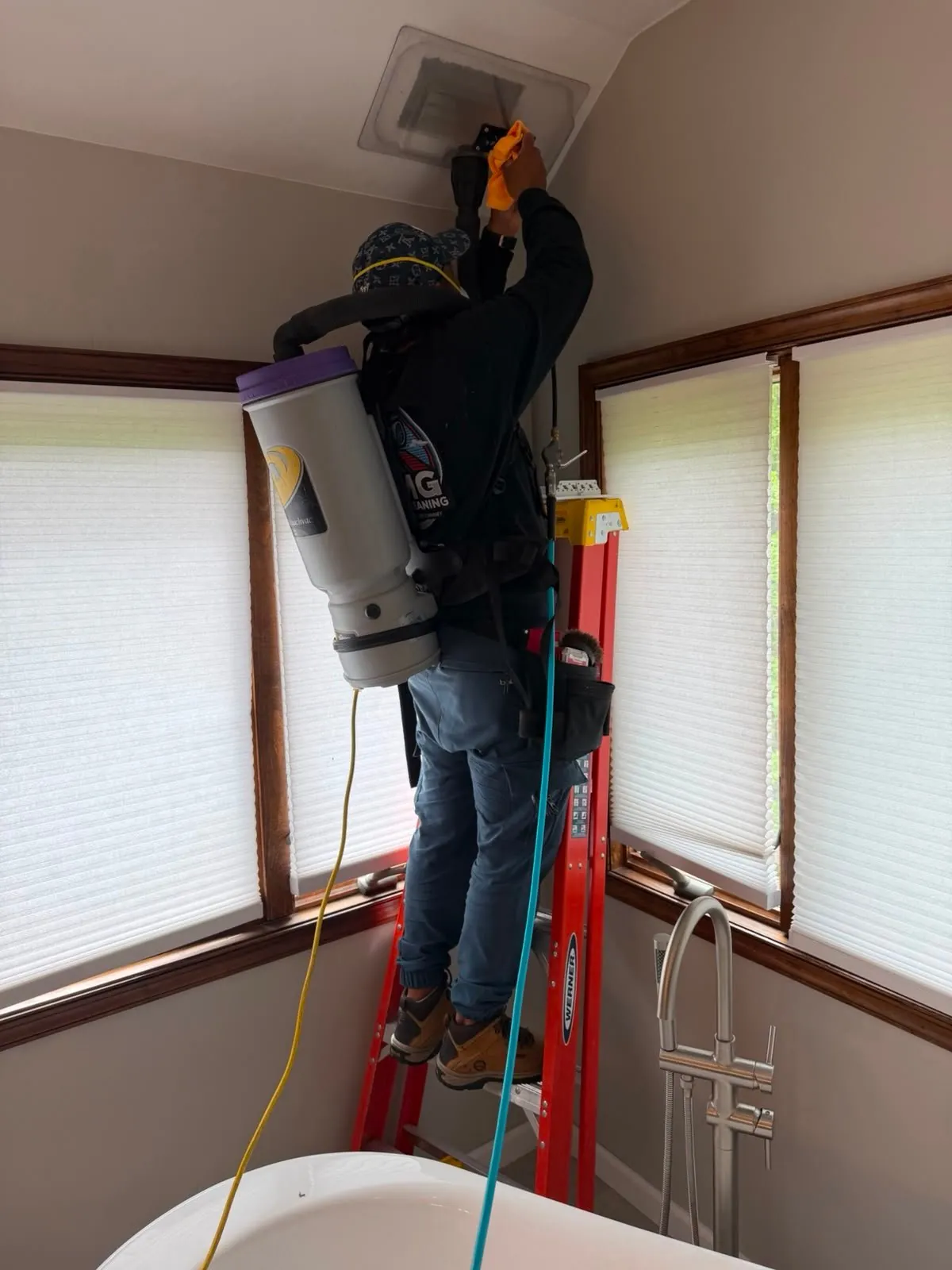
A cleaning clears hair and dander out of the return runs, off the coil, and out of the supply branches it can reach, and a house usually shows less dust settling on surfaces and less hair circulating through the air stream once that material is gone. What a cleaning does not do is treat a person's symptoms. Duct cleaning removes dust and debris from the system; it is not a medical treatment and does not cure or prevent any illness. A household dealing with a reaction to pet dander should talk with a physician about that separately from any decision about duct service.
When damage adds to the hair problem
If a return boot has come loose or a joint near the air handler has separated, hair and dust get pulled into wall cavities or a crawlspace instead of reaching the filter at all, and some of that material works its way back into the house through gaps elsewhere in the system. That is a repair issue, not a cleaning issue, and Air Duct Repair is what addresses a loose boot, a crushed return run, or a joint that needs resealing before the next cleaning can do its job in full.
Where UV light fits for a household with pets
An HVAC UV Light Installation adds a layer right at the coil, working against the organic buildup that collects there between cleanings. It is not a stand-in for cleaning or for the right filter, since a UV lamp does not pull hair out of the ductwork or stop dander from settling on a coil already coated with it. In a house with shedding pets, the lamp works alongside a filter matched to the household and a cleaning schedule that accounts for how fast that material builds up.
A household with pets does not necessarily need a different kind of cleaning. It needs a schedule matched to how much hair and dander the system handles, which a technician can set after seeing the return grille, the filter and the coil in person rather than guessing from a calendar alone.