Installing a dryer vent that performs reliably in Elizabeth, New Jersey starts with the right tools. Good planning and quality materials matter, but the tools you bring to the job often determine whether the installation is clean, safe, and long-lasting. This comprehensive guide covers the must-have and nice-to-have tools for different home types common in Elizabeth—from basements in older houses to laundry closets in newer townhomes—so you can work efficiently and protect your finishes. If you are just beginning to scope your project, review the core concepts of dryer vent installation while assembling a toolkit that matches your home’s construction.
Elizabeth’s weather and building styles introduce unique variables. Coastal winds and winter storms test exterior terminations and flashing. Masonry exteriors demand different cutting methods than vinyl siding. Tight utility closets call for careful planning to avoid crushing the transition duct. The tools below help you handle each of these scenarios while preserving safety and compliance.
Measuring and Layout Tools
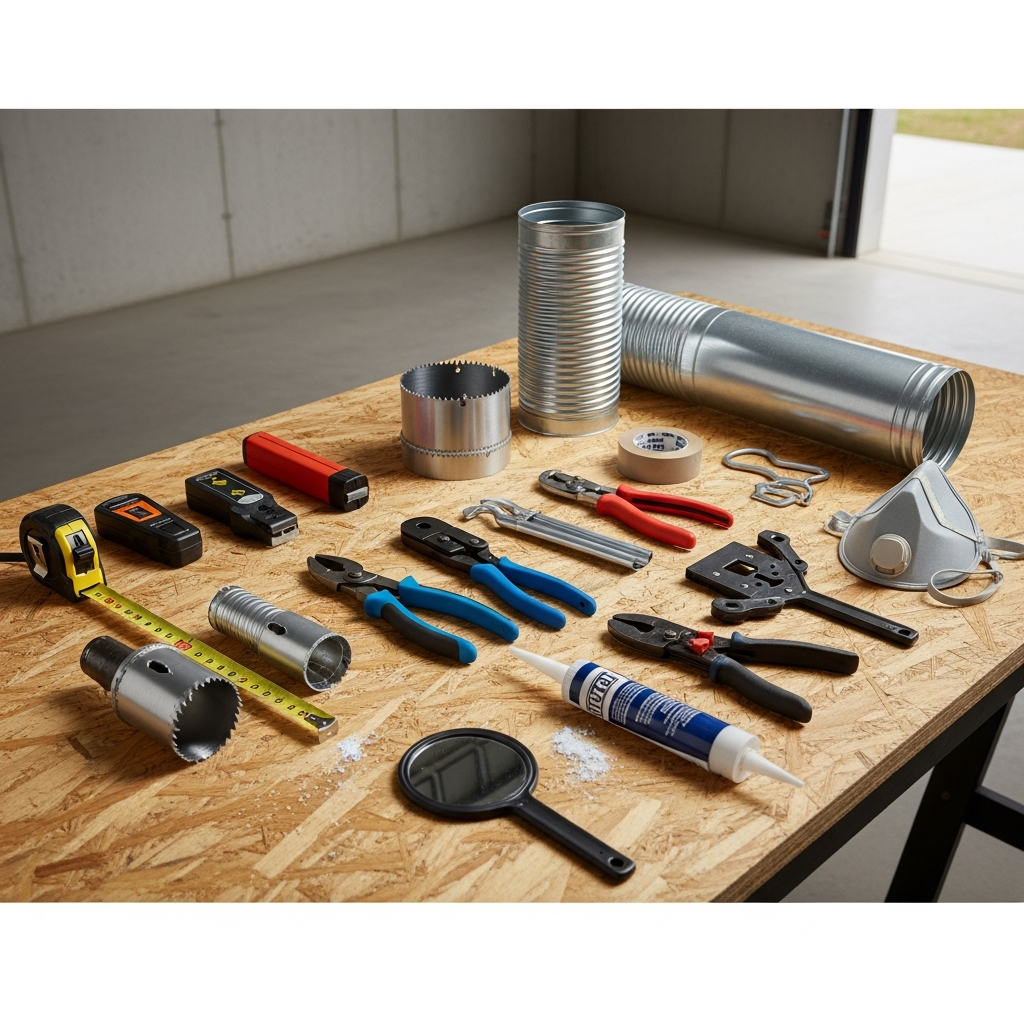
- Measuring tape and level: Accurate routing starts with precise measurements so ducts align, elbows mate properly, and the run slopes gently toward the outside.
- Stud finder: Identify studs, joists, and headers before drilling to avoid surprises and preserve structural integrity.
- Marking tools and templates: A simple cardboard template for a 4-inch opening helps you visualize clearances and avoid clashes with trim or utilities.
Cutting and Drilling Tools
- Drill/driver with pilot bits: Start with pilot holes to verify exit points and check for obstructions before committing to a full-size opening.
- Hole saws: Use a 4-1/4 inch or manufacturer-recommended size for clean, accurate cutouts through wood sheathing and siding.
- Masonry bits and core drills: For brick or block exteriors common in Elizabeth’s older neighborhoods, masonry-specific tools create neat openings with minimal vibration.
- Tin snips and aviation snips: Adjust rigid duct lengths, trim elbows, and fine-tune termination flanges.
- Oscillating multi-tool or fine-tooth saw: Useful for cutting siding or interior finishes with control near corners and tight spaces.
Assembly and Sealing Tools
- Foil-backed HVAC tape: Seal exterior joints on rigid metal duct; it withstands heat and maintains adhesion better than cloth tape.
- Crimping tool: If you need to create male ends for airflow-oriented joints, a crimper ensures a snug, consistent fit.
- Sheet metal screws for exterior mounting: Use where permitted on flanges or to secure mounting blocks; do not penetrate the interior of the airflow path.
- Caulk gun with exterior-grade sealant: Weatherproofs the termination flange and any siding or masonry transitions.
- Support straps and hangers: Prevent sagging on horizontal runs, preserving slope and interior smoothness for airflow.
Inspection and Safety Tools
- Inspection mirror or borescope: Verify that interior cavities are clear before drilling larger holes and confirm joint integrity after assembly.
- Non-contact voltage tester: Safety-check areas before cutting near concealed electrical lines.
- Gloves, safety glasses, and dust mask: Protect your hands, eyes, and lungs while cutting or drilling through various materials.
Specialty Tools for Tight or Complex Installs
- Recessed dryer box template and cutter: Helps create space behind the dryer to prevent crushing the transition duct in compact closets.
- Long-radius elbows: While technically a component, keeping a selection on hand is practical; they reduce resistance compared to short-radius bends.
- Venting snake or brush kit: Useful for cleaning after installation and during maintenance, ensuring you start with a debris-free system.
- Masonry sleeve or wall thimble: Facilitates clean, code-conscious penetrations through thick or layered walls.
How the Right Tools Improve Performance
The best tools deliver straight, true cuts and joints that align perfectly, which is fundamental for airflow. A precise hole saw avoids ragged edges that interfere with the termination flange. A crimping tool ensures joints are oriented in the airflow direction and seat fully. Support hangers keep ducts from sagging, preventing pockets where lint and condensation could accumulate. In Elizabeth’s climate, where warm, moist air from the dryer meets cold exterior walls in winter, these small details reduce the chance of condensation and mold.
Tools also protect your finishes. An oscillating multi-tool lets you undercut trim or carefully notch siding so the termination sits flush and seals neatly. Proper pilot drilling avoids expensive mistakes like hitting wiring or plumbing. Over the life of the installation, these decisions pay off in consistent performance and fewer service calls.
Route Planning with Tools in Mind
Start by mapping the shortest, straightest route to an exterior wall using your measuring tape, level, and stud finder. Mark a centerline for the duct and estimate total equivalent length, including deductions for elbows. If your path is too long, re-evaluate early. When a basement laundry needs to reach a back wall, long-radius elbows and careful support may make the difference between marginal and excellent airflow. For upper floors, a recessed dryer box may allow a gentler transition behind the machine and reduce the risk of crushing the hose.
Once you have a route, prepare your workspace. Lay down drop cloths, move the dryer, and gather your hole saws, snips, tape, and sealant within reach. A well-organized tool layout reduces mistakes and helps maintain focus on clean workmanship.
Executing Clean Cuts and Secure Joints
With the exit point chosen, drill a pilot hole to verify the exterior location. Next, use the correct hole saw or core bit from the outside to cut a clean opening. Dry fit the termination to confirm a flush seat, then apply exterior-grade sealant to the flange and fasten per manufacturer guidance. Inside, assemble rigid duct with the crimped ends pointing in the direction of airflow, sealing each external joint with foil-backed tape. Avoid internal screws, which collect lint. As you work, use the level and support hangers to maintain alignment and slope toward the exterior.
Behind the dryer, connect a listed transition duct cut to the shortest functional length, and secure with appropriate clamps. Slide the dryer into place carefully, watching that the transition maintains a gentle curve and does not kink or crush.
Testing and Adjusting with Simple Tools
After assembly, plug in the dryer and run a warm cycle. At the exterior, use a simple ribbon test—tape a light strip near the hood and verify that it flies outward under strong airflow. Listen for the damper to open fully and close smoothly when the cycle ends. If airflow is weak, re-check for crushed sections, misaligned elbows, or poorly seated joints. Your inspection mirror or borescope can help you find internal issues without disassembling the entire run.
Maintenance Tools You Will Use Again
Plan for ongoing care by keeping a vent brush kit and a compact vacuum accessory set nearby. Seasonal checks are especially valuable in Elizabeth, where leaves, windblown debris, and snow can affect terminations. A quick exterior inspection after storms and a semiannual brushing maintain peak performance and safety.
Common Tool-Related Mistakes to Avoid
- Using the wrong hole saw size: An undersized opening can crush the collar and restrict airflow.
- Skipping the crimper: Forcing uncrimped ends together leads to poor seating and leaks.
- Relying on cloth duct tape: Heat and time degrade it; use foil-backed HVAC tape rated for the application.
- Forgetting supports: Sagging ducts invite lint and condensation; hangers are not optional on long horizontals.
- Over-cutting interiors: Rushing with aggressive tools near finishes can mean patchwork and delays.
When Professional Tools and Expertise Are Worth It
Some projects warrant professional involvement, particularly when you face thick masonry, long interior runs, or penetrations through fire-resistance–rated assemblies. Pros bring specialized core drills, long-reach inspection cameras, and a stocked selection of elbows, couplings, and terminations to solve unexpected problems on the spot. They also document route lengths and verify airflow after completion. If you would rather leave the cutting, sealing, and testing to an expert, consider the benefits of professional dryer vent installation backed by the right tools and proven techniques.
FAQ
Q: Can I use a standard wood hole saw on brick? A: No. Use masonry bits or a core drill made for masonry to avoid damaging tools and the wall.
Q: Do I really need a crimping tool? A: Yes, if you are fabricating or adjusting joints. Properly crimped joints seat better, seal more reliably, and preserve airflow.
Q: What tape should I use on joints? A: Foil-backed HVAC tape rated for high temperature is appropriate for exterior joint sealing on dryer ducts.
Q: How do I know if my termination is sealed well enough for Elizabeth’s weather? A: Inspect the bead of exterior sealant around the flange for continuity, and verify that the hood is fastened securely into solid backing or masonry.
Q: What is the easiest way to test airflow? A: The ribbon test at the termination is quick and effective; you should feel a strong, steady stream of air and see the ribbon blow outward during a cycle.
Equip Yourself for Success
With a deliberate tool selection, you can create a clean, efficient dryer vent that stands up to Elizabeth’s climate and your household’s demands. Plan the route, cut accurately, seal correctly, and verify airflow before calling the job complete. If you decide the project calls for a specialist, choose a team that arrives with the right equipment and proven methods, and schedule your dryer vent installation for a hassle-free, reliable outcome.
