Keeping ducts clean and airflow strong is a year-round effort in Elizabeth, New Jersey, where weather swings from humid summers to brisk winters. This guide focuses on practical maintenance habits that prevent buildup, protect your HVAC equipment, and preserve indoor air quality. For those considering a professional partner to complement DIY routines, explore reputable air duct cleaning services while you implement the tips below to stretch results between deep cleanings.
Maintenance is more than occasional vacuuming of vents. It blends filter selection, humidity control, housekeeping habits, and periodic system checks. When you combine these elements, dust and allergens are captured at the source instead of circulating. You will also ensure your blower and coil do not shoulder extra load, which can lead to uneven temperatures and unnecessary wear. The following sections outline a pragmatic approach tailored to common Elizabeth home layouts and lifestyles.
Adopt a Filter Strategy That Fits Your Home
Filters are your first line of defense. Choose a filter with a MERV rating appropriate to your system and sensitivities. Households with pets or allergy concerns may prefer higher efficiency, while systems that struggle with airflow may require a moderate rating to balance capture and resistance. Replace filters on a consistent schedule—often every one to three months, with monthly checks during peak seasons. Write the change date on the frame so you do not lose track.
Do not wait for a filter to look dark before changing it. Dust can fill microscopic pores long before the surface appears dirty. If airflow weakens, rooms become stuffy, or you notice rising dust on furniture shortly after cleaning, inspect and replace the filter promptly.
Vacuum Vent Openings During Routine Cleaning
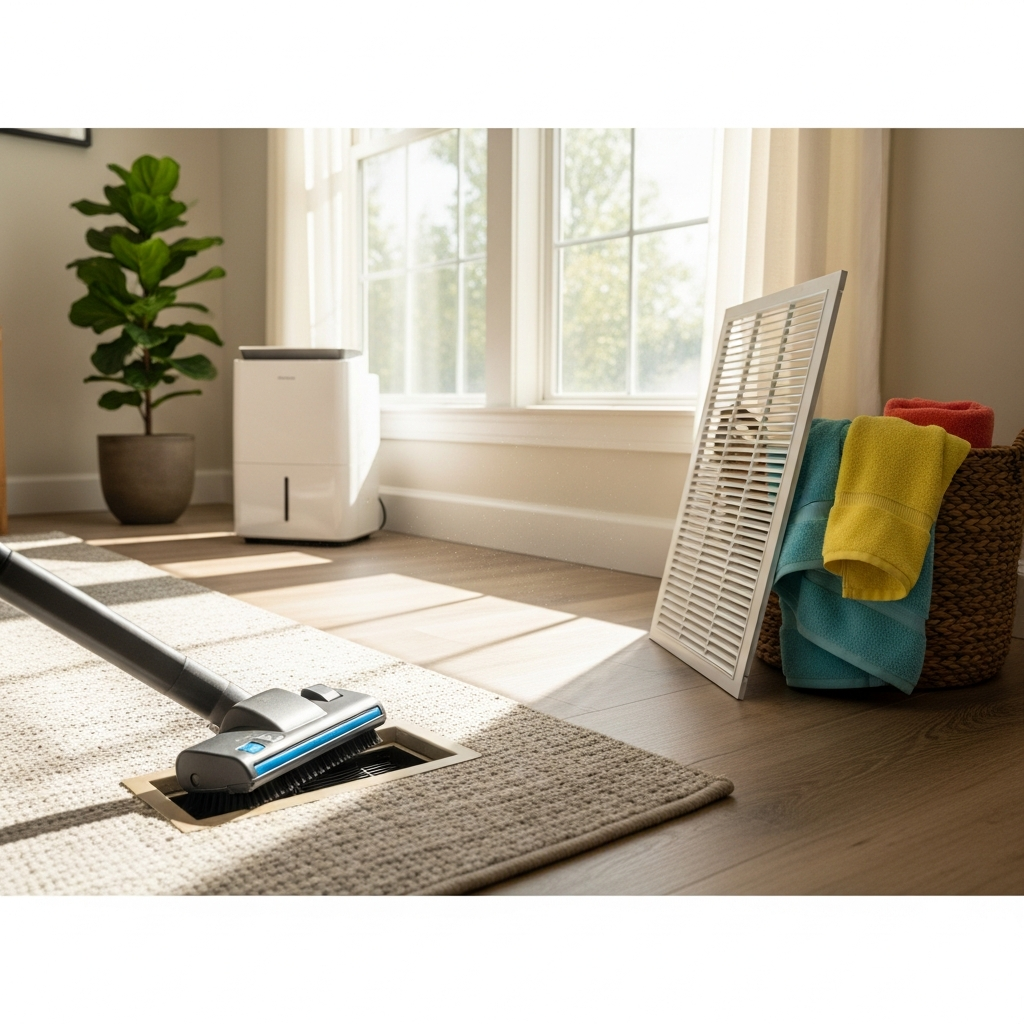
As part of weekly or biweekly housekeeping, use a vacuum with a soft brush to clean just inside each vent opening. Light passes capture fluff, pet hair, and settled dust before it migrates deeper. Wipe grilles with a damp microfiber cloth to remove smudges and sticky particles that can trap more dust. Mark high-traffic areas on a simple map of your home so you remember to give them extra attention.
If a register is on the floor, keep the surrounding area free of small objects that can tumble into the duct. A dropped toy or screw can rattle and obstruct airflow. For wall and ceiling supplies, a stable step stool and good lighting make quick work of the task, reducing the chance of missing corners.
Control Moisture to Prevent Dust Clumping and Odors
Elizabeth’s summer humidity can make dust cling to duct surfaces, creating a film that holds allergens and fosters musty smells. Aim for indoor relative humidity around 35% to 55%. Run bathroom and kitchen exhaust fans during and after showers or cooking. Use a whole-home dehumidifier or a portable unit in damp basements. Address roof, plumbing, or foundation leaks as soon as they are found; moisture intrusion quickly undermines cleanliness inside ducts.
A dry environment also helps your filter perform better. Moist fibers can collapse and restrict flow, and sticky dust is harder to capture. When you strike the right humidity balance, you support the entire cleaning strategy.
Seasonal Maintenance Checklist for Elizabeth Homes
Spring: Replace the air filter at the start of cooling season. Vacuum return grilles more often as pollen increases. Inspect for any debris left from winter projects or stored holiday decorations that could have shed into returns. Check for condensation risks as temperatures swing.
Summer: Keep dehumidification steady. Vacuum supply openings monthly to remove fine dust that collects during heavy AC use. Pay attention to musty odors that could indicate moisture in the evaporator area or duct insulation.
Fall: Replace the filter ahead of heating season. Vacuum and wipe grilles and the first two feet inside vents. Inspect easily accessible duct joints for loose or aging tape and note any sections that might need resealing to prevent basement dust migration.
Winter: With windows closed, indoor dust tends to recirculate. Inspect the filter monthly and consider an extra mid-season change. Keep vents unblocked by rugs, furniture, or curtains, which can reduce comfort and encourage dust to drop near openings.
Keep the Area Around Returns and the Air Handler Clean
Returns draw in room air, so the floors and surfaces nearby should be especially clean. Vacuum carpets and mop hard floors around returns more frequently than other areas. Avoid placing fabric furniture directly against a return grille; fabric fibers can shed and load the filter faster. In basements or utility closets, keep storage bins sealed and a few inches away from the air handler to reduce dust around the equipment.
Periodically wipe the outside of the furnace or air handler cabinet with a slightly damp cloth. This simple habit keeps dust from slipping past access panels when you open them for inspection. If you see rust, persistent moisture, or oily spots, address the underlying cause promptly to protect indoor air quality.
Upgrade Small Habits That Have a Big Impact
Change vacuum bags or empty canisters before they overfill, and use a vacuum with strong filtration so you are not blowing fine dust back into rooms. Brush and bathe pets regularly to reduce shedding. Place high-quality doormats at entries and encourage shoe removal to cut down on grit that becomes airborne. Launder bedding and curtains regularly; textiles trap dust and release it when disturbed by airflow.
Cooking generates aerosols that settle and travel through returns. Use your range hood while cooking and for several minutes afterward. The less grease and steam that drift through living areas, the less residue will land on grilles and duct surfaces.
Check for Air Leaks and Insulation Gaps
Small leaks at accessible duct joints can draw in dusty air from basements or attics. During a routine visual check, look for gaps or aging tape. Use UL-rated foil tape to seal minor seams you can reach safely. For larger issues—missing insulation, crushed flex duct, or disconnected runs—schedule a repair before dust pathways become chronic.
Insulation around ducts that pass through unconditioned spaces prevents condensation and maintains steady temperatures in the airstream. Even modest improvements here reduce the risk of musty odors and dust sticking to cooler surfaces.
Know When to Perform a Light DIY Clean
If you notice dust reappearing on surfaces soon after cleaning, a light DIY clean of vent openings and the accessible blower compartment (with power off) can refresh performance between deep services. Vacuum the first few feet of returns and supplies using a soft brush, and wipe vent rims. Replace the filter once you are finished so captured dust does not circulate.
Stop DIY efforts if you see signs of mold, vermin, or heavy construction debris deep in branches. These situations call for specialized tools and containment methods to avoid spreading contaminants into living spaces.
Coordinate Deep Cleaning with Life Events
Several milestones justify deeper attention: after renovations, when moving into a previously occupied home, or if household members develop new or worsening respiratory symptoms. Post-renovation fine dust is notorious for infiltrating ductwork, and a thorough service paired with filter upgrades will help your home reset to a cleaner baseline.
Similarly, if you begin caring for a new pet or start a hobby that creates dust—like woodworking or crafting—tighten your filter schedule and consider stepping up to a filter with better capture efficiency, provided your system can handle the airflow resistance.
Document Your Maintenance Plan
A written plan reduces guesswork. Create a simple calendar that lists filter changes, vacuuming of vents, humidity checks, and quick inspections of visible duct runs. Keep photos of duct conditions taken during seasonal checks; before-and-after visuals are helpful if you later consult a professional. Documentation also aids resale value by demonstrating care of the home’s mechanical system.
Label each grille’s room and location on a small map. This helps new household members contribute to maintenance and avoids missed vents in guest rooms, basements, or attic conversions that do not see daily traffic.
Partner with Professionals Strategically
Professional services bring negative-pressure systems, rotary brushes designed for ducts, and detailed inspections that many homeowners cannot replicate. Consider scheduling a professional deep clean every few years, or sooner for homes with significant dust challenges. Between visits, your maintenance routine preserves results and reduces the amount of time and disruption required for the next service.
If you want a benchmark for your home’s cleanliness, ask for before-and-after documentation and recommendations on filter choices and sealing opportunities. For reliable scheduling and clear scope, many residents compare options that include comprehensive air duct cleaning, then align future maintenance around the technician’s findings.
Frequently Asked Questions
Q: How often should I change filters in Elizabeth, NJ? A: Check monthly during peak summer and winter; replace every one to three months depending on dust levels, pets, and sensitivity to allergens.
Q: What MERV rating should I use? A: Choose the highest MERV your system can handle without excessive pressure drop. When in doubt, consult your HVAC manual or a technician to balance efficiency with airflow.
Q: Will duct maintenance reduce allergies? A: While no single step eliminates allergies, consistent filtering, moisture control, and surface cleaning reduce the burden of airborne irritants and can make symptoms more manageable.
Q: Can scented sprays improve duct smell? A: Scents mask odors but do not solve root causes. Focus on moisture control, filter changes, and cleaning. If odors persist, investigate the coil, drain pan, or insulation for issues.
Q: Are DIY duct cleaning tools from hardware stores safe? A: Use caution. Choose soft, non-metallic brushes and avoid spinning tools in flexible duct. When in doubt, clean only the accessible openings and hire a professional for deep runs.
Q: How do I know if I have duct leaks? A: Listen for whistling, feel for air movement at seams while the fan runs, and look for accumulated dust at joints. A smoke pencil or incense stick can reveal drafts in a still room.
Make Your Next Season the Cleanest Yet
Steady, simple habits protect your indoor air and comfort throughout Elizabeth’s changing seasons. With smart filter choices, moisture control, and routine cleaning, your ducts will stay cleaner and your system will breathe easier. If you are ready to combine diligent maintenance with a periodic professional reset, schedule help through a trusted provider of air duct cleaning and enjoy a fresher home with less effort.
