Duct Dust vs Dryer Vent Lint: Home Airflow Safety in Westfield, NJ
Most homeowners assume that dusty air coming from their vents and a slow-drying dryer are basically the same problem with different symptoms. They are not. In Westfield, NJ, these two airflow issues have separate causes, separate risks, and require separate fixes. Mixing them up means you could address the wrong system entirely, leaving a real hazard untouched while you wait for results that never come.
1. The Source of the Problem Is Completely Different
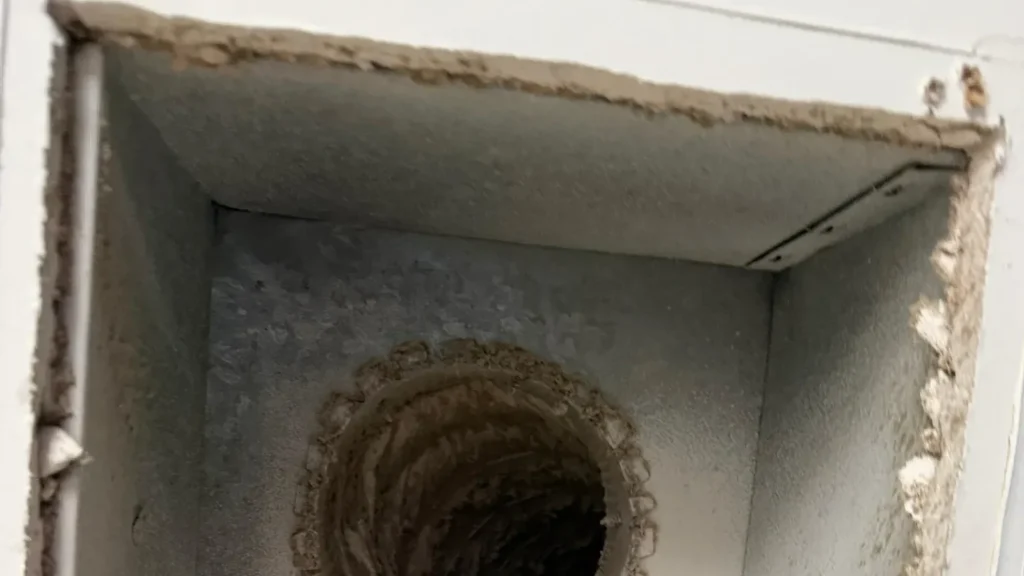
Dust blowing from your supply registers originates inside your HVAC ductwork, the branching network of metal or flex channels that distributes heated or cooled air throughout your home. Over months and years, particulates settle on duct walls, and when the blower kicks on, some of that buildup gets pushed into your living space. The full explanation of why HVAC systems blow dusty air walks through exactly how that cycle works.
Dryer vent lint, by contrast, never touches your HVAC system at all. It accumulates in a dedicated exhaust path that runs from the back of your dryer, through your laundry room wall, and terminates at an exterior vent cap. These are two entirely separate systems sharing nothing but the word “vent.” Diagnosing one when the other is the actual culprit wastes time and leaves a risk factor in place.
2. The Safety Stakes Are Not Equal
Duct dust is primarily an air quality and comfort concern. A heavily soiled duct system can contribute to more household dust on surfaces, a stale or musty odor when the system first starts up, and reduced airflow efficiency as buildup narrows passage diameter. These are real issues worth addressing, but they are not acute fire hazards.
A clogged dryer vent is a different category of problem. Lint is highly combustible, and when it accumulates in a restricted exhaust path, the combination of heat and reduced airflow creates conditions that have caused residential fires across the country. The U.S. Fire Administration has documented dryer fires as a recurring cause of home structure fires, and restricted venting is consistently identified as a leading contributing factor. This is not a problem to defer.
If you are noticing clothes that take two cycles to dry, a dryer cabinet that feels unusually hot to the touch, or a burning smell during operation, those are signals to stop using the appliance until the vent has been inspected and cleared.
3. The Symptoms Overlap More Than You’d Expect
Here is where homeowners most often get confused. Both a clogged dryer vent and dirty HVAC ducts can produce a dusty or musty smell inside the home. Both can make a room feel stuffy. Neither announces itself with a flashing warning light.
The key is to pay attention to when and where the symptom appears. A dusty smell that hits the moment your thermostat kicks the furnace or air conditioner on, and that comes from ceiling or wall registers, points toward the duct system. A burning or lint-like odor that appears during or right after a drying cycle, or a laundry room that feels warmer than the rest of the house, points toward the dryer exhaust path. For a deeper look at how to read duct-specific warning signs, see how to tell when your ducts need attention.
4. Westfield’s Older Housing Stock Affects Both Systems
Westfield’s residential neighborhoods are dominated by homes built between the 1920s and 1970s, Colonials, Tudors, and Cape Cods that give the town its character but also carry some predictable maintenance realities. Ductwork in these homes is often original or partially updated, with seams that have loosened over decades, insulation that has degraded, and interior surfaces that have accumulated multiple heating seasons’ worth of particulate. Union County’s humid summers and cold winters mean HVAC systems run hard in both directions, accelerating buildup.
If you want it handled correctly the first time, consider professional air duct cleaning and repair in elizabeth new jersey what to expect in Westfield.
Dryer vent configurations in older Westfield homes can be equally problematic. Laundry areas were frequently placed in basements or interior rooms during original construction, meaning vent runs are long, sometimes exceed recommended maximum lengths, and may include multiple elbows that trap lint at every bend. Rigid metal ducting, the preferred material, was not always used; some older installations used plastic or foil accordion flex that crushes easily and creates lint-catching ridges. If your home was built before the 1980s and the dryer vent has never been inspected, the run may not meet current safety guidance regardless of how clean it looks from the outside.
5. How Each System Gets Cleaned (and Why DIY Has Limits)
HVAC duct cleaning involves accessing the duct system through registers and the air handler, using high-powered negative pressure equipment combined with agitation tools to dislodge and capture accumulated debris. The process requires reaching every branch of the system, not just the visible register covers. Wiping a register with a cloth or blowing compressed air into a vent opening does not clean the duct interior and can actually push settled debris further into the system.
Dryer vent cleaning uses a different set of tools: rotating brush systems that travel the length of the exhaust run and break up compacted lint, combined with a vacuum to capture what’s dislodged. A homeowner with a basic brush kit can sometimes clear a short, straight run, but longer runs with multiple bends, or vents that exit through a roof rather than a side wall, require professional equipment to clean thoroughly. An incomplete cleaning that leaves a plug of lint midway through a long run provides little safety benefit.
Both services benefit from a professional inspection that checks not just cleanliness but also structural integrity: disconnected duct sections, crushed flex runs, damaged vent caps, and bird nests in exterior terminations are all findings that a cleaning visit can surface.
6. The Inspection Checklist Differs by System
When a technician evaluates your HVAC ductwork, they are looking at airflow balance across registers, visible debris at access points, the condition of flex duct connections, signs of moisture intrusion that could indicate a condensation or leak problem, and whether the return-air side of the system is pulling adequate volume. A dirty filter that has been left too long is often the first thing flagged, because a collapsed or heavily loaded filter restricts airflow and causes the system to work harder, pulling more debris through any gaps in the duct seams.
A dryer vent inspection focuses on different checkpoints: the length and configuration of the run, the material used (rigid metal preferred, flexible metal acceptable, plastic not acceptable), the condition of the exterior termination cap and its damper flap, and whether the vent is clear of obstructions end to end. Technicians also check that the vent is properly connected at the dryer collar, since a disconnected section inside a wall cavity can exhaust hot, lint-laden air directly into the building structure.
For questions to bring to any professional inspection, this guide on what to ask a duct cleaning professional covers the key topics worth raising before work begins.
7. Frequency Recommendations Are Different for Each
HVAC duct cleaning is generally recommended every three to five years for a typical residential home, with shorter intervals if the home has pets that shed heavily, recent renovation work that generated significant dust, or occupants with respiratory sensitivities. Homes in Westfield that run their systems year-round, heating in winter, cooling through NJ’s humid summers, tend to accumulate particulate faster than homes in milder climates.
Many Westfield homeowners rely on expert air duct cleaning and repair in elizabeth new jersey what to expect in Westfield for exactly this.
Dryer vent cleaning carries a more urgent recommended frequency: at least once per year for a household that does laundry regularly. Families with children, or anyone running multiple loads per week, may benefit from twice-yearly service. The lint accumulation rate depends on load volume, fabric type, and vent run length. A longer, more complex run fills faster than a short, straight one. Annual service is a reasonable baseline; the symptoms described in item 3 above are signals to schedule sooner regardless of when the last cleaning occurred.
8. One Cleaning Does Not Substitute for the Other
This point is worth stating plainly because the confusion is common: having your air ducts cleaned does not clean your dryer vent, and having your dryer vent cleaned does not address your HVAC ductwork. They are separate systems, separate service visits, and separate line items. A home that needs both still needs both after only one has been done.
The good news is that bundling both services in a single visit is efficient. A technician already in your home with equipment can inspect and service both systems without the overhead of a second mobilization. If you are scheduling one, it is worth asking whether the other is due as well. AMG Duct Cleaning handles both air duct cleaning and dryer vent cleaning for Westfield homeowners, so a single appointment can cover both systems. See why Westfield homes tend to accumulate dust faster than average for context on why staying current on both services matters in this specific market.
9. What to Do If You’re Unsure Which System Is the Problem
If you cannot clearly attribute a symptom to one system or the other, the practical answer is to have both inspected. An inspection is low-cost relative to the service itself, and it gives you a factual baseline rather than a guess. A technician can tell you whether the duct system shows meaningful buildup, whether the dryer vent has a restriction, and whether either issue is urgent or can be scheduled at your convenience.
For homeowners who want to understand the cost factors involved before scheduling, this breakdown of what affects duct cleaning pricing in NJ explains the variables that influence what you can expect to pay, without specific figures, so you can compare quotes with context. And if the symptom you’re tracking is specifically a dusty or stale smell from your heating and cooling vents, the guide to dusty HVAC startup in Westfield addresses that scenario in detail.
Frequently Asked Questions
Can a clogged dryer vent cause dust to come out of my HVAC registers?
No. The dryer exhaust system and your HVAC duct system are completely separate. A clogged dryer vent cannot push lint or dust into your heating and cooling registers. If dust is coming from your HVAC vents, the source is inside the duct system itself, not the dryer exhaust path.
How do I know if my dryer vent needs cleaning versus my air ducts?
Pay attention to timing and location. Dusty or stale air that appears when your thermostat activates and comes from ceiling or wall registers points to the HVAC duct system. A burning or lint-like smell during or after a dryer cycle, clothes that take longer than one cycle to dry, or a laundry room that runs unusually warm points to the dryer vent. When in doubt, have both inspected.
Is dryer vent cleaning something I can do myself in a Westfield home?
For a short, straight vent run, a homeowner brush kit can remove surface lint near the dryer connection. However, many Westfield homes have longer runs with multiple bends due to older floor plans that placed laundry areas away from exterior walls. Those configurations require professional equipment to clean thoroughly, and an incomplete cleaning that leaves a lint plug midway through the run provides limited safety benefit. A professional inspection will tell you what your specific run requires.
Both your HVAC ductwork and your dryer exhaust path deserve attention on a regular schedule. If you’re a Westfield homeowner who hasn’t had either system inspected recently, reach out to AMG Duct Cleaning for a professional dryer vent and duct inspection. We serve Westfield and surrounding Union County communities, and a free estimate is available to get you started.
