Clean, efficient air circulation is essential for comfort and health in Elizabeth, New Jersey, where hot, humid summers and chilly winters keep HVAC systems busy. This homeowner’s guide explains what air duct cleaning involves, why it matters, how to plan the work, and how to maintain results for the long term. If you are considering help from specialists as you learn the basics, you can review trusted air duct cleaning services to match professional options with your goals.
Air duct cleaning is more than vacuuming dust. It is a coordinated process that looks at the whole air pathway: returns where air enters the system, filters that capture particles, the blower and coil that condition air, and supply ducts that deliver it back to rooms. When these elements are clean and sealed, you enjoy better airflow, fewer allergens, and more stable temperatures across the home. This guide provides clarity for Elizabeth homeowners navigating older basements, mixed duct materials, and seasonal humidity swings.
Why Air Duct Cleaning Matters
Dust, dander, and pollen constantly settle on duct surfaces. In humid conditions, these particles can form thin films that trap new dust and encourage musty odors. Clean ducts reduce the amount of irritants circulating with each heating or cooling cycle. When combined with regular filter changes and moisture control, cleaning also helps your HVAC work closer to its design efficiency, reducing strain on the blower and improving comfort in distant rooms.
In Elizabeth’s diverse housing stock, you may encounter long flexible runs, older metal trunks, or a combination of both. Each type collects dust differently and requires a tailored approach. Understanding your system’s layout makes every step—inspection, cleaning, and maintenance—more effective.
Understanding Your System: Returns, Supplies, and the Air Handler
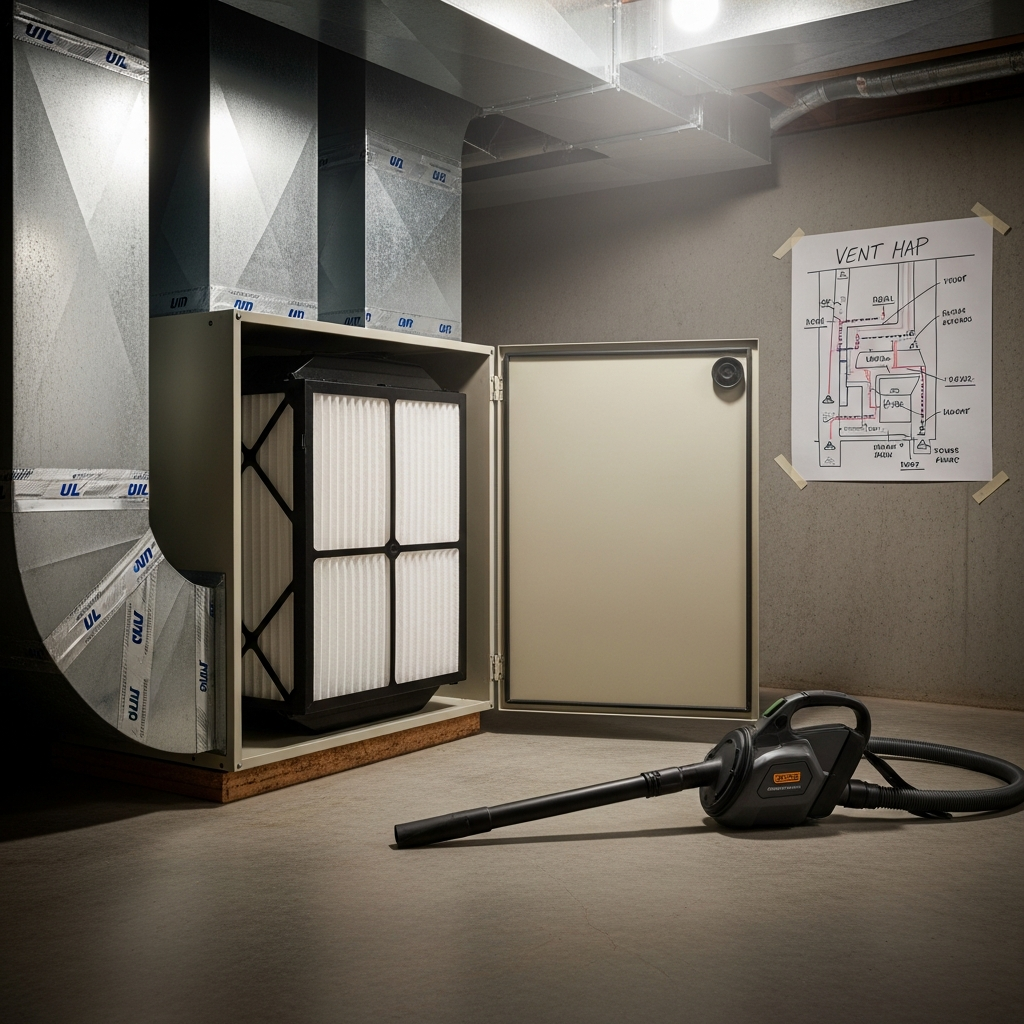
Returns pull air from rooms back to the air handler or furnace, where it is filtered and conditioned. Returns usually have larger grilles and may be located in hallways, living rooms, or stair landings. Supplies push conditioned air into rooms and are smaller and more numerous. The air handler, often in a basement or utility closet in Elizabeth homes, contains the blower and evaporator coil for cooling, with a furnace or heating element for winter months.
Knowing the difference between these components helps you target cleaning efforts efficiently. Returns often host the heaviest accumulations of lint and dust, while supplies tend to collect lighter films. Accessible panels around the blower compartment can also gather debris that should be removed carefully with power off.
Planning: DIY, Professional Help, or a Blend
Many homeowners successfully perform surface-level cleaning and light vacuuming inside vent openings, while leaving deep runs, delicate coils, and complex issues to professionals. Consider your comfort with basic tools, the accessibility of duct runs, and any red flags such as odors, moisture, or signs of pests. A blended plan—DIY for grilles and first few feet of ducts, professional service for trunks and inaccessible branches—often delivers the best results with minimal disruption.
If you have recently completed renovations, welcomed pets, or noticed renewed dust shortly after housekeeping, place duct cleaning and filter upgrades near the top of your to-do list. Coordinating efforts after big life changes keeps air quality on track and prevents dust from layering into stubborn films.
Step-by-Step Overview of a Thoughtful Cleaning
Preparation: Shut off the thermostat and, if you will open panels, the breaker. Gather a HEPA or fine-filtration vacuum, soft brushes, screwdriver set, microfiber cloths, new filters, and painter’s tape for temporary sealing of vents not in use.
Vent Covers: Remove grilles, label their locations, and wash or wipe them thoroughly. Clean rims around openings to remove paint drips and dust traps.
Returns: Vacuum the first several feet using a soft-bristle brush. Draw the hose along the bottom and sides in overlapping passes. Avoid aggressive tools in flexible duct to prevent punctures.
Supplies: Vacuum accessible sections gently. Long, rigid runs can be inspected with a flashlight or mirror. Do not force tools around sharp elbows or fragile liners.
Blower Area: With power off, vacuum loose dust on flat, accessible surfaces around the blower housing. Avoid coils and wiring. If the evaporator coil appears matted or the drain pan is questionable, consult a professional.
Filter and Reassembly: Install a fresh filter, confirm airflow direction, and run the system for 10 to 15 minutes to verify quiet operation and consistent flow.
Elizabeth, NJ Specific Considerations
Seasonal humidity creates conditions for dust to cling and for musty odors to develop, especially where cold ducts pass through damp basements. Dehumidification, proper insulation, and well-sealed joints are crucial. In neighborhoods with heavy traffic, particulate infiltration may load filters faster; make inspections and filter changes more frequent during peak seasons.
Construction styles vary widely. Some older homes use panned returns or creative routing that can introduce dust from wall cavities or basements. During cleaning, look for these configurations and plan to seal unintended gaps with UL-rated foil tape where accessible.
Choosing Filters and Improving Airflow
Filters come in various efficiencies. Select the highest MERV that your system can handle without causing high static pressure. If rooms feel weak or whistling begins after a filter upgrade, balance protection with airflow by stepping down slightly or choosing a sturdier, low-resistance model. Replace filters every one to three months, with monthly checks during heavy use.
Keep vents unblocked. Furniture, area rugs, and curtains can reduce effective airflow and encourage dust to settle near grilles. In multi-story homes, pay attention to airflow balance; strategic damper adjustments or professional tuning can help even out temperatures.
Maintenance Habits That Preserve Results
Vacuum just inside each vent opening during regular housecleaning to capture surface dust before it migrates. Wipe grilles with a damp microfiber cloth. Keep basements tidy, and store items in sealed bins to limit dust near the air handler. Manage humidity within a comfortable range—typically 35% to 55%—to prevent dust clumping and odors.
Use kitchen and bathroom exhaust fans to control moisture and aerosols. If you start a dust-generating hobby or adopt a pet that sheds, plan for more frequent filter checks and occasional touch-up cleaning at vents and returns.
Common Problems and Practical Solutions
Whistling at vents: Check for paint buildup on rims, misaligned grilles, or overly dense filters. Tighten screws, clean edges, and consider a moderate filter to reduce pressure if needed.
Weak airflow in a room: Confirm the register damper is open, remove blockages, and inspect for kinked flex duct along accessible runs. If the problem spans multiple rooms, the restriction may be upstream in the trunk or a closed damper.
Musty odors: Look for moisture near the coil and drain pan, manage humidity, and insulate cold ducts in damp spaces. Persistent odors that appear only during AC use warrant professional evaluation.
Persistent dust: Check for filter bypass at the rack and for leaks at accessible joints. Improve housekeeping habits—entry mats, shoe removal, pet grooming—and empty vacuum canisters before they overfill.
When to Choose Professional Help
Call in experts if you suspect mold, see vermin evidence, notice disconnected or crushed ducts, or face strong odors that resist basic steps. Professionals can measure static pressure, scope long runs with cameras, and use negative-pressure equipment to capture debris without spreading it.
Consider a combined approach: maintain vents and filters yourself, then schedule a deep service every few years or after major renovations. Ask for before-and-after documentation and recommendations tailored to your home’s layout and climate conditions.
Budgeting Time and Effort, Not Just Money
Even though this guide does not discuss pricing, it is helpful to plan the time and energy your household can commit. A methodical DIY cleanup of grilles and the first few feet of ducts might take a weekend, while coordinating with professionals requires scheduling and a short home visit. Balance your calendar, comfort with tools, and the complexity of your duct system to choose the right mix.
Preparation pays off. Assemble tools, label vents, and keep a small notebook of observations. With a map and checklist, you will move quickly and avoid repeating steps or missing rooms.
Frequently Asked Questions
Q: How often should ducts be cleaned in Elizabeth, NJ? A: Many homes do well with a professional deep clean every three to five years, with annual inspections and routine filter changes. Renovations, pets, or allergy concerns may justify more frequent attention.
Q: Can I clean flexible duct safely? A: Yes, if you use soft, non-metallic brushes and avoid spinning tools. Do not press hard or try to force around sharp bends. Focus on accessible sections near vents and returns.
Q: Will cleaning ducts reduce energy use? A: It can help by preserving airflow, but the biggest gains come from pairing cleaning with proper filter selection, sealing leaks, and managing humidity to keep the system within design parameters.
Q: What if I smell a metallic or heated-dust odor? A: This is common at first startup after a long pause and should fade within a few hours. Persistent odors deserve inspection of the blower motor, wiring, or coil area by a technician.
Q: Is scented duct spray a good idea? A: No. Fragrances mask odors and can add residues. Address root causes—dust, moisture, airflow—and choose unscented, HVAC-safe cleaners only for nearby surfaces as needed.
Q: Should I seal all visible seams? A: Seal unintended leaks at reachable seams with UL-rated foil tape. Do not block designed airflow or vents. Major repairs should be performed by trained professionals.
Putting It All Together for a Cleaner Home
With a clear plan and consistent habits, Elizabeth homeowners can enjoy fresher air and steadier comfort all year. Start with inspection and filter choices, add careful DIY cleaning where safe, and call in help for deep, inaccessible runs or persistent problems. When you are ready to combine your routine with expert equipment and documentation, connect with local providers who deliver comprehensive air duct cleaning and set your home up for long-term success.
