Introduction: Leaky Ducts, Real Comfort Problems—What Elizabeth, NJ Homeowners Should Know
Air duct leaks quietly undermine comfort and indoor air quality by letting conditioned air escape into attics, basements, and crawlspaces while drawing dust and unfiltered air into your living spaces. In Elizabeth, New Jersey, where seasons swing from humid to frigid, these losses are magnified when your system works its hardest. This guide explains how to spot leaks, what drives repair complexity, and how to discuss scope with a professional so you get durable, documented results. If early checks reveal gaps at collars, loose seams, or crushed flexible ducts, consider prioritizing expert air duct repair to stop the leaks before they ripple into larger performance issues.
While your title suggests costs, this article focuses on the factors that influence the level of effort, materials, and planning required—without quoting specific dollar amounts. Understanding drivers of complexity helps you make informed choices and avoid repeat problems.
Common Signs of Duct Leaks
Uneven room temperatures are one of the most recognizable indicators. When a bedroom runs cool in winter or warm in summer despite a consistent thermostat setting, air may be escaping before reaching the register. Similarly, if a room becomes comfortable only when the system runs for unusually long cycles, supply air might be bleeding into unconditioned areas through gaps or tears.
Listen for whistling or hissing near duct seams when the blower runs. Such sounds often point to air moving through unintended openings. Another tell is visible dust accumulation along register edges that returns rapidly after room cleaning. That dust can reflect return-side leaks pulling dirty air from basements, attics, or wall cavities.
Odors can also signal leakage. Musty smells during system startup may indicate that damp air from unconditioned areas is being drawn in through return leaks. Moisture stains or corrosion on metal ducts suggest condensation forming where insulation is missing or seams are open.
Where Leaks Typically Hide
Collars where branches connect to plenums are frequent culprits, especially if the original sealant dried out or if mechanical vibration loosened the joint. Transitions between metal ducts and flexible runs are another high-risk zone, as are elbows where tight turns stress connections. Long horizontal runs in attics or crawlspaces can sag over time, stretching or cracking seals and creating gaps.
Returns that pull air from basements or utility rooms may develop unfiltered bypasses if panels loosen or if gaps around filter housings go unnoticed. Even small openings create large performance losses because pressure differentials concentrate airflow through the easiest paths.
DIY Checks vs. Professional Diagnostics
Homeowners can perform simple observation-based checks. With the system on, listen and feel around accessible seams for escaping air. A small stream of air against your hand or a noticeable change in sound when you press on a joint can indicate a leak. However, full diagnostics often require trained eyes and tools for safe and accurate results.
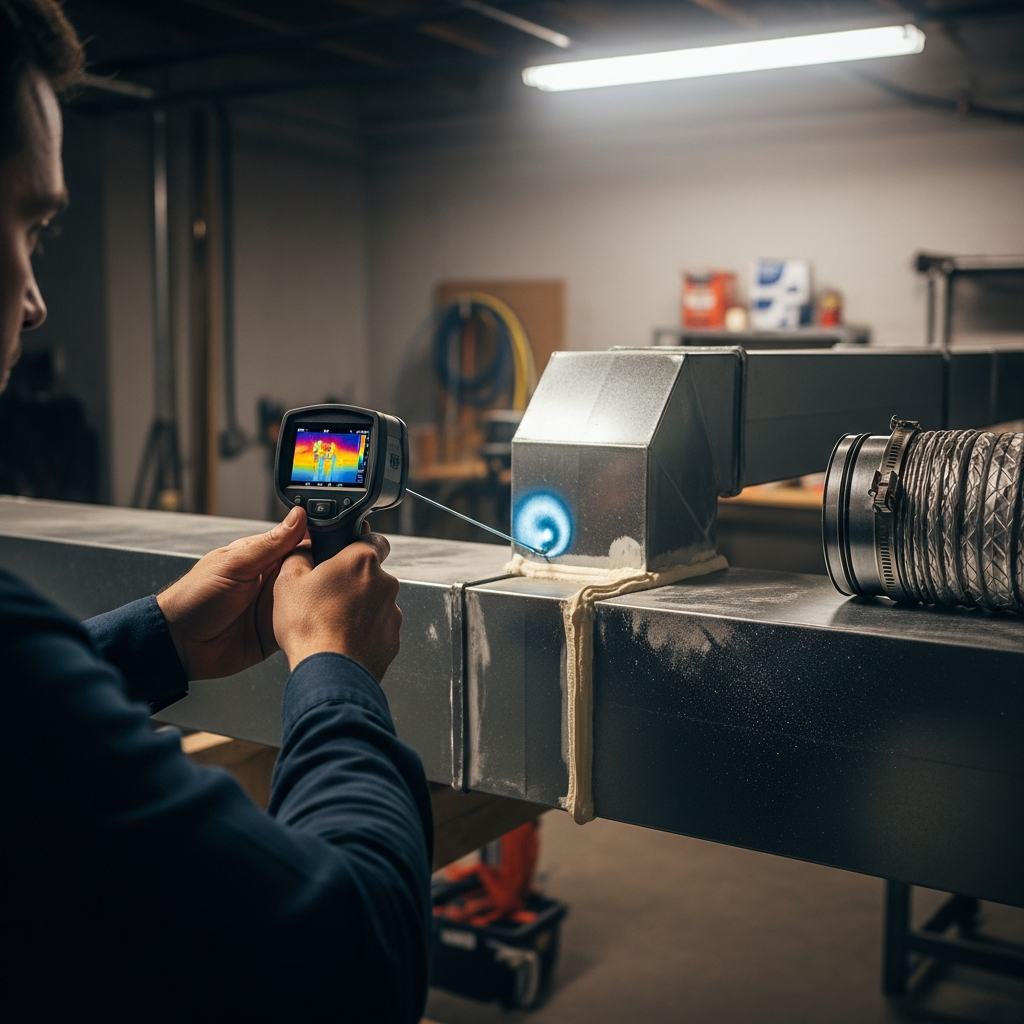
Professionals may use specialized testing methods and comprehensive visual examinations to pinpoint issues you cannot safely access. They also know how to distinguish between a surface draft caused by nearby returns and a true seam failure, ensuring repairs target the real source.
Photographic documentation before and after sealing helps confirm success. Ask your technician to explain each repair area and to note any structural constraints that could influence long-term durability.
Repair Methods that Last
Durable repairs pair the right materials with careful technique. For metal ducts, appropriate tapes and sealants designed for duct systems create flexible, long-lasting seals at seams and collars. For flexible ducts, technicians replace torn sections, apply correct collars and clamps, and secure the outer jacket and insulation neatly to minimize future stress.
Proper support spacing is critical. Sagging not only restricts airflow but also strains connections, inviting future leaks. Re-strapping to maintain a consistent slope and shape prevents collapses and keeps joints stable as the system cycles on and off.
Insulation around metal ducts in unconditioned spaces must be continuous and intact. Gaps invite condensation during humid months, which can degrade materials and corrode metal over time. Rewrapping or replacing damaged insulation pays dividends in comfort and longevity.
Understanding What Drives Effort and Planning
Several factors shape the scope and duration of leak repairs. Access is a prime consideration. Attic and crawlspace runs may be hard to reach safely, especially in older homes with tight framing. Limited clearance can slow progress and require creative but careful approaches to avoid collateral damage.
Material type matters as well. Metal ducts with multiple transitions demand meticulous sealing at every seam, while flexible ducts require gentle handling to prevent new tears. Mixed systems—metal trunks with flexible branches—add coordination challenges that experienced teams are equipped to manage.
The number of leak points influences verification needs. Sealing a single collar is faster than addressing distributed micro-leaks across long runs. Technicians should validate progress as they go, particularly at critical branches that feed rooms with historic comfort complaints.
Elizabeth, NJ Specific Considerations
Seasonal humidity and winter temperature swings in Elizabeth place extra stress on ducts. In summer, warm, moist air makes its way into unconditioned spaces. Any gap in insulation or open seam can allow condensation and odor transfer. In winter, longer run times increase vibration and pressure at weak connections, gradually widening openings that began as hairline gaps.
Older buildings can conceal ducts behind finishes or within narrow chases, complicating access. Multifamily properties introduce coordination requirements with building management and sometimes time windows for utility corridor work. An experienced team will anticipate these factors and plan accordingly.
Pre-Repair Preparation for Homeowners
Before a scheduled visit, clear pathways to the air handler, returns, and known problem areas. Move furniture away from registers and secure pets. If you have identified suspicious seams or heard unusual noises, note the locations and times. Photos and a short symptom log help technicians focus their initial inspection.
If you have recently renovated, tell your contractor. Construction dust and new penetrations can alter airflow paths and add to leak risks, especially on the return side. Coordinating a post-renovation review reduces surprises.
Mid-Project Checkpoints
Good contractors communicate progress during repair. They confirm when a major leak is sealed, show photos of re-strapped or re-insulated sections, and explain any limitations. This dialogue ensures everyone aligns on priorities—stopping the biggest leaks first, then addressing secondary paths that dilute airflow to distant rooms.
If early repairs deliver immediate comfort gains, maintain momentum. It is often efficient to continue while access is open, sealing nearby seams and stabilizing supports to prevent future issues. When the plan requires phasing, align follow-up timing with seasonal needs so winter rooms receive attention before peak heating demand.
During this phase, you can also decide whether supplementary improvements make sense, such as gentle layout adjustments to reduce sharp bends. If those changes are warranted, coordinate them with targeted air duct repair so your home benefits from both leak sealing and airflow optimization.
Verification: Trust, But Verify
Verification should blend visual checks and functional assessment. With the system running, listen again for hissing at previously problematic seams. Feel for escaping air near joints, and compare airflow in rooms that historically underperformed. Technicians can show before-and-after imagery and, when appropriate, discuss performance observations that confirm the improvement.
Ask for a brief summary of repaired locations, materials used, and any access constraints. This summary creates a baseline for future maintenance and helps track whether performance remains stable across seasons.
Aftercare and Prevention
Maintain progress with seasonal visual inspections, timely filter changes, and attention to any new odors or dust patterns. If your attic or crawlspace is subject to extreme conditions, consider periodic checks of insulation integrity and strap tension. Small adjustments now can prevent larger repairs later.
If you plan renovations, loop in your contractor early. A small change in layout can affect run lengths or bends, and addressing duct routing in parallel with renovations prevents surprises after the walls close.
FAQ
Q: What are the most obvious signs my ducts are leaking? A: Uneven room temperatures, whistling at seams, rapid dust buildup at registers, and musty odors at startup are common indicators.
Q: Can I seal leaks myself? A: Homeowners can sometimes address small, visible gaps with appropriate materials, but many leaks hide in hard-to-reach areas. Professional repairs ensure durability and comprehensive coverage.
Q: How do technicians verify success? A: Through visual confirmation, functional airflow checks at registers, and photographic documentation of sealed seams and re-supported sections.
Q: Will sealing leaks improve indoor air quality? A: Yes. Properly sealed returns prevent unfiltered air from entering the system, while sealed supplies deliver conditioned air to rooms as intended.
Q: What influences the effort and planning required? A: Access, material types, number of leak points, building specifics, and seasonal timing all shape scope and scheduling.
Take Control of Comfort in Elizabeth, NJ
Leaky ducts do not fix themselves. With the right plan and a careful, transparent team, you can stop air loss, quiet whistling seams, and stabilize temperatures throughout your home. When you are ready to protect comfort and indoor air quality with lasting results, schedule professional air duct repair and enjoy the difference a sealed, well-supported system makes in every season.
