Introduction: When Same-Day Air Duct Repair Makes All the Difference
In Elizabeth, New Jersey, few home issues are as disruptive as a duct problem that suddenly robs rooms of airflow, spreads dust, or triggers persistent odors. Same-day air duct repair services exist to stabilize comfort quickly, prevent further damage, and restore clean circulation without days of waiting. This guide explains how to recognize urgent symptoms, prepare for a rapid visit, and collaborate with technicians for a smooth, safe, and effective result. If you have already spotted a disconnected trunk, a crushed return, or a torn flexible run, prioritize a quick consultation and line up professional air duct repair so your home can return to normal as soon as possible.
Fast service does not have to mean rushed or careless. The most reliable providers blend triage speed with disciplined technique, safeguarding your home and validating improvements before they leave.
Urgent Symptoms That Justify Same-Day Service
Some warning signs demand immediate attention. A sudden whooshing or whistling noise near a seam can indicate a joint that has come loose. A room that was previously comfortable but now receives very little air may have a blocked or disconnected branch. An unexplained musty odor when the system starts, particularly after recent rain, can signal moisture intrusion or compromised insulation that needs prompt sealing or replacement.
Visible damage is another clear trigger. If a section of flexible duct is crushed or torn, if a metal duct shows a gap at a collar, or if insulation is hanging open, airflow is likely compromised and contaminants may be entering or leaving the system at the wrong places. The earlier these issues are addressed, the less they threaten comfort and air quality.
Safety First: Stabilize Before You Inspect
If you suspect a major disconnection, switch the HVAC system off at the thermostat and, if needed, the breaker. This prevents the blower from forcing conditioned air into a compromised pathway, which can spread dust, strain the equipment, or waste energy. Avoid entering cramped attic or crawlspace areas unless you have safe access, sturdy footing, and proper lighting. Document what you can safely see from registers and returns, then contact a professional to confirm the full scope.
For multifamily buildings, also consider building policy. You may need to coordinate access with a superintendent or property manager, especially if the system serves multiple units or if shared utility corridors are involved.
How Same-Day Pros Triage Effectively
Rapid-response technicians arrive with a mindset of stabilize first, optimize second. They quickly identify the dominant failure—like a disconnected collar, a collapsed flexible run, or a missing section of insulation—and restore safe, sealed airflow to critical areas. Once stabilized, they expand the inspection to catch secondary issues that may have developed alongside the primary fault.
Expect careful handling of flexible ducts to prevent further tears, appropriate fasteners and sealants for metal seams, and straightforward communication about any constraints that might require a follow-up visit. The goal is to secure comfort immediately while setting up durable performance.
Elizabeth, NJ Conditions That Influence Urgency
Local climate and construction details shape what “urgent” looks like. In summer humidity, damaged insulation or open seams can draw moist air into unconditioned spaces, amplifying odors and condensation risks. In winter, leaks force the system to run longer, making rooms drafty and uncomfortable. Older homes may have tight crawlspaces or attics that hide defects until they become severe, so a fast response limits escalation.
The city’s mix of housing—from single-family homes to multifamily buildings—means same-day teams must adapt quickly. Narrow basements, shared utility spaces, and older materials require both caution and creativity.
Homeowner Preparation for a Same-Day Visit
Preparation speeds resolution. Clear entry paths to the air handler, returns, and affected rooms. Move furniture away from registers and secure pets. If you have photos of visible damage, have them ready to show upon arrival. A written symptom log—when you noticed the issue, which rooms lost airflow, any odors you smelled—helps technicians prioritize the first checks.
Ensure someone with decision-making authority is present or reachable. Quick approvals enable technicians to move from diagnosis to repair without delay, which is vital for same-day outcomes.
On-Site Workflow: What to Expect
The visit typically begins with a brief interview to confirm symptoms and priorities, followed by a focused visual inspection of accessible ducts and key transition points. Technicians isolate the most likely failure, implement the appropriate fix, and verify airflow improvements at the registers you identified as problematic.
During the process, good teams protect floors, remove grilles carefully, and communicate if they encounter unexpected constraints. If a section is inaccessible or requires specialized materials not on the truck, they stabilize what they can and propose a near-term follow-up.
Common Same-Day Repairs
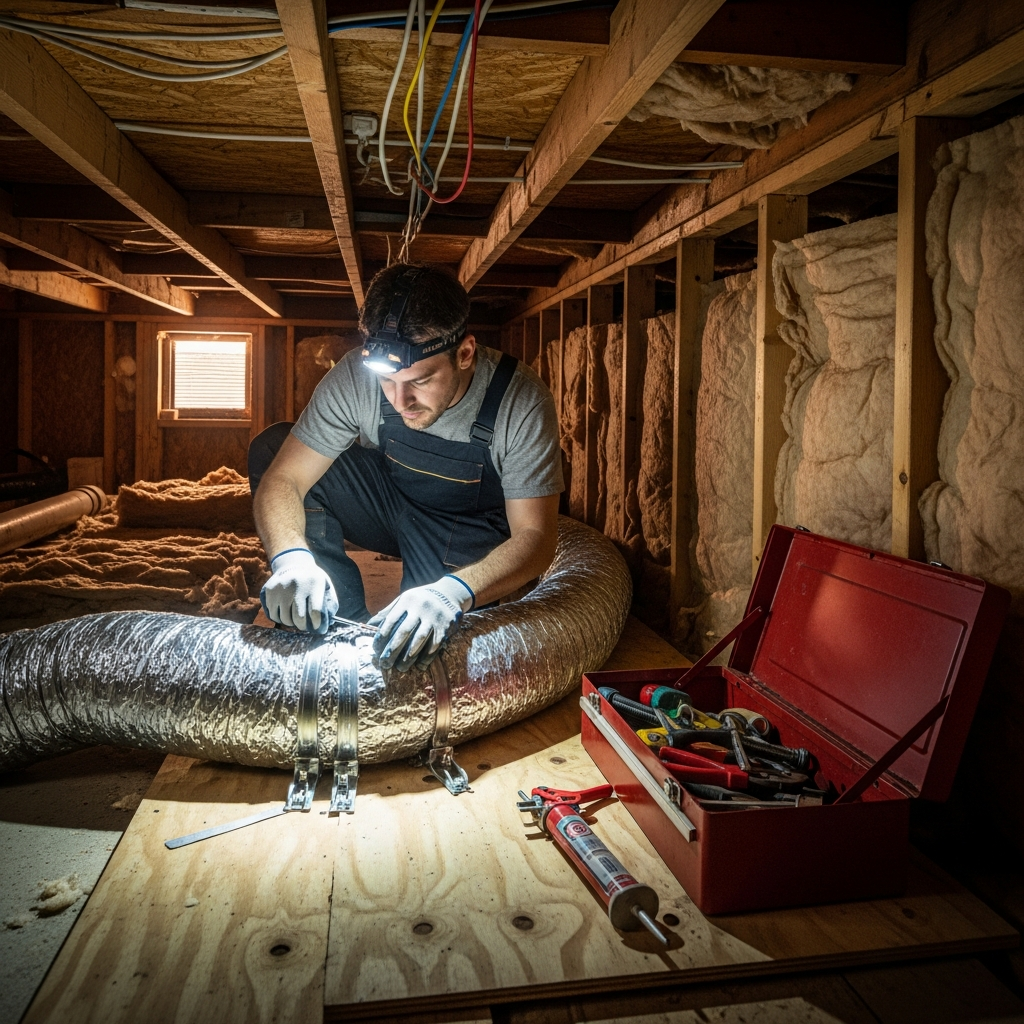
Typical quick fixes include reseating and sealing a disconnected collar at a plenum, replacing a crushed segment of flexible duct, re-strapping a sagging section to restore proper slope and cross-section, and re-wrapping or replacing damaged insulation to prevent condensation. For metal ducts, technicians may apply appropriate sealants and tapes designed for duct systems and secure loose joints with fasteners to eliminate whistling and air loss.
When odors are present, they look for moisture sources, compromised insulation, or return-side leaks near dusty areas. Addressing the source stops the odor cycle more effectively than masking it.
Verification: Proving the Fix Worked
Same-day service should still end with visible and functional proof. You might feel stronger airflow in previously weak rooms, hear quieter operation, and see neatly sealed seams. Technicians often show before-and-after photos and explain what was done so you can track future performance confidently.
Ask about any limitations discovered during the visit. If long, winding runs or undersized branches are part of the problem, you may benefit from a follow-up optimization plan once the urgent defect is corrected.
Maintaining Momentum After the Emergency
After stabilization, switch to prevention. Schedule seasonal checks, replace filters on time, and keep returns unobstructed. If you recently completed renovations, request a quick post-renovation review to ensure dust and debris have not loaded the return side or coated interior duct surfaces.
Document the repaired sections and set reminders to glance at them during your regular maintenance routine. Early intervention remains the easiest path to comfort and clean air.
Midpoint Planning: From Stabilization to Optimization
Once the urgent issue is under control, many homeowners pivot to fine-tuning. This may involve adding supports to prevent future sagging, improving insulation around metal ducts in unconditioned spaces, and sealing minor seams that were not the root cause but still allowed air loss. If the triage revealed broader layout constraints, discuss phased improvements that align with your schedule.
When you are ready to move beyond temporary relief and lock in durable performance, coordinate a follow-up plan that includes targeted air duct repair to address secondary leaks, optimize airflow to stubborn rooms, and verify that recent fixes continue to hold under everyday use.
Elizabeth Neighborhood Nuances
Different parts of Elizabeth pose different access and layout quirks. Older neighborhoods may have legacy ducts with tight bends and limited headroom, while newer developments might run long branches to upper floors with insulation demands that change across seasons. A seasoned same-day team recognizes these patterns and adjusts techniques quickly.
If you live in a multifamily building, check whether your association or management requires advance notice for utility access. A quick call ahead can save an appointment from stalling at the lobby.
FAQ
Q: What problems truly require same-day duct repair? A: Disconnected trunks or branches, crushed flexible ducts, gaping seams, and moisture-intrusion signs that affect comfort or air quality should be addressed immediately.
Q: Will a quick fix hold up long term? A: Many same-day repairs are durable when executed with proper materials and technique. Your technician should explain what was stabilized and whether further optimization is recommended.
Q: How should I prepare before the team arrives? A: Clear access to key areas, secure pets, gather photos of damage, and write down symptom timelines. Have a decision-maker available to approve necessary work.
Q: Can same-day teams work in tight spaces? A: Yes, but access and safety drive decisions. Where full access is impossible, they will stabilize what they can and schedule a follow-up to complete less accessible tasks.
Q: What if the issue turns out to be equipment-related, not duct-related? A: Competent technicians will explain their findings and recommend the next steps. Stabilizing duct issues first often clarifies whether equipment service is also needed.
Restore Comfort Fast in Elizabeth, NJ
When airflow drops, odors rise, or seams open unexpectedly, swift and careful action keeps life on track. Choose a team that blends speed with craftsmanship, verifies results, and provides clear aftercare. If you are ready to stabilize comfort and protect indoor air quality today, schedule reliable same-day air duct repair and feel the difference as your rooms return to balanced, clean airflow.
