Introduction
For Elizabeth, New Jersey homeowners, installing or upgrading a dryer vent is one of the most impactful improvements you can make for laundry efficiency and safety. A well-designed vent reduces drying times, curbs energy waste, prevents overheating, and minimizes the risk of lint-related fires. This comprehensive guide focuses on practical planning, smart material choices, and careful testing so you can complete the project with confidence. If you would prefer an expert to handle it end-to-end, dependable local pros can deliver code-aware dryer vent installation that meets your home’s unique needs.
Elizabeth’s neighborhoods range from historic homes with thick masonry to newer townhouses with compact laundry closets. Each setting presents its own routing considerations, wall assemblies, and termination options. Regardless of architecture, your goals are the same: create a short, straight vent path, use smooth-wall metal ducting, and ensure the exterior hood opens freely to release moist, warm air.
Planning for Elizabeth Homes
Start by evaluating the laundry location and the nearest suitable exterior wall. Walk the potential route and note framing, wiring, plumbing, and any obstacles that could complicate drilling or alignment. In multifamily buildings or HOA communities, confirm placement guidelines for exterior terminations, clearances, and appearance. It is often easier to relocate a dryer a short distance to achieve a vastly better vent path than to force a long, winding route.
Account for seasonal conditions. Winter lows and summer humidity can both stress a marginal vent system. A tightly sealed, well-insulated duct in unconditioned spaces can mitigate condensation in cold weather and deter lint clumping during humid months. Consider service access as well; you should be able to inspect and clean major sections without dismantling finished walls.
Measure the total equivalent length, adding allowances for elbows. Each 90-degree turn increases resistance, so limit sharp bends and spread angles where possible. Keep the termination at an accessible height where you can clear lint and verify damper function periodically.
Selecting Materials and Tools
Use smooth-wall rigid or semi-rigid metal for the main duct run to maintain airflow and discourage lint buildup. Reserve short semi-rigid sections for tight connections at the dryer or where a slight flex aids alignment. Avoid thin foil flex or plastic ducts that can tear, crush, and collect lint quickly.
Choose a robust exterior hood with a gravity damper or reliable louvers sized to the duct. The hood should shed rain, resist pests, and allow full opening under airflow. Match collar diameter to your duct to avoid constrictions that degrade performance. Stock up on HVAC-rated metal foil tape for sealing seams and joints.
Gather a drill, hole saw or masonry bit (as appropriate), a level, protective gear, duct crimping tools, pipe straps, and suitable fasteners. If you plan to penetrate brick or block, a rotary hammer and a core bit will produce a clean opening sized to your hood’s sleeve.
Mapping the Route
Sketch the path from dryer outlet to exterior termination, aiming for the straightest, shortest line. Identify obstructions behind the wall with a stud finder and exploratory pilot holes if needed. Confirm that your exit point is free of soffits, vents, and trim that could interfere with the hood’s operation or weather-sealing.
In older Elizabeth houses, framing may not be standard or perfectly plumb. Expect slight adjustments in elbow angles and plan for a semi-rigid connector at the dryer to prevent stress on the appliance outlet. Maintain a gentle slope toward the exterior to reduce condensation risk inside the duct.
Think through how the duct will be supported. Use pipe straps to keep the run aligned and to prevent sagging. Where the path crosses an unconditioned area, consider insulating the metal duct to minimize temperature swings that can encourage moisture.
Creating the Exterior Opening
Mark the intended exit point from inside and drill a small pilot hole to confirm the location from outside. Enlarge the opening with a hole saw for siding or a core bit for masonry. Keep edges smooth and tight to the hood sleeve to make sealing easier and to reduce the potential for air leakage.
Dry-fit the hood and verify the damper opens fully. On siding, tuck flashing or the hood flange to shed water correctly. On masonry, apply a compatible sealant behind the flange and secure it with corrosion-resistant anchors. Ensure the assembly is level so the damper does not bind.
Building the Interior Duct
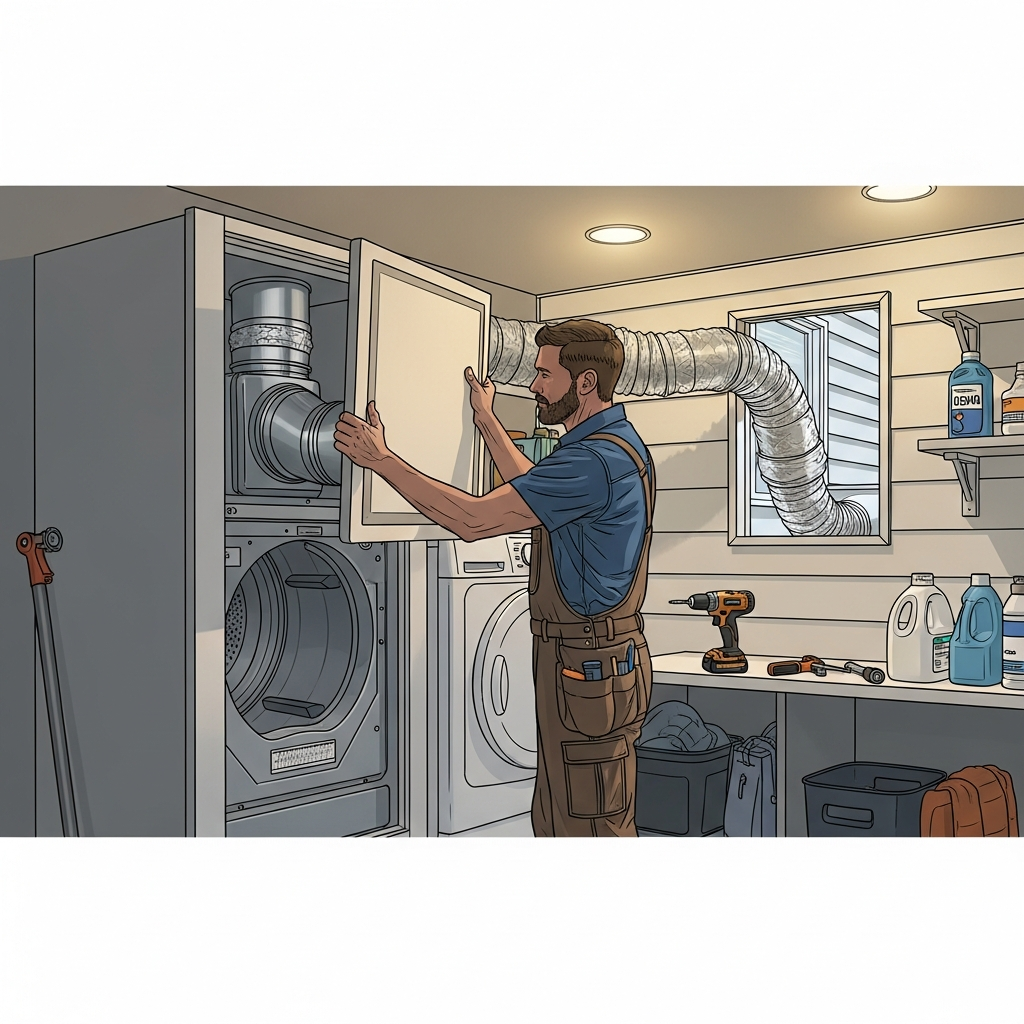
Assemble the duct with the crimped ends facing the direction of airflow so interior seams do not snag lint. Seal every joint with HVAC-rated metal foil tape, and avoid using screws that protrude into the duct interior. Where elbows are unavoidable, expand them fully to create the most gradual turn possible.
Support the duct every few feet to prevent movement. Keep it clear of sharp edges and protect it where it passes through framing. If you must run vertically, incorporate a backdraft damper and maintain proper fire-blocking where the duct penetrates between floors or through top plates.
Place the dryer in its final position allowing space to attach the transition piece without crushing it. A short semi-rigid metal connector can simplify alignment while maintaining optimal airflow. Use the manufacturer’s clamps at both ends for a secure, serviceable connection.
Sealing, Insulating, and Weather Protection
Seal all seams with metal foil tape and press firmly for full adhesion. If portions of the run traverse an unconditioned attic or crawlspace, consider insulating the metal duct to limit condensation and improve performance in cold weather. Do not insulate the flexible transition and avoid burying any part of the transition behind finished surfaces.
Outside, verify the hood’s damper opens freely under dryer airflow and closes when off. Ensure the hood is well-sealed to the wall and that water cannot migrate behind the flange. Keep landscaping trimmed so plants do not obstruct the damper or accumulate lint.
Testing and Tuning Performance
After assembly, plug in the dryer and, for gas units, reopen the gas valve. Run a no-heat cycle to check airflow. The damper should open fully, and you should feel strong, warm exhaust at the termination. Inside, listen for rattles or whistles that could indicate misaligned pieces or gaps that need resealing.
Check the lint screen suction; steady airflow is a positive sign. If drying times remain long, revisit your elbows and overall length—small routing refinements can make a large difference. Whenever you want a streamlined, hands-off solution, professional teams in the area can manage complete dryer vent installation with proper sealing, support, and testing to deliver consistent results.
Document your final route with photos before closing any access points. A quick visual record will help with future cleanings and inspections, particularly in hard-to-reach spots.
Maintenance for Long-Term Safety
Clean the lint screen before or after every load. Quarterly, vacuum behind and around the dryer, and examine the transition and accessible duct sections for dust or lint. Annually, inspect the exterior hood, confirm damper function, and clear any accumulated debris or insect nests.
Pay attention to warning signs: longer drying times, a hot laundry room, or a burnt smell. If any occur, stop the dryer and inspect the vent path immediately. Addressing minor restrictions before they worsen preserves efficiency and reduces the risk of overheating.
Elizabeth-Specific Tips
In closely spaced homes, ensure your termination directs exhaust onto your own exterior and does not impact neighbors’ windows or walkways. For brick exteriors, use appropriate bits and anchors, and do not oversize the penetration; a snug fit improves weather sealing. In townhouses with stacked laundry closets, favor straight, vertical routes with cleanout access near the base.
Seasonal swings make a tight, well-sealed duct especially valuable. Insulating longer exterior-wall runs can discourage winter condensation and reduce the chance of lint clumping in humid summer months. A simple seasonal check—watching the damper open during a drying cycle—can confirm performance at a glance.
Frequently Asked Questions
Q: What duct type is best for homeowners replacing an older vent?
A: Smooth-wall rigid or semi-rigid metal is ideal for the main run. It supports strong airflow, resists crushing, and collects less lint than flexible foil or plastic alternatives.
Q: Do I need a permit to install or replace a dryer vent?
A: Requirements vary by project scope and building type. Replacements may not need permits, but new penetrations or relocations often do. Confirm with your local building office or property manager.
Q: How can I minimize elbows in a tight laundry closet?
A: Slightly repositioning the dryer, using a close-clearance elbow at the outlet, or choosing a different exterior exit point can reduce the number and severity of bends.
Q: Should I install a screen on the exterior hood to block pests?
A: Do not add a screen that could trap lint. Instead, use a hood with an integrated damper designed for dryers. It will open fully under airflow and close when off to deter pests.
Q: How often should the vent be cleaned?
A: Inspect every season and clean at least once a year, more often for large households or heavy laundry use. Regular maintenance ensures safe, efficient operation.
Q: Can the dryer share an exhaust path with another fan?
A: No. The dryer requires a dedicated vent. Sharing with bathroom or kitchen fans compromises performance and creates a significant safety risk.
Q: What indicates poor airflow after installation?
A: Symptoms include long drying times, a hot laundry room, the exterior damper barely opening, or a burning odor. Investigate immediately and correct any restrictions or leaks.
Q: Is vertical venting acceptable?
A: Yes, provided it remains as straight and short as possible, includes backdraft protection, and meets fire-blocking requirements at penetrations between levels.
Make Your Next Load More Efficient
With thoughtful planning, careful sealing, and diligent testing, you can complete a high-performing dryer vent upgrade that suits Elizabeth’s housing styles and seasonal climate. If you would rather have a seasoned specialist handle routing, sealing, and performance verification, schedule expert dryer vent installation and enjoy reliable results on day one.
Protect your home, your appliance, and your time by ensuring your vent is short, smooth, and properly terminated outdoors. When you are ready to move forward, book local, code-aware dryer vent installation and keep laundry day running efficiently all year.
