Introduction
Installing a new dryer vent in Elizabeth, New Jersey is a project that rewards careful planning, attention to safety, and a solid understanding of airflow. When done correctly, you will reduce drying times, lower energy waste, and significantly reduce lint accumulation that can become a fire hazard. Whether you are replacing a damaged duct or setting up a vent for a new laundry space, this guide will walk you step by step through a safe, code-conscious process. If at any point you prefer professional help, consider trusted local experts for dryer vent installation to ensure performance and peace of mind.
Elizabeth’s mix of historic homes and newer construction adds unique twists to the work. Older houses can surprise you with plaster walls, tight crawlspaces, and long vent runs that make routing a challenge, while newer townhomes and multifamily properties may include shared chases or strict HOA standards. No matter the building, your goals remain the same: create the shortest, straightest path outdoors; use robust, smooth-wall metal ducting; and seal and support it properly.
Know the Local Context Before You Begin
Dryer vent installation is more than pushing a hose through a wall. In Elizabeth, where winter winds can drive moisture into building envelopes and summer humidity can make lint clump, poor venting quickly leads to inefficiency and risk. Take time to evaluate the laundry location, exterior wall options, and the overall route from dryer to outside. Short runs with gentle curves improve airflow and reduce lint buildup.
While most areas follow broadly adopted safety standards, requirements can vary based on building type and age. It is wise to confirm local expectations regarding termination hoods, backdraft dampers, and exterior clearances. Permits may or may not be required for replacing an existing vent, but when adding a new penetration or relocating a dryer, always check with your local building office or property manager to avoid surprises.
In dense neighborhoods or multifamily settings, be mindful of vent discharge locations relative to walkways, windows, and neighboring units. A well-placed termination prevents recirculation of moist air and helps keep siding, fencing, and landscaping free of lint deposits. Plan for a termination hood that sheds rain, blocks pests, and opens freely when the dryer runs.
Choosing the Right Materials
Select smooth-wall rigid or semi-rigid metal ducting for the main vent run. Smooth interiors resist lint accumulation better than flexible foil or plastic, which are prone to kinking and tearing. Choose high-quality foil-backed or metal foil tape rated for HVAC use to seal joints; avoid standard cloth duct tape, which dries out and fails under heat. Where the duct passes through a wall or a tight cavity, a short section of semi-rigid metal may ease alignment while maintaining airflow.
Use a purpose-built exterior hood with a gravity damper or a high-quality louver design that opens fully under airflow and shuts when the dryer is off. A robust hood discourages birds and rodents, sheds rain, and minimizes backdrafts. Ensure the hood’s collar size matches your duct diameter to avoid sudden transitions that restrict airflow. When routing vertically, include a backdraft damper and consider a slight upward slope toward the exterior to discourage condensation from pooling inside the duct.
Gather mounting hardware that suits your wall material, such as masonry anchors for brick or block and appropriate screws for wood sheathing. Include pipe straps or hangers to support horizontal runs every few feet. Plan for a proper dryer transition connector designed to attach securely to the dryer outlet without sharp turns.
Planning the Route
Before making any cuts, sketch the route. Aim for the most direct path with the fewest turns. Each 90-degree turn can add significant airflow resistance, so use gentle bends where possible. Keep total equivalent length within recommended limits whenever you can, and measure as you go, including allowances for elbows.
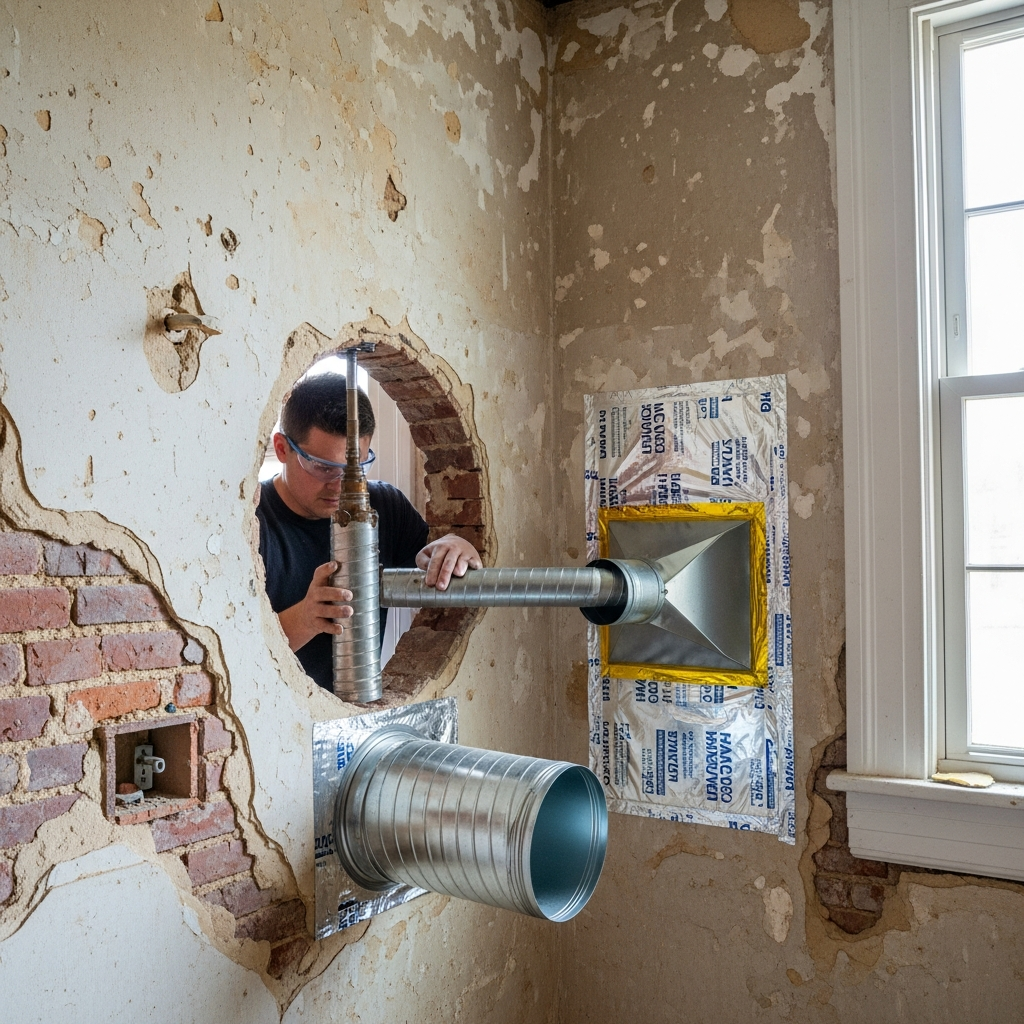
Identify the wall or rim joist section where the termination hood will exit. Confirm there are no hidden wires, plumbing, or structural elements in the way. A stud finder, small pilot holes, and careful inspection in accessible areas can save major headaches. If exiting through brick or block, plan for a masonry core bit sized to your hood’s sleeve.
Think ahead about serviceability. Choose a path that lets you access sections of the duct for periodic cleaning. Try to avoid burying long runs behind permanent finishes without cleanout access. Future you will appreciate the foresight when it is time to remove accumulated lint and confirm damper operation.
Preparing the Work Area
Protect the laundry area by moving the dryer forward, covering the floor, and clearing shelves or nearby storage. Turn off the dryer and unplug it. If you have a gas dryer, shut the gas valve and confirm no fuel line stress will occur as you reposition the unit. Label any flexible gas connector alignment to avoid twisting or kinking during reinstallation.
From the exterior, set a drop cloth beneath the planned termination. If you will be cutting siding, mark the outline carefully and save any pieces you remove so you can flash and finish neatly. For masonry, anticipate dust and wear appropriate eye, respiratory, and hearing protection. Good lighting is essential indoors and outdoors for safe, accurate work.
Cutting the Exterior Opening
Measure twice from the interior before drilling a small pilot hole to confirm the exit point. From outside, evaluate clearances from trim, soffits, walkways, and planting beds. When you are certain, enlarge the opening to fit the hood sleeve. Keep the opening round and tight to limit air leakage and to make sealing easier.
Dry-fit the hood and ensure the damper moves freely. On siding, slip the hood’s flange beneath the course above when possible to shed water properly. On masonry, you may need a bead of appropriate sealant behind the flange and corrosion-resistant anchors to secure the hood to the wall. Ensure the hood sits level so the damper does not bind.
Assembling the Interior Duct
Start from the exterior and work inward, or vice versa, depending on access. Join sections of smooth-wall metal duct in the direction of airflow so the male ends face outward, reducing lint-catching edges. Use metal foil tape on each joint; avoid screws protruding into the airflow. Where an elbow is needed, expand it fully for the most gradual turn that space allows.
Support the duct every few feet with straps, maintaining a gentle, consistent slope toward the exterior to discourage condensation. Keep the duct run away from sharp edges and moving components. When passing through framing, use appropriately sized holes and grommets or protective edges to prevent abrasion over time.
As you approach the dryer, position the appliance in its final location, leaving enough room to connect the transition piece without crushing it. A short, flexible semi-rigid metal transition from the dryer outlet to the main duct can simplify alignment while preserving airflow efficiency. Secure the connection with the manufacturer’s recommended clamp or band.
Sealing, Insulating, and Fire Safety
Seal all duct seams with HVAC-rated metal foil tape, smoothing the edges and inspecting for gaps. In unconditioned spaces or where condensation is a concern, consider insulating the duct to limit temperature swings that invite moisture. Do not wrap the dryer’s flexible transition with insulation, and never bury the transition inside a wall or ceiling.
Keep combustible materials clear of the duct path. Maintain appropriate clearances from structural members, wiring, and plumbing. In multi-level homes, observe any fire-blocking requirements when penetrating floors or top plates, and restore fire barriers after the duct is in place with approved materials that match the surrounding assembly.
Testing Airflow and Performance
Once assembled, plug in the dryer and, for gas units, re-open the valve and check for leaks with a non-corrosive leak detection solution at the connector if you disturbed it. Run the dryer on a no-heat or low-heat cycle to verify that the exterior damper opens fully and that warm, moist air exits the termination freely. Listen for rattles or whistling that suggest misalignment or loose joints.
Inside, check for any warm air escaping at connections; reseal as needed. Confirm the dryer sits level and that the transition is not crushed when you move the appliance back into place. Open the lint screen and verify that air is drawn steadily across the filter. Midway through your project review, remember that skilled help is available if you want a streamlined approach to dryer vent installation that prioritizes safety and code compliance.
Run a small load of towels and note the drying time compared to your previous setup. Shorter cycles often signal improved airflow, while any lingering dampness could indicate an obstruction or an overly long or convoluted path. Revisit your elbows and clearances if performance is underwhelming.
Maintenance and Ongoing Care
Clean the lint screen before or after every load. Every few months, vacuum the area around the dryer and check the visible portions of the transition and duct for dust or lint accumulation. At least annually—or more often if you do heavy laundry—inspect the exterior hood, clear any debris, and confirm that the damper moves freely.
Make a habit of walking outside during a drying cycle to ensure the hood opens fully and exhaust is warm. If you notice reduced airflow, a burnt smell, or excessive heat in the laundry area, shut the dryer off and inspect the vent path immediately. Early attention to minor issues can prevent larger problems and maintain efficiency.
Common Mistakes to Avoid
Avoid long runs that snake through multiple rooms when a shorter exterior wall is available. Resist the temptation to connect multiple bathrooms or fans to the dryer vent; the clothes dryer needs a dedicated, direct route. Do not use screws that protrude into the duct interior, and avoid thin, easily crushed foil flex for main runs.
Never vent a dryer into an attic, garage, or crawlspace. Moist air and lint can cause mold growth, structural damage, and serious fire hazards. End the vent outdoors with a proper hood; screen inserts that catch lint can block flow and should not be used on dryer exhausts.
Special Considerations for Elizabeth Homes
In neighborhoods with closely spaced homes, respect property lines and ensure your termination hood directs exhaust onto your own exterior surface. When routing through older brick, carefully evaluate mortar joints and consider professional drilling for a clean penetration that preserves structural integrity. For stacked laundry closets common in townhouses, prioritize short, straight vertical runs with accessible cleanout points.
Elizabeth’s seasonal shifts highlight the value of a smooth, well-sealed duct. In winter, cold exterior walls and unconditioned spaces can promote condensation inside poorly insulated ducts. In summer, humidity can accelerate lint clumping. Tidy routing, tight joints, and periodic checks will keep your system performing year-round.
Frequently Asked Questions
Q: Can I reuse my old dryer vent duct when installing a new dryer?
A: Reuse is rarely advisable. Older flexible ducts may be crushed, torn, or coated with lint. Upgrading to smooth-wall metal improves airflow, reduces lint buildup, and lengthens the time between cleanings.
Q: How long should a typical dryer vent be?
A: Shorter is better. Keep the equivalent length as low as practical, minimizing turns. Every elbow adds resistance, so use gradual bends and the most direct route to the exterior.
Q: Is foil tape safe for sealing the duct?
A: Use HVAC-rated metal foil tape on seams and joints. Avoid standard cloth duct tape, which deteriorates under heat. Ensure surfaces are clean and dry before applying for a lasting seal.
Q: Do I need a backdraft damper?
A: Yes, a functioning damper is important. It prevents outside air, pests, and moisture from entering the duct when the dryer is off and helps maintain proper airflow when it runs.
Q: What is the best material for the main vent run?
A: Smooth-wall rigid or semi-rigid metal is preferred. Flexible foil or plastic can crush easily, collect lint, and may not meet safety expectations in many jurisdictions.
Q: How can I tell if airflow is adequate after installation?
A: Check that the exterior damper opens fully and that exhaust feels strong and warm. Inside, verify steady suction at the lint screen. Longer drying times or a hot laundry room can signal a restriction.
Q: Is vertical venting acceptable?
A: Vertical runs are common in closets and multifloor homes. Keep them as straight as possible, include a backdraft damper, and observe any fire-blocking requirements if you penetrate floors or top plates.
Q: How often should I clean the dryer vent?
A: Inspect seasonally and clean at least annually, more often for large households or high-volume laundry. Regular maintenance preserves safety and performance.
Q: Can I vent into a crawlspace with a screen to catch lint?
A: No. Dryer vents must terminate outdoors. Venting indoors or to enclosed spaces creates moisture problems and substantial fire risk.
Q: What if I cannot achieve a short, straight path?
A: When layout forces a longer route, use the largest practical duct size compatible with your dryer, minimize sharp elbows, and provide accessible points for cleaning and inspection.
Take the Next Step
If you are confident in your tools and preparation, the steps above will guide you through a safe, efficient installation tailored to Elizabeth’s housing styles and climate. If you would rather save time and ensure optimal airflow from day one, schedule expert help for dryer vent installation and enjoy the confidence that comes with professional workmanship.
From planning the route to testing performance, attention to detail makes all the difference. Restore your laundry room’s efficiency, protect your home, and extend the life of your dryer by ensuring your vent is properly designed, sealed, and maintained. When you are ready, book an appointment for local, code-aware dryer vent installation and get reliable results without the guesswork.
