Choosing the Best Dryer Vent Cleaning Equipment for Elizabeth, New Jersey Homes
The right equipment makes the difference between a quick touch-up and a thorough cleaning that restores airflow, reduces drying time, and enhances safety. Elizabeth’s varied housing stock—pre-war brick homes, garden apartments, high-rise condos, and renovated single-family houses—presents unique vent routes with distinct challenges. Selecting appropriate tools for your layout ensures effective lint removal without damaging ducts or exterior hoods. For complex runs, many homeowners rely on expert dryer vent cleaning that combines professional-grade systems with proven techniques. This guide breaks down the essential equipment categories, explains when each tool shines, and helps you match solutions to Elizabeth homes and seasonal conditions.
Core Principles for Equipment Selection
- Protect the Duct: Choose tools that agitate lint without cutting into metal or deforming joints.
- Capture Debris: Pair agitation with strong vacuum collection to prevent indoor mess and airborne dust.
- Reach Every Section: Use flexible rods and appropriate brush sizes for elbows, long runs, and vertical segments.
- Verify Performance: Test airflow at the exterior hood to confirm results.
These principles ensure that tool choice supports a complete, end-to-end cleaning rather than a superficial pass that leaves performance issues unresolved.
Rotary Brush Systems
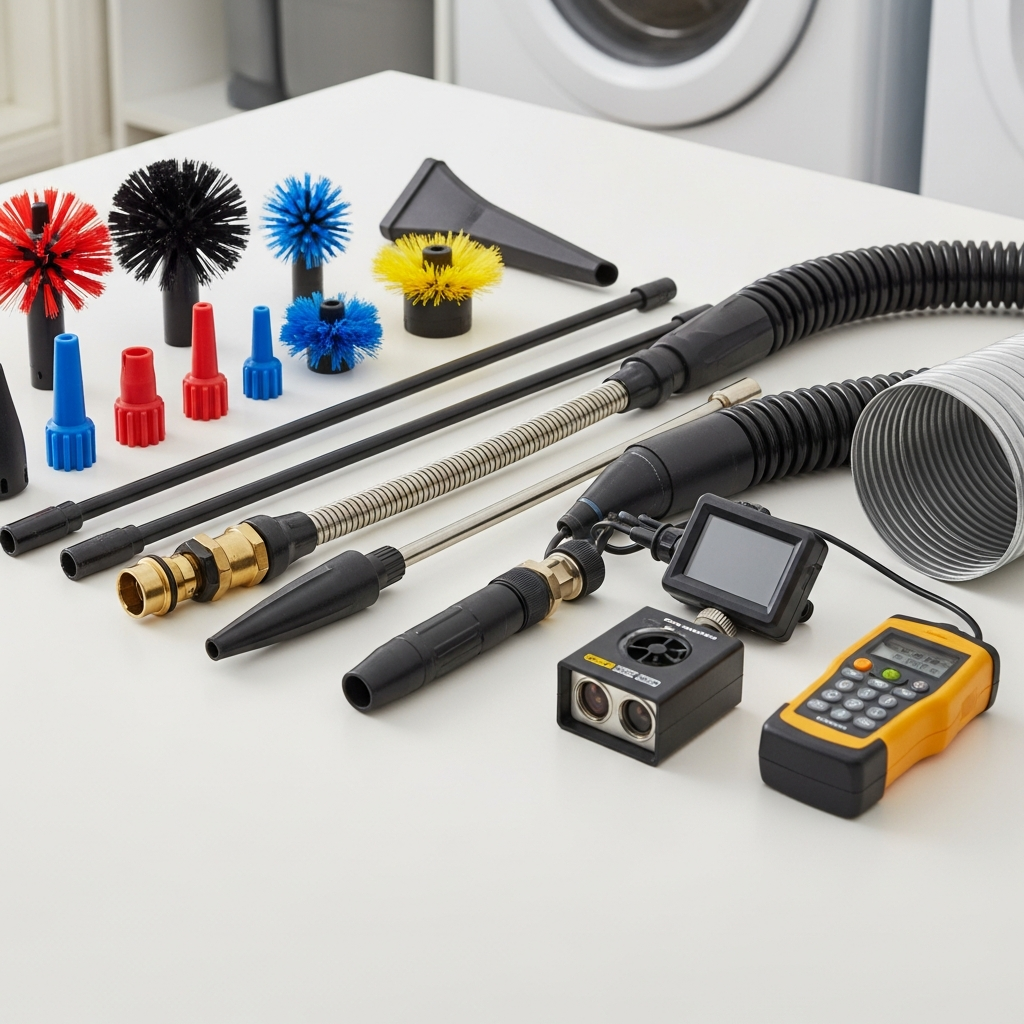
Rotary brush kits are a backbone of thorough vent cleaning. Professional versions use flexible rods that connect to a power head or a drill, spinning a brush sized to the duct diameter. For Elizabeth homes with moderate run lengths and a few elbows—common in single-family properties and townhomes—rotary systems excel at scouring lint from interior walls. Brushes should match the duct’s size to avoid gouging or insufficient contact. Nylon bristles are gentle yet effective for most rigid metal ducts. Always advance rods slowly to feel for elbows or obstructions and avoid force against screws that may have been improperly installed inside the line.
Air-Sweep or Compressed-Air Tools
Air-sweep systems propel specialized nozzles down the duct, using high-velocity air to dislodge lint while a containment vacuum captures debris. This approach is well-suited for longer or more complex routes, such as those found in multifamily buildings around Midtown and Bayway. Air tools reduce the risk of snagging on elbows and can navigate turns gracefully. They also work well where access is limited and brush rotation could stress the duct’s joints. When used with proper filtration and sealing at the work area, air-sweep methods keep indoor spaces clean and undisturbed.
High-Powered Vacuums and Filtration
A strong vacuum paired with adequate filtration is non-negotiable. Whether you are using brushes or air tools, you need consistent suction to capture lint and fine particulates. HEPA or high-efficiency filters protect indoor air quality by containing dust that would otherwise resettle in living spaces. In Elizabeth’s dense housing, where neighbors share walls or hallways, clean containment is a courtesy and a necessity. Professional crews often bring portable units designed to fit in elevators and to roll across protective floor coverings without leaving marks.
Inspection Cameras and Airflow Meters
Inspection cameras provide visual confirmation of obstructions, crushed sections, and lint mats. They also verify cleanliness after the job is complete. Airflow meters or anemometers measure exhaust velocity at the exterior hood, offering a simple metric to compare before-and-after performance. These tools help technicians communicate results clearly, which is especially valuable in condo and co-op settings where owners report back to boards or property managers.
Transition Duct Upgrades and Fittings
Even with the best cleaning tools, a crimped or overly long transition duct will undermine results. Smooth-walled, fire-resistant transition ducts reduce turbulence and resist crushing when the dryer is moved. Quality clamps and elbows designed for tight clearances—common in laundry closets throughout Elizabeth—maintain a safe, short path from the dryer to the wall. In many cases, replacing a flimsy transition duct yields immediate improvements in drying time.
Exterior Hood Improvements
The exterior termination is more than a cap; it is a moving part that must open freely. Hoods with efficient dampers reduce backpressure and block animal entry without restrictive screens that snag lint. During fall leaf season or spring pollen peaks, easy-clean designs simplify quick checks. A secure mounting and proper flashing protect siding and masonry from moisture.
When to Choose Professional-Grade Systems
Homeowners can maintain lint traps and clean short, straight ducts with consumer brush kits, but many Elizabeth layouts benefit from professional-grade equipment. Long basement runs, rooftop exits, and concealed elbows in older renovations require flexible tools, controlled suction, and trained hands. If you have experienced repeated overheating shutoffs, persistently long dry times after DIY efforts, or a damper that barely opens during operation, a professional cleaning with rotary or air-sweep systems—and proper containment—delivers the thoroughness needed.
Midway Insight: Matching Tools to Elizabeth Homes
Consider a few common scenarios. A single-family home in Elmora with a dryer on an exterior wall may need only a rotary brush and a capable vacuum to restore perfect airflow. A condo near the waterfront with a vertical chase to the roof may benefit from air-sweep nozzles and precise airflow testing. A renovated townhouse with multiple elbows demands flexible rods, gentle brushes, and careful verification at the hood. In each case, pairing the right equipment with measured technique is the key to reliable, repeatable outcomes—especially when combined with scheduled professional dryer vent cleaning that documents improvements.
Practical Tips for Safe Equipment Use
- Size brushes correctly to avoid scraping or missing lint along the duct wall.
- Advance rods slowly and identify elbows by feel; never force the tool.
- Seal connection points to maintain suction and control debris.
- Monitor the exterior hood during testing to confirm strong, steady exhaust.
- Avoid makeshift blowers that can damage dampers or scatter lint indoors.
Thoughtful technique protects both the duct and the surrounding spaces. Take your time, confirm each segment is addressed, and verify performance before reassembling the area.
Maintenance Habits that Complement Good Tools
- Clean the lint filter before every load and occasionally wash it to remove residue.
- Keep the transition duct short and straight, leaving space behind the dryer.
- Inspect the exterior hood each season; free movement is essential for airflow.
- Separate heavy textiles from light ones to reduce cycle time and heat stress.
- Track maintenance dates and note drying performance to plan service intervals.
With consistent habits, even busy households can maintain safer, more efficient dryers through Elizabeth’s humid summers and chilly winters.
Frequently Asked Questions
Which brush material is safest for metal ducts? Nylon brushes are widely used because they are effective yet gentle on rigid metal ducts. Correct sizing is as important as material choice.
Do I need an inspection camera? While not mandatory for every home, cameras are invaluable for complex routes and for verifying both obstructions and results. Professionals frequently use them to document work.
Is it okay to install a screen at the exterior hood? Avoid restrictive screens that trap lint. Choose hoods designed to block animal entry while allowing free airflow.
How do I know if airflow is adequate? A strong, steady exhaust that holds the damper fully open during operation is a good sign. For precision, an anemometer reading before and after cleaning quantifies improvement.
Can I use a leaf blower? It is not recommended. Uncontrolled air can dislodge connections, damage dampers, and scatter lint inside walls or living spaces.
Equip Yourself for Success
When you match tools to your vent route and apply careful techniques, you safeguard your home and keep laundry days predictable. For complex layouts or stubborn performance issues, step up to professional systems that combine rotary or air-sweep tools with strong containment and clear verification.
Get Reliable Results in Elizabeth, NJ
For a thorough, documented outcome—especially in homes with long or complex routes—schedule professional dryer vent cleaning. The right equipment, applied with experience, restores airflow, improves safety, and keeps your Elizabeth home running smoothly through every season.
