Comparing providers the right way is less about flashy ads and more about understanding process, protection, documentation, and fit for your home’s layout. In Elizabeth, New Jersey, where homes range from pre-war multifamily buildings to modern townhomes, the best team is the one that can plan around your realities and deliver verifiable results. This guide shows you how to compare providers with discipline—by scoring what matters, not what merely sounds good—so you can choose with confidence and enjoy cleaner indoor air, stronger airflow, and a respectful in-home experience from start to finish. If you want a quick overview of methods and standards to frame your research conversations, review a primer on professional air duct cleaning before you begin.
Build a comparison framework before you gather quotes
When you compare providers, you need a consistent yardstick. Before speaking with anyone, create a simple framework that helps you weigh the details that matter most to your home, family, and schedule. You are not just buying a scheduled slot; you are selecting a careful process and a team you trust in your living space.
- System familiarity: Experience with your type of home (row house, single-family, multifamily), duct materials, and zoning layouts.
- Method transparency: Clear explanation of source removal, negative pressure, and tool selection for each duct type.
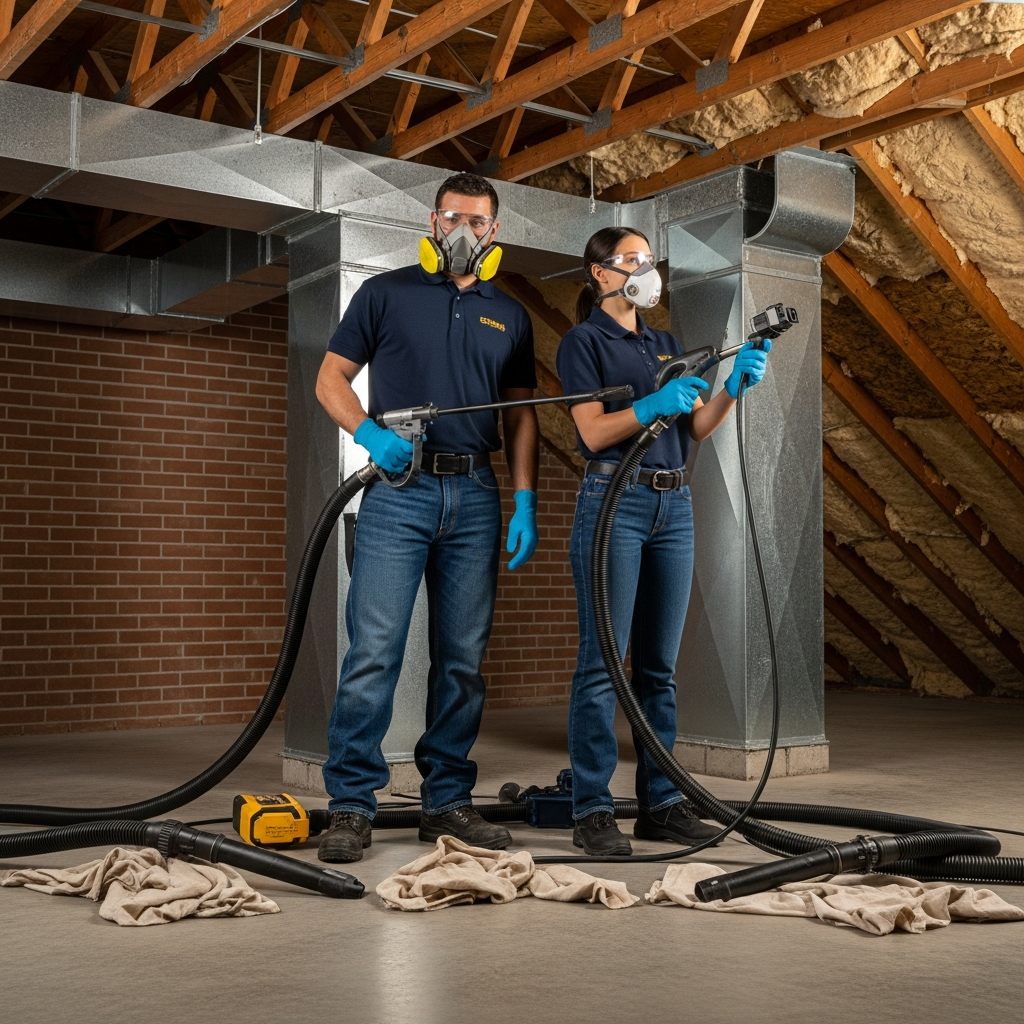
- Protection plan: Specifics about drop cloths, containment, filtration, and treatment of registers and grilles.
- Documentation: Before-and-after photos and a summary of completed sections, plus any maintenance suggestions.
- Communication: Responsiveness, punctuality, and willingness to answer questions thoroughly and respectfully.
Ask the same questions of every provider
A fair comparison depends on consistency. Using the same core questions allows you to see differences in approach and professionalism more clearly. You are looking for teams that speak plainly, welcome your questions, and demonstrate both knowledge and care.
- How do you adapt techniques for ductboard, older flex, or tight chases?
- How do you establish and maintain negative pressure during the entire process?
- What is your sequence for addressing trunks, branches, returns, and components?
- How will you protect floors, corners, and finishes in all active rooms?
- What documentation will I receive when the job is done?
Weigh experience and local familiarity
Elizabeth’s housing mix presents unique logistical challenges: limited street parking, narrow staircases, crowded mechanical rooms, and historic finishes that deserve careful handling. A team that works locally understands these realities and plans accordingly. Ask providers about projects similar to yours and how they handled access, protection, and confirmation of results.
Method over marketing: what really drives outcomes
Professional equipment matters, but it is only as effective as the plan and the hands guiding it. Proof of a strong method includes detailed mapping of the system, tool selection tailored to materials, disciplined containment practices, and consistent verification steps. Teams that can articulate this clearly tend to deliver consistent outcomes in diverse homes.
Protection and cleanup: respect for your space
Beyond the ducts themselves, look closely at how a provider treats your living space. Respect shows in the small things: clean drop cloths, careful corner guards, protective coverings at registers, and tidy hoses. Cleanup at the end should be thorough, with a walkthrough that ensures your home is left as it was—only cleaner.
Documentation as a differentiator
Photos, notes, and measurements transform a promise into a verifiable result. They also help you understand your system better and make informed decisions about filter choices and maintenance habits. Providers that document their work consistently show pride in their process and accountability in their outcomes.
Elizabeth realities: multifamily vs. single-family considerations
In multifamily buildings, coordination with property managers and neighbors can be essential. Elevator timing, staging equipment without blocking corridors, and respecting building quiet hours all matter. In single-family homes, access to attics and crawlspaces, safe ladder placement, and protection of finishes across many rooms come to the foreground. A provider experienced in both settings brings an adaptable mindset and the right gear for either situation.
Comparing scope statements: what to look for
Scope statements should be specific. Vague language can hide corner-cutting or wishful thinking. Look for itemized descriptions of how each section will be reached and what tools will be used.
- System mapping: Are trunks, branches, and returns clearly identified?
- Access planning: Which registers will be removed? Are existing service openings used appropriately?
- Tooling detail: Which agitation methods are suited to your duct materials?
- Containment specifics: How will negative pressure be established and maintained?
- Verification plan: How will completion be confirmed?
How to spot a strong in-home experience before day one
You can predict a lot from early interactions. Do they respond promptly and professionally? Do they request photos or diagrams to plan protection and access? Do they explain the schedule and what noise levels to expect? A provider who treats your time and home with respect in the early stages is more likely to do so on the day of service.
Use mid-process clarity as a deciding factor
Ask providers how they communicate during the appointment. Do they offer mid-process updates? Are they willing to pause for a quick look at a completed section? Periodic check-ins build trust and help you visualize progress. They also allow you to ask questions and learn about your system while the work is in progress.
What “value” looks like without cutting corners
True value comes from a precise, thorough workflow that protects your system and home. It is not the promise of a rushed visit. Look for providers who emphasize safety, verification, and care with finishes. They will tailor their plan to your priorities—improving airflow balance, addressing allergens, or refreshing ducts after a renovation—while maintaining discipline in every step.
Mid-article resource to frame your comparisons
If you want a quick reference to help you evaluate proposals and methods, review a practical overview of air duct cleaning and keep it at hand while you speak with each provider. Use it to ensure you are comparing like with like, and to prompt specific questions that reveal attention to detail.
Frequently Asked Questions
How do I know if a provider is truly thorough? Look for a detailed scope, an explanation of negative pressure and agitation tools, and a commitment to documentation with photos or reports.
Will my home be protected during the process? Reputable teams use drop cloths, corner guards, and containment. They also plan room-by-room to prevent scuffs and manage hoses safely.
Can this help with uneven temperatures in my home? Addressing return and supply pathways can improve airflow balance. Discuss persistent hot or cold rooms with your provider.
Do I need to replace filters more often after the work? Follow your HVAC professional’s guidance based on your system and household. New filters after the project are a common recommendation.
What if I live in a building with strict access rules? Experienced providers coordinate with property managers, schedule around building quiet hours, and plan equipment staging carefully.
Is DIY an option? Homeowners can handle surface cleaning of grilles and timely filter changes. Deep source removal and containment are best left to trained professionals.
Your decision, made easier
Comparing providers with a clear framework reduces stress and leads to better outcomes. Prioritize method, protection, documentation, and communication. Ask the same questions of everyone, and look for teams that answer with patience and precision. The result is a confident choice—and cleaner, healthier air moving through your home.
Take the next step with confidence
Ready to choose a provider that brings discipline, respect, and proven methods to your Elizabeth home? Reach out to a local team that can explain its plan clearly, protect your space diligently, and verify results. To ground your conversations in best practices and set expectations for a successful project, start by reviewing air duct cleaning, then schedule a visit that fits your calendar.
