When your HVAC system cycles on in Elizabeth, New Jersey, it pulls air through returns, conditions it, and sends it back through a network of ducts. Over time, dust, pollen, pet dander, and renovation debris settle onto those interior surfaces, especially in a four-season climate where windows stay closed for much of the year. Understanding each step of a professional cleaning helps you prepare your home, set expectations, and verify results. For a quick introduction to the methods and goals of air duct cleaning, you can review reputable overviews, then use this guide for a detailed, step-by-step walkthrough tailored to Elizabeth homes.
Step 1: Initial Walkthrough and Planning
Technicians start with questions about dust, odors, allergies, pets, and recent renovations. They identify all supply and return registers, locate the air handler or furnace, note duct materials—sheet metal, flex, or lined—and map the main trunks and branches. In Elizabeth’s diverse housing stock, this may include navigating tight mechanical closets, basements with low clearances, and attics with limited access. Clear communication sets the scope and predicts how long the appointment will take.
Step 2: System Protection and Home Safeguards
Before any agitation begins, the team protects your space. Corner guards, drop cloths, and register masking help keep dust contained. Sensitive rooms with electronics or fine décor get extra care. Pets are secured, and pathways are cleared to the air handler. The technician will also confirm that power is safely controlled at the equipment and that fuel-burning appliances remain properly vented during the process.
Step 3: Establishing Negative Pressure
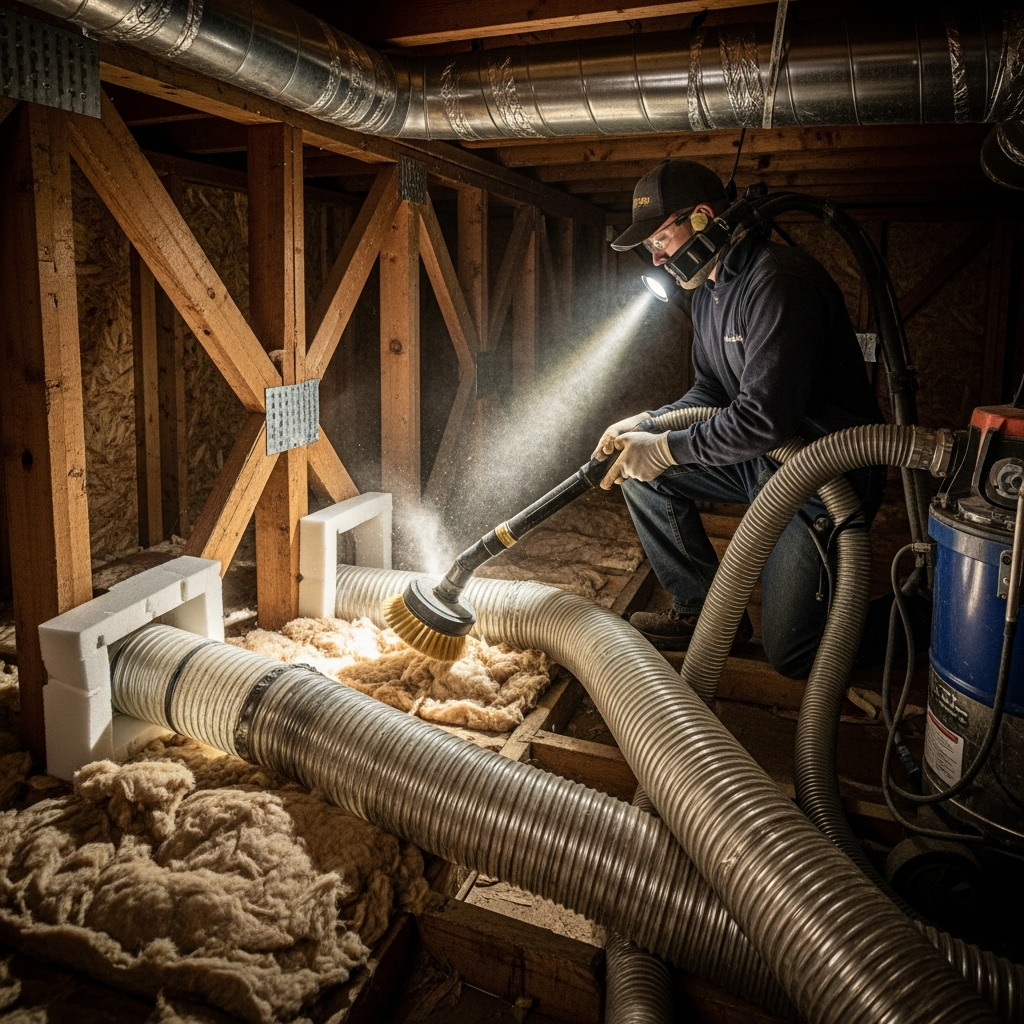
A powerful vacuum collection unit is connected to the main trunk or plenum, creating negative pressure that pulls dislodged debris toward the filtration system. Register masks and foam blocks are used strategically to enhance suction at specific branches. This setup is the backbone of source removal, ensuring debris is captured instead of dispersed into the living space.
Step 4: Zoning and Airflow Management
To clean thoroughly, technicians isolate segments of the system. By closing certain registers and focusing on one trunk or branch at a time, they generate stronger localized suction and more effective debris capture. In multi-level Elizabeth homes, zoning ensures that upper floors and basements each receive targeted attention despite different duct runs and static pressure characteristics.
Step 5: Agitation of Dust and Debris
With negative pressure established, the team uses rotary brushes, air whips, and compressed air tools sized to your ducts. The goal is to dislodge adhered dust, lint, and heavier particles without damaging duct surfaces. Flex duct receives gentler treatment to protect inner liners. Lined ducts are agitated with methods that lift debris without scouring the insulation. This is where experience matters; technique must match duct type and condition.
Step 6: Register-by-Register Attention
Each supply and return opening is addressed in turn. Registers are removed, cleaned, and reinstalled. Technicians work from the furthest runs back toward the trunk, maintaining airflow direction aligned with the vacuum draw. This systematic path reduces the chance that debris in one area will migrate into already-cleaned sections.
Step 7: Component Cleaning at the Air Handler
Accessible blower compartments and plenum areas are evaluated and cleaned when appropriate. Dust on blower blades and housings can impede performance and redistribute particulates. Coil housings are inspected; removable surface dust or debris near the coil face may be addressed carefully. Any findings such as coil fouling, rust, or insulation deterioration are discussed so that you can schedule specialized coil service if needed.
Step 8: Optional Sanitizing Measures
In cases of odor, past moisture issues, or minor contamination, technicians may apply HVAC-appropriate sanitizers. These are used only when indicated and are not a substitute for mechanical source removal. The focus remains on physically extracting debris so the system starts from a clean baseline.
Step 9: Sealing, Reassembly, and Quality Check
Any access holes created for cleaning are sealed with proper materials, not just tape. Registers are unmasked, grilles reinstalled, and the system is run to confirm airflow and listen for anomalies. The team provides a debrief, often including before-and-after images that document results and highlight areas to monitor in the future.
Elizabeth Realities: Tight Spaces and Mixed Materials
Local homes often present a blend of sheet metal trunks and flex branches, with sections routed through basements and attics. Tight spaces require careful equipment placement, and mixed materials demand varied agitation methods. Older homes may have legacy modifications—abandoned runs, patched boots, or oversized returns—that call for thoughtful handling to maintain structural integrity during cleaning.
Homeowner Role: What You Can Do
- Prepare access to all registers and the air handler.
- Secure pets and clear pathways before the appointment.
- Share a list of rooms with dust or odor concerns.
- Replace the filter on the schedule recommended post-service.
- Monitor humidity: keep it below 60% in summer; avoid over-humidifying in winter.
Timing and Duration
The length of a visit depends on system complexity, the number of registers, and accessibility. A typical Elizabeth home may require several hours. Multi-zone or multi-unit properties take longer. Plan for the vacuum to run continuously and for audible bursts from tools during agitation.
Verification: How to Know It Was Done Right
- Representative before-and-after images from trunks and branches.
- Clean, securely reinstalled registers and sealed access points.
- Even airflow and temperature distribution across rooms.
- Reduced dusting frequency in the weeks following service.
Maintenance Between Cleanings
Long-term results rely on good habits. Choose a filter that your blower can handle, mark replacement dates, and track dusting frequency. After renovations, isolate workspaces and close relevant registers to contain debris. Keep an eye on basements and attics for signs of condensation or leaks that can introduce residues and odors into ductwork.
What Not to Do
- Do not attempt aggressive DIY cleaning without negative pressure; it can spread debris indoors.
- Do not block multiple supply registers to “save energy”; you may raise static pressure and reduce comfort.
- Do not ignore unusual odors; they can indicate moisture, pest activity, or other issues needing attention.
Midway Reminder for Elizabeth Homeowners
If you are planning a seasonal tune-up or debating whether to schedule service now or later, it can help to revisit a concise summary of air duct cleaning so you feel confident about timing. Pairing a professional duct visit with filter changes and a quick coil inspection keeps your system performing smoothly as seasons shift.
Common Questions During Service
Technicians often field similar concerns. You might ask whether your ducts are primarily sheet metal or flex and how that affects agitation methods. If you hear a new noise after cleaning, it could be a misaligned register or a loose panel; a quick adjustment usually resolves it. If dust returns rapidly, discuss filter pressure drop, pet dander levels, and recent activities like sanding or drywall work that may be loading the system.
Addressing Moisture and Odor
Musty odors, rust streaks at grills, or visible water staining point to moisture issues. Solutions may include sealing and insulating ducts in unconditioned spaces, verifying condensate drains, or balancing indoor humidity. Once moisture is under control, cleaning can remove residues so the system runs fresh.
Safety and Professionalism
Expect clear communication, careful handling of access panels, and thorough cleanup. If anti-microbial products are used, your technician should explain what, where, and why. If a damaged flex section is discovered, you will be informed and can plan a repair. Documentation matters; photos and notes help you track the system’s evolving condition.
FAQ
Q: How long does the average cleaning take? A: A few hours for a typical home, longer for multi-zone or complex layouts.
Q: Will cleaning help with allergies? A: It can reduce recirculated particulates. Pair it with proper filtration and humidity control for the best outcomes.
Q: Can I operate the HVAC during cleaning? A: The system is typically off or controlled as needed while negative pressure and agitation are in progress.
Q: What if my home has lined ducts? A: Technicians adapt tools and methods to lift debris without damaging insulation.
Q: Is chemical treatment required? A: Not by default. It is considered only when contamination or odor warrants it.
Putting the Steps into Action
Understanding each stage—from planning and protection to agitation and verification—helps you partner effectively with your service team. Prepare your space, ask questions, and document results. When you are ready to book an appointment and start fresh, schedule a visit and enjoy the comfort of professionally completed air duct cleaning for your Elizabeth, New Jersey home.
