Staying ahead of dust, pollen, and humidity is a year-round effort in Elizabeth, New Jersey. Between spring allergy peaks, summer heat, and sealed winter living, your HVAC system works hard—and your ducts quietly collect whatever the air carries. A practical checklist simplifies what to do before, during, and after a professional service visit, and what tasks you can handle month to month. Use this homeowner-focused guide to plan, track, and verify results. For a quick primer on methods and outcomes, you can also consult trusted introductions to air duct cleaning and return here to tailor steps to your own home.
Before the Appointment: Preparation Checklist
Preparation helps technicians work efficiently and protects your home. A little planning reduces disruption and supports better results.
- Confirm access points: Make sure the air handler, furnace, and main returns are unobstructed. Clear items from closets or basements where equipment sits.
- Identify all supply and return registers: Walk each level and note any hard-to-reach grills behind furniture or rugs.
- Protect keepsakes: Move delicate items, cover electronics near vents, and put away loose décor.
- Secure pets: Choose a quiet room or schedule a brief outing to minimize stress as doors open and close.
- Note concerns: Odors, uneven temperatures, visible dust plumes, or rooms with stubborn dust should be flagged for attention.
- Plan parking and pathways: Reserve space for a service vehicle and ensure a clear path through entryways and halls.
- Check recent filter changes: Identify your filter size and date of last replacement for discussion with the technician.
During the Visit: What to Watch For
A professional team follows a consistent process focused on containment, agitation, and extraction.
- Home protection: Corner guards, drop cloths, and boot covers where appropriate.
- Negative pressure: A vacuum collection unit attached to the main trunk or plenum creates controlled suction.
- Register masking: Temporary seals on vents help direct airflow and maximize debris capture.
- Agitation tools: Rotary brushes, air whips, and compressed air dislodge adhered dust and debris.
- Component cleaning: Blower compartment, accessible coil housing, and plenum surfaces are assessed and addressed when needed.
- Photo or video verification: Representative images support transparency and help you understand findings.
- Communication: Technicians explain the plan, progress, and any surprises such as damaged flex sections or disconnected boots.
After the Service: Immediate Follow-Up
Use this list to verify completion and set the stage for lasting results.
- Visual spot-check: With a flashlight, look at a few supply and return openings for obvious debris.
- Airflow balance: Run the system to confirm consistent airflow and comfort across rooms.
- Register cleanliness: Ensure grills are reinstalled, clean, and secure.
- Filter placement: Confirm the correct filter size and orientation, and note the installation date.
- Technician debrief: Review before-and-after images, discuss any damaged or poorly sealed sections, and request recommendations.
- Odor monitoring: Mild, temporary cleaning smells may occur, but strong, lingering odors should be reported.
Ongoing Homeowner Tasks: Monthly and Seasonal
Regular attention keeps ducts cleaner for longer and protects your HVAC investment.
- Filter changes: Mark your calendar every 30–90 days depending on pets, occupancy, and local air quality.
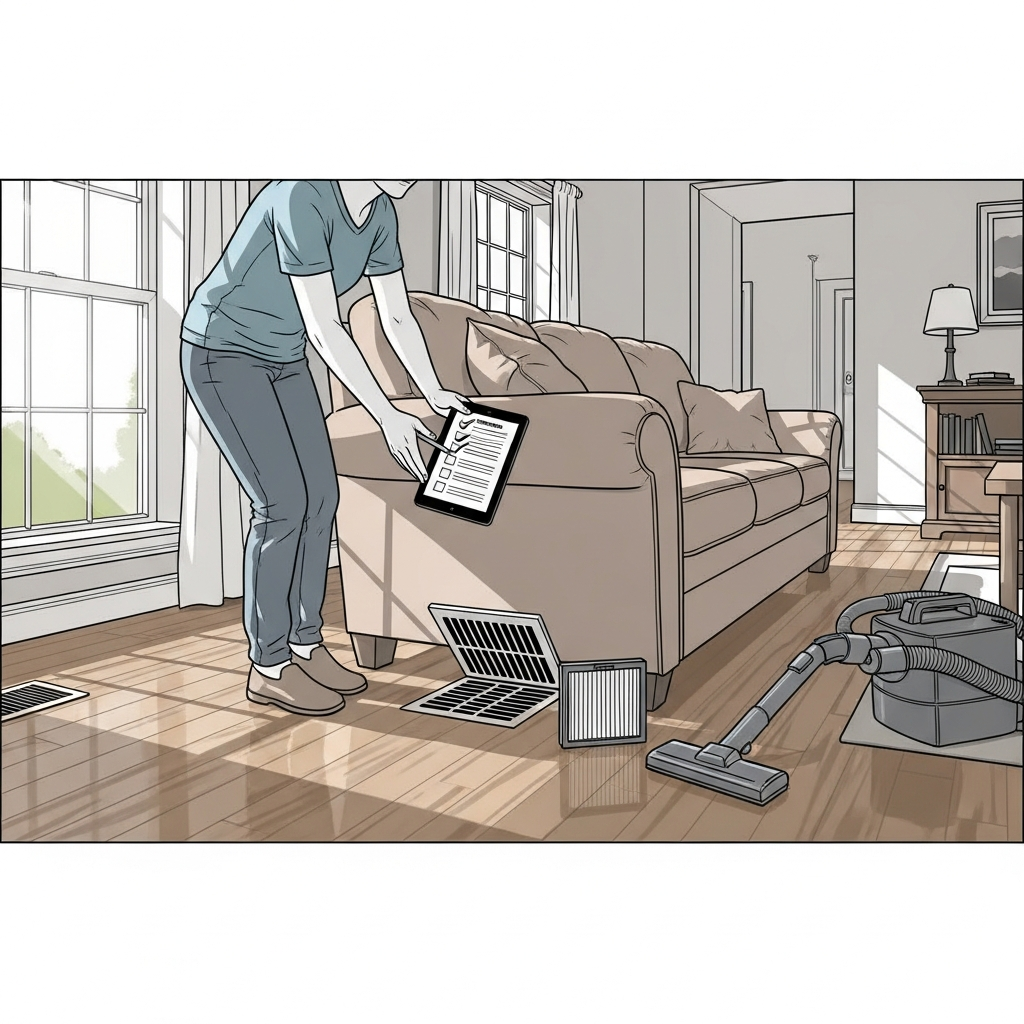
- Register care: Vacuum grills and surrounding floors or carpets to limit debris entering returns.
- Clutter control: Keep returns unblocked by furniture, drapes, or storage bins.
- Humidity management: In summer, target indoor relative humidity under 60%; in winter, avoid over-humidifying.
- Allergy season strategy: On peak pollen days, keep windows closed and rely on filtration.
- Post-project cleanup: After painting or sanding, isolate work zones and protect registers to limit dust spread.
Elizabeth-Specific Considerations
The city’s housing mix ranges from historic row houses to multifamily units and single-family homes with basements or crawlspaces. That diversity shapes your checklist:
- Shared walls and tight chases: Access planning matters. Ask technicians how they will reach vertical runs and concealed plenums.
- Basement moisture: Keep an eye on condensation around ductwork and address dehumidification if needed.
- Attic ducts: Insulate and seal to prevent heat gain, winter losses, and condensation.
- Traffic-related particulates: Expect filters to work harder in neighborhoods near major corridors; increase replacement frequency accordingly.
Room-by-Room Checklist for Best Results
- Living room: Move sofas and rugs away from floor registers before the appointment.
- Bedrooms: Clear nightstands or dressers that block wall grills and bag bedding to reduce dust during agitation.
- Kitchen: Remove mats near toe-kick registers; wipe counters after the service as a precaution.
- Bathrooms: Identify small exhaust vents separate from HVAC supplies to avoid confusion.
- Hallways and stairs: Provide safe, well-lit access; note registers close to railings or baby gates.
- Basement: Tidy storage around duct chases and the furnace to allow safe setup.
Choosing Filters and Setting a Replacement Rhythm
Pick a filter that balances particle capture with airflow. Too restrictive, and your system strains; too porous, and particulates circulate freely. Ask your technician to suggest an appropriate MERV range for your blower and duct design. Create a simple schedule—monthly checks with replacement as needed—and keep spare filters on hand. If you share your home with pets, you may benefit from more frequent changes, especially in peak shedding seasons.
Verifying Quality: A Homeowner’s Mini-Audit
After the team leaves, verify that access holes are sealed with proper materials, not just tape. Confirm that all registers reopened and are free of masking. Look for even airflow and listen for whistling that can indicate dislodged or misaligned registers. If camera images were captured, ask for copies; they help you decide on the interval for your next inspection and build a history of your system’s condition.
Post-Cleaning Habits That Extend Results
- Vacuum and dust regularly with a HEPA-capable unit to reduce what enters returns.
- Keep closet and entry rugs clean to capture grit before it travels deeper indoors.
- Schedule duct inspection after any major indoor project or move.
- Address moisture promptly to prevent residues from sticking inside ducts.
- Use your range hood and bathroom fans to remove humidity and particulates at their sources.
Mid-Cycle Checkpoint
Six months after professional service, perform a quick inspection of visible registers, note dusting frequency around supply vents, and check your filter. If you notice recurring dust plumes or odor, document dates and conditions—heat or cooling mode, time of day, humidity—and share them at your next appointment. For reminders on the fundamentals or to re-familiarize yourself with the process, a concise overview of air duct cleaning can help you recalibrate your routine.
Special Cases: Apartments, Row Houses, and Multifamily
Shared buildings introduce coordination issues. Confirm access permissions and elevator or stairwell policies for equipment transport. Identify building-wide systems versus unit-specific equipment so expectations are clear. In tight mechanical closets, ensure flammable storage is removed and that technicians have enough room to work safely around gas or electric components. Ask management about any building standards for filter type or replacement intervals so you stay consistent with community guidelines.
Allergy and Pet Owner Addendum
If allergies are part of your life, combine duct cleaning with broader indoor air practices: choose washable curtains, launder bedding in hot water, and minimize high-pile carpets that trap dander. For pet households, brush and bathe animals regularly and consider a grooming schedule aligned with shedding periods. Keep litter areas and pet beds away from returns to reduce local particle load.
Common Mistakes to Avoid
- Skipping preparation, which prolongs appointments and limits thoroughness.
- Ignoring filter pressure drop; forcing a too-dense filter can impair airflow and comfort.
- Closing multiple supply registers to “save energy,” which can raise static pressure and reduce system efficiency.
- Relying on fragrance or sprays instead of true source removal.
- Overlooking attic and crawlspace ducts where leaks and insulation gaps often hide.
FAQ
Q: How often should I schedule duct cleaning? A: Start with an inspection every two to three years, then clean as needed based on debris levels, pets, and renovation history.
Q: Do I need to leave home during service? A: Not usually. Expect some noise. Keep pets secure and provide clear access.
Q: Will cleaning stop all dusting? A: It reduces recirculated particulates, but surface dust also comes from daily living. Pair cleaning with filtration and regular housekeeping.
Q: Can I clean ducts myself with a shop vac? A: You can vacuum registers and accessible areas, but deep source removal requires negative pressure and specialized tools.
Q: Is sanitizer necessary? A: Only when contamination warrants it and with HVAC-appropriate products. Source removal remains the priority.
Q: What about mold concerns? A: Address moisture first. If growth or residues remain in ducts, targeted cleaning and remediation may be recommended.
Take the Next Step Toward Cleaner Air
Set a practical plan: schedule your inspection, prepare the home with this checklist, and establish a filter routine that matches your lifestyle. If you are ready to act on a straightforward maintenance roadmap, book your visit and refresh your home’s comfort with trusted air duct cleaning in Elizabeth, NJ.
