Introduction
Good ventilation keeps your Elizabeth, New Jersey kitchen cooler, quieter, and fresher. The exhaust hood, filters, duct, and fan must work together to capture grease and odors before they spread through the home. Yet even a high-quality system loses efficiency when films of grease coat the interior or when filters become saturated. This guide shares practical maintenance tips that fit real homes across Elizabeth—from compact apartments to older houses with long duct runs—so you can protect airflow, extend equipment life, and simplify cleaning. For a sense of what comprehensive care looks like beyond day-to-day upkeep, it is helpful to review how professionals approach kitchen exhaust hood cleaning and use that standard to shape your routine.
Small, regular actions prevent big messes. When you keep up with simple tasks and notice changes early, the fan does not have to work as hard, the kitchen smells better, and surfaces stay brighter. Think of maintenance as a cycle: prepare, clean, inspect, document, and adjust the schedule as cooking habits change.
Understand Your System
Knowing the parts helps you maintain them. The hood canopy captures vapors rising from pots and pans. Baffle filters slow and collect grease droplets. Air then moves into the plenum and through the duct to the exterior, driven by the fan. Some Elizabeth homes have makeup air systems that introduce fresh air to balance the exhaust; others rely on natural infiltration or a cracked window during cooking. Each element has its own maintenance needs, and attention to all of them keeps performance predictable.
Finish materials matter, too. Stainless steel is sturdy and resists corrosion, but it can show water marks and scratches from abrasive pads. Aluminum filters are lighter but require gentler cleaners to avoid dulling. Painted hoods need mild detergents and soft cloths. Match your products to the materials to avoid unintended damage that makes future cleaning harder.
Daily and Weekly Habits
Start the fan a minute before cooking to establish airflow. Use lids and back burners when possible so vapors enter the capture zone efficiently. After cooking, let the fan run for several minutes to clear lingering odors and moisture. Wipe the underside edges of the hood and nearby backsplash with a damp microfiber cloth; this prevents sticky borders that creep inward over time.
Each week, give the control panel, light lenses, and the hood face a careful wipe with a mild cleaner suitable for the finish. If you notice the hood getting louder, or if steam lingers longer than usual, place filter washing on your immediate to-do list. Small signs often appear before performance drops significantly.
Filter Care
Filters do the heavy lifting. Wash baffle filters in hot water with a kitchen-safe degreaser every few weeks if you fry or sauté often. Let them soak long enough for oils to dissolve, then rinse thoroughly and allow to dry fully before reinstalling. Damp filters restrict airflow and may produce a temporary musty smell. Inspect frames for warping and rivets for looseness; replace filters that no longer sit flush or develop gaps.
If your setup uses aluminum filters, choose a gentler cleaner to prevent dulling and avoid highly alkaline solutions. Track washing dates in a simple log so you can detect whether you are washing often enough. Filters that feel tacky even shortly after washing indicate heavier cooking loads or a need for deeper cleaning of the plenum and duct.
Hood Interior Maintenance
With filters removed, clean the plenum and interior surfaces with a degreaser compatible with your hood’s materials. Work from top to bottom, giving the product time to lift grease before you wipe. Use a two-bucket method to avoid spreading residues back onto clean areas. Finish with a mild detergent or warm water rinse to remove any cleaner film that might hold odors.
Inspect seams and corners where grease accumulates faster. If you spot ridges or hardened streaks, plan a deeper cleaning session soon. Keeping the plenum clean helps filters work efficiently and prevents sticky vapors from migrating to the duct.
Duct Awareness and Access
Not every homeowner can or should clean the entire duct, especially when it runs through walls or up to the roof. Still, awareness is powerful. Locate any cleanout panels, note duct lengths and bends, and record the type of exterior termination your system uses. If you have safe, limited access to an interior segment, a careful wipe with minimal liquid helps maintain a cleaner pathway. Avoid introducing large volumes of water or cleaner that could pool in low spots.
Plan professional help for long or complex ducts and for fans that require rooftop access. Elizabeth’s seasonal winds and occasional storms make exterior work risky without proper preparation. When booking service, ask the provider how they protect electrical parts, control runoff, and document before-and-after conditions—questions that reflect a maintenance mindset and ensure you get a thorough job.
Fan Care and Performance
The fan determines how much air moves through the system. Excess grease on blades or wheels can unbalance the assembly, causing noise and wear. With power off, remove the housing as your model allows and inspect for deposits. Clean evenly around the wheel, keeping liquids away from the motor. If you notice wobble or grinding, do not add oil unless the manual specifies it; many motors are sealed and need replacement rather than lubrication.
After reassembly, test airflow by holding a thin strip of paper near the hood opening. A steady draw suggests good performance. If airflow seems weak, check that filters are dry, correctly oriented, and seated without gaps. Inspect the exterior cap for sticky residue or a stuck damper that could choke flow.
Seasonal Tips for Elizabeth’s Climate
Winter brings closed windows and heavier indoor cooking. Slightly crack a window near the kitchen during high-heat cooking to improve capture and prevent backdrafts. In summer, humidity makes films tackier, so consider an extra mid-season wipe of the plenum and a more frequent filter wash. Autumn leaves can collect around exterior wall caps; a quick check after windy days prevents blockages. Spring is a great time to review your maintenance log and schedule any professional service before holidays and cookouts.
Saltier coastal air can contribute to corrosion on exterior fasteners and caps. Periodically inspect screws and gaskets, and replace corroded hardware with stainless options where possible. Keeping the termination in good condition supports stable, efficient airflow year-round.
Products and Tools
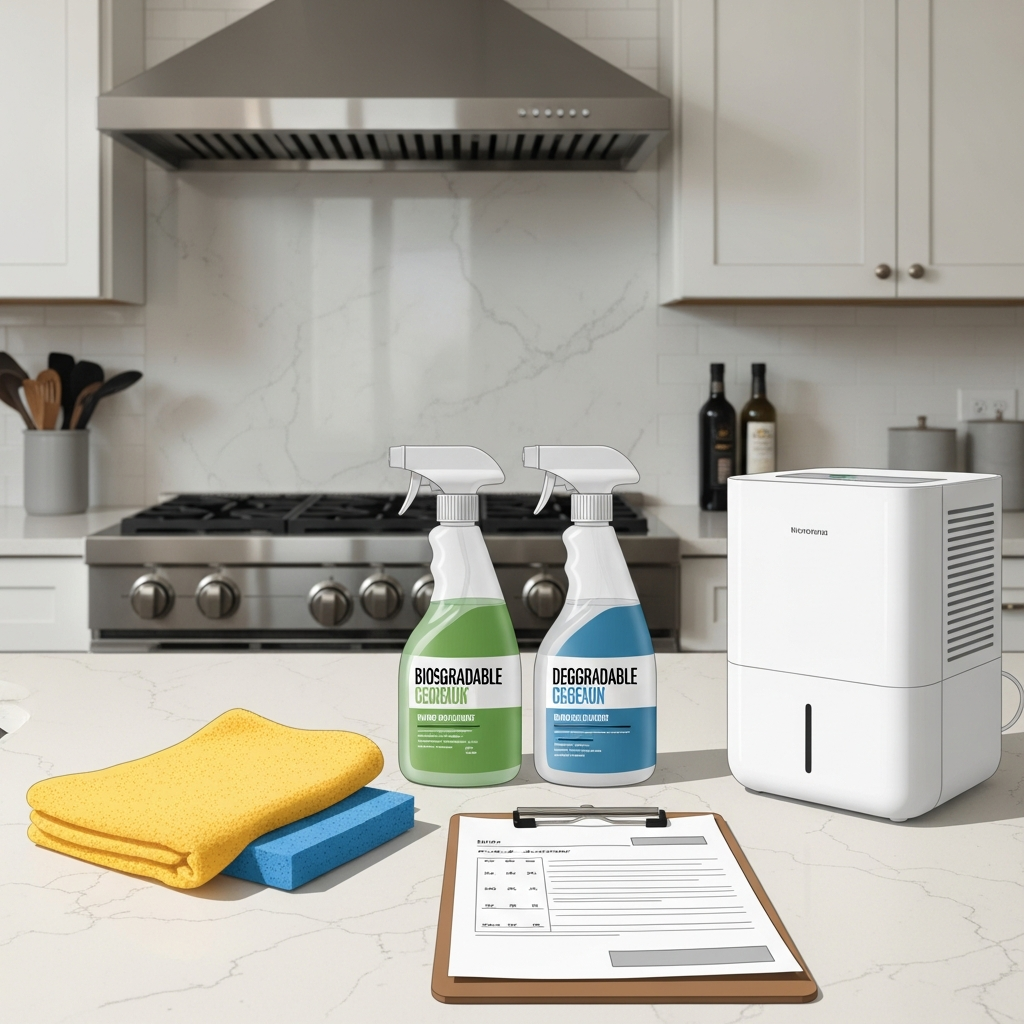
Keep a small kit on hand: microfiber cloths, non-scratch pads, a kitchen-safe degreaser suitable for your hood’s finish, mild detergent, gloves, and a flashlight. For fans, a basic nut driver set and screwdriver are handy if your model allows user-level access. Store everything together so quick wipe-downs are convenient; convenience is the secret to consistency in maintenance.
Choose cleaners thoughtfully. High-pH degreasers cut heavy grease quickly but may not suit aluminum. Neutral or mildly alkaline cleaners are versatile for routine wipes. Always read labels, ventilate the area, and test on a small, inconspicuous spot if you are uncertain.
Common Mistakes to Avoid
Do not use steel wool or harsh abrasives on stainless; scratches trap grime and can encourage rust-like discoloration. Avoid spraying large amounts of cleaner directly into the duct or fan housing where liquid can collect. Do not reinstall wet filters, and never operate the fan while panels are open or the wheel cover is removed. If you replace filters, make sure the new set matches exactly; slight size changes can compromise capture by creating bypass paths.
Another trap is neglecting the exterior termination. Sticky residue at the cap attracts lint and dust, which slows the system. Include the termination in your seasonal checks along with gutters and outdoor vents for dryers and bathrooms. A minute spent here can restore noticeable airflow.
Troubleshooting Performance Drops
If the hood suddenly feels weak, start with the simplest checks. Confirm that filters are clean and dry. Verify that the damper at the exterior termination swings freely. Listen for new noises, which may signal a loose panel or unbalanced wheel. Inspect the duct access point if you have one; a thin, shiny layer of grease can become a slippery choke point, especially around elbows.
Persistent issues after these steps suggest a deeper restriction or motor wear. At that point, bring in a trained technician who can safely clean the full duct and evaluate the fan assembly. Restoring baseline cleanliness often resolves capture complaints and reduces odors immediately.
Documentation Builds Momentum
Write down dates for filter washing, interior cleaning, and any service visits. Jot quick notes on noise levels, odor persistence, or visible residue. Over time, you will see how your cooking pattern affects maintenance. This simple record also helps you budget time for upkeep before busy seasons and provides useful context if you ever sell your home.
Photographs add value to your notes. A quick snapshot of the plenum or fan wheel before and after cleaning proves progress and helps you or a technician spot gradual changes that might otherwise go unnoticed.
Benchmarking Against Professional Results
It is helpful to compare your outcomes with a professional baseline. After a thorough cleaning, surfaces inside the hood should feel smooth, not tacky; filters should drain cleanly; and the fan should run without wobble or unusual noise. Airflow at the hood entrance should pull a lightweight strip of paper steadily across the opening. If your results fall short, study how comprehensive services define success in kitchen exhaust hood cleaning and decide whether targeted help or a full visit will close the gap.
Frequently Asked Questions
How often should I wash filters? Every two to four weeks for frequent frying; monthly for lighter use. If they feel sticky or look dull quickly, increase frequency.
What is the best way to reduce odors after cooking? Run the fan a few minutes after you finish, clean filters regularly, and keep the plenum free of films. A brief window crack during strong-cooking sessions improves capture.
Can I pressure-wash the fan? Avoid it unless the unit is specifically designed for that method and fully protected. Excess water can damage motors and roof components.
Do aluminum filters need special care? Yes. Use gentler cleaners and avoid high-alkaline products that can dull or pit aluminum surfaces.
Is exterior cap maintenance necessary? Absolutely. A clean, freely moving damper is essential for airflow. Check and wipe it seasonally.
Keep Your System Performing
Maintenance is not a one-time event; it is an ongoing habit that keeps your kitchen healthier and more enjoyable. By combining weekly wipes, monthly filter care, seasonal checks, and timely professional support for ducts and fans, you create a reliable ventilation system that matches Elizabeth’s varied housing and weather conditions. When your schedule is tight or access is difficult, book comprehensive kitchen exhaust hood cleaning so your system stays balanced, quiet, and ready for every meal.
Schedule Service and Breathe Easier
If you want a top-to-bottom reset, help with long ducts, or simply the assurance that every component is addressed properly, schedule a convenient appointment with a trusted local provider. Reserve time for thorough kitchen exhaust hood cleaning so your home stays comfortable, odors clear faster, and cooking remains a pleasure in every season.
