Introduction: A Homeowner-Friendly Guide for Elizabeth, New Jersey
If you are planning a new laundry space or updating an older setup in Elizabeth, New Jersey, understanding the essentials of a safe, efficient dryer vent is one of the smartest upgrades you can make. Proper venting reduces fire risk, speeds up drying times, and protects your home from excess moisture. Whether you live in a historic house near the Midtown area, a townhome in Uptown, or a multifamily building on the North End, the layout of your home influences every decision you will make about materials, routing, and termination. If you prefer professional help from the start, you can always explore expert dryer vent installation so your system performs reliably from day one.
This guide explains how dryer vents work, which materials to use, how to plan the route, and what to consider for Elizabeth’s climate and housing styles. You will also learn step-by-step tips for installation, how to test performance, and how to maintain the system so lint and moisture do not compromise your laundry room or your home’s air quality.
Why Proper Dryer Venting Matters
Every dryer needs a clear and direct path to expel warm, moist air and lint. If the vent is too long, has too many turns, or is made from the wrong material, the dryer must work harder. That leads to longer cycles, higher energy use, more lint buildup, and elevated risk of overheating. Over time, these issues can also shorten appliance life and cause damage to surrounding finishes and structures.
In a place like Elizabeth, where summers can be humid and winters can be cold and damp, pushing moisture outdoors effectively is especially important. A poor vent connection can introduce humidity into walls or attics, which may lead to condensation, staining, mildew, or odors. Good design keeps the air moving and the lint contained.
Know Your Home: Elizabeth, New Jersey Considerations
Homes in Elizabeth vary widely in age, size, and construction types. Older homes might have plaster walls and tight utility chases, while newer townhomes could offer direct routes through exterior walls. Multifamily properties often have shared chases or longer runs that require careful planning. Local considerations include:
- Short winters, humid summers: Pay attention to condensation control and insulation on ducts in unconditioned spaces.
- Row homes and attached structures: Termination points may be limited to specific walls or the roof.
- Historic or existing finishes: Minimizing wall cuts and selecting the best path can help preserve character while ensuring safety and performance.
Planning the Vent Path
Start by identifying the shortest, straightest route from the dryer to the exterior. The most efficient installations often exit through the nearest exterior wall. Roof termination can work, but it adds complexity and potential for weather intrusion if not properly executed. Prioritize minimal bends, avoid sharp turns, and keep the duct as short as reasonably possible.
- Pick the exit location: An exterior wall behind or adjacent to the dryer is ideal.
- Map the route: Sketch the path and note each elbow. Fewer elbows mean less resistance.
- Consider accessibility: Joints should be accessible for inspection and maintenance when feasible.
- Check obstructions: Look for plumbing, wiring, studs, and joists before cutting any holes.
Materials That Matter
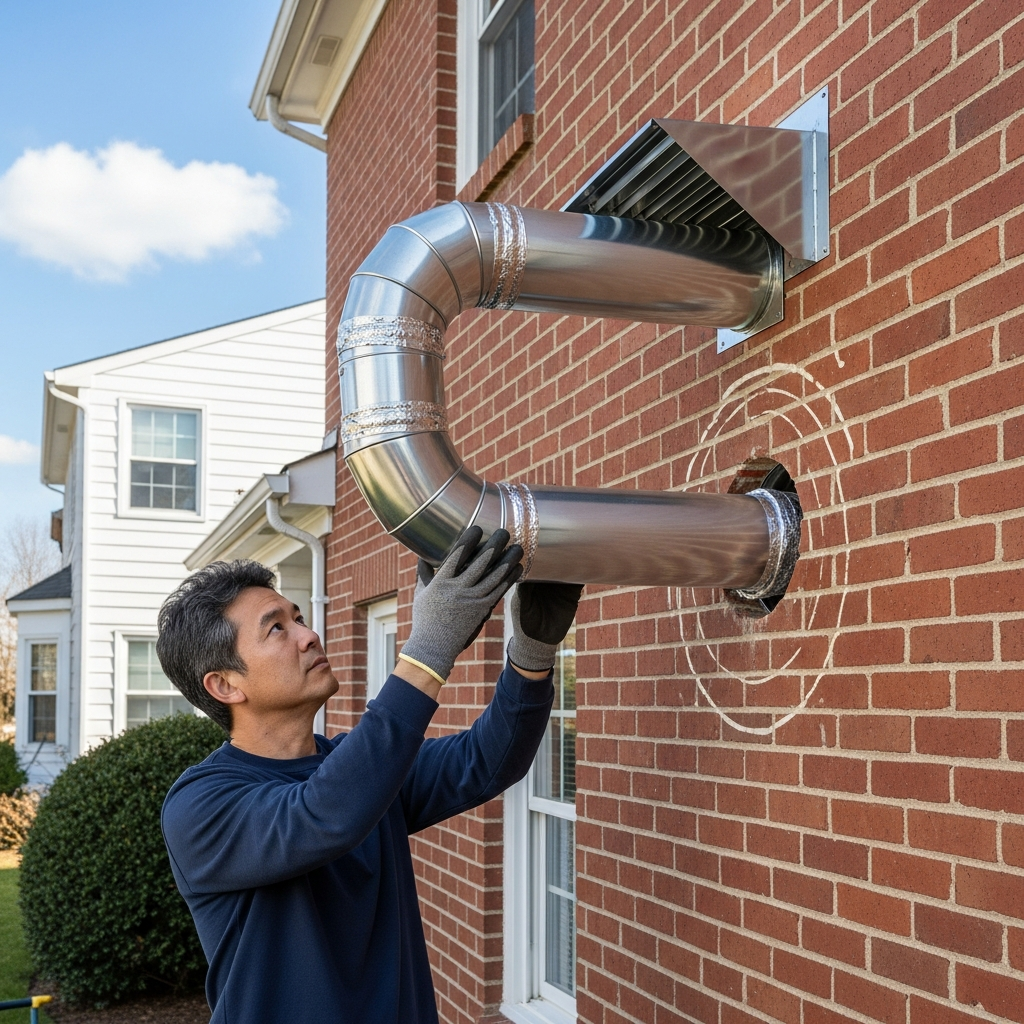
Selecting the right materials is essential to performance and safety. In most cases, smooth, rigid metal duct is preferred for the run through walls, floors, basements, or crawlspaces because it minimizes lint accumulation and provides superior airflow. The short connector between the dryer and the wall outlet can be a listed semi-rigid transition duct specifically designed for dryers.
- Rigid metal duct: Smooth interior for low friction and easier lint transport; durable and better for longer runs.
- Listed transition duct: Use a UL-listed transition connector from the dryer to the wall outlet; keep it as short and as straight as possible.
- Foil tape (not cloth duct tape): Seals joints without degrading under heat; screws inside the airstream should be avoided because they can catch lint.
- Exterior hood with backdraft damper: Allows air to exit and prevents outside air and pests from coming in; avoid screens that can trap lint.
Tools and Preparation
Assemble the basic tools before you begin. Typical tools include a drill with hole saw, a jigsaw or reciprocating saw for siding or sheathing, metal snips for duct, a level, a tape measure, and a stud finder. Protective equipment like gloves and eye protection keeps the work safe. Having clamps, support straps, and the proper fasteners for your siding or masonry speeds the job.
Step-by-Step Overview of a Typical Installation
- Measure and mark: Identify the centerline of the outlet on the interior wall and transfer that location outside.
- Cut the exterior hole: Size it to fit the termination hood and collar. Keep the hole neat to simplify weather sealing.
- Install the hood: Caulk or flash the perimeter appropriately for the siding type so wind-driven rain does not enter.
- Run the rigid duct: From the interior, connect sections with foil tape at seams. Keep joints oriented in the direction of airflow to reduce lint catching.
- Limit elbows: Use long-radius elbows where possible and keep the run as straight as you can.
- Support the duct: Add metal straps every few feet to prevent sagging and joint stress.
- Connect the transition: Attach a short, listed transition duct from the dryer outlet to the wall duct; keep it tidy and uncrushed.
- Seal and finish: Tape all accessible joints with high-quality foil tape. Do not cover any required access points.
- Test airflow: Run the dryer on a no-heat cycle to verify strong airflow at the exterior hood and that the damper opens fully.
Wall Versus Roof Termination
Wall terminations are often simpler to maintain and monitor. You can see the damper move, check for lint, and clean it with minimal ladder work. Roof terminations, while sometimes unavoidable, must be flashed correctly and kept clear of snow, leaves, or ice. They typically require roof-safe access for maintenance. When roof venting is used, a low-resistance cap designed for dryers helps reduce back pressure.
Gas and Electric Dryer Notes
Gas dryers vent combustion byproducts along with moisture and lint. Ensuring a secure and unobstructed vent path reduces the chance of fumes entering the home. Electric dryers do not produce combustion gases, but they still emit humid air that must be vented outdoors. Never terminate a dryer into interior spaces, attics, crawlspaces, or garages.
Condensation and Insulation
Cold weather can cause condensation on metal ducts located in unconditioned spaces. Wrapping the duct with appropriate insulation in basements, crawlspaces, or garages can help keep the interior air warmer, minimize moisture at joints, and reduce potential dripping. Sealing penetrations at walls, floors, and the exterior termination also protects against drafts and pests.
Commissioning: How to Verify Performance
After installation, a quick check pays dividends. Observe the exterior damper while the dryer runs; it should open fully. Inside, listen for rattles that may indicate loose straps or misaligned joints. Check for unusual heat on the dryer cabinet, which can mean restricted airflow. A short test load should dry efficiently, without musty smells or excessive heat in the laundry area.
Common Mistakes to Avoid
- Using plastic or thin, non-listed flex duct that can sag and trap lint.
- Adding multiple tight elbows that increase resistance and reduce airflow.
- Running vents into attics or crawlspaces rather than outdoors.
- Using screws that protrude into the airstream and collect lint.
- Skipping exterior weatherproofing at the hood, which can lead to moisture intrusion.
Maintenance Planning From Day One
A well-installed system still needs periodic care. Clean the lint trap in the dryer before every load, and check the exterior hood monthly to confirm it opens fully and remains lint-free. Inspect the transition duct seasonally to ensure it is not crushed behind the dryer and that it remains securely connected. An annual or semiannual deeper cleaning of the entire run may be warranted depending on laundry volume and the vent length.
When to Consider a Professional
Complex routes, long runs, and rooftop terminations can be challenging for homeowners. If your installation requires navigating finished walls, dense framing, or shared chases in multifamily properties, bringing in a specialist can ensure the work is safe, code-compliant, and reliable. In these scenarios, homeowners often choose professional dryer vent installation to minimize disruption and get performance testing included with the job.
Safety Tips for Families and Landlords
- Keep combustibles away from the dryer and vent path.
- Verify that the dryer is set up for your fuel type and that clearances are maintained.
- Teach everyone in the home to clean the lint filter and report unusual drying times or odors.
- Schedule inspections after renovations, appliance replacements, or when you move into a new home.
Frequently Asked Questions
Q: What type of duct should I use for the main run?
A: Smooth, rigid metal duct is the most common recommendation for the main run because it resists crushing, has a low-friction interior, and is easier to keep clean. A short, listed transition duct can connect the appliance to the wall outlet.
Q: How long can a dryer vent run?
A: Shorter is better. The actual allowable length depends on your dryer model and the number of elbows. Each fitting adds resistance. Check your appliance manual for maximum length guidelines and keep the run as straight as feasible.
Q: Can I vent a dryer into an attic or crawlspace?
A: No. Dryer exhaust contains lint and moisture that should be sent directly outdoors. Terminating into enclosed spaces can lead to moisture damage, odors, and safety concerns.
Q: Is roof termination acceptable?
A: It can be, but it must be done carefully using a cap designed for dryer exhaust and proper flashing. Regular maintenance is important because roof terminations are harder to access for inspection and cleaning.
Q: What are signs my vent needs attention?
A: Clothes taking longer to dry, overheating, a hot laundry room, musty smells, or a damper that barely opens can indicate restriction. Visible lint at the hood or around joints is another signal.
Q: What about birds or pests getting into the vent?
A: The exterior hood should include a backdraft damper that closes when not in use. Avoid screens that trap lint. If pests are common in your area, choose a hood design that deters entry while maintaining airflow.
Q: Do electric and gas dryers have different venting needs?
A: The mechanical routing is similar, but gas dryers also exhaust combustion byproducts. Proper venting and good makeup air are important to keep the home safe and comfortable.
Q: How often should I clean the vent?
A: Clean the lint filter every load, inspect the exterior hood monthly, and consider a deep cleaning annually or semiannually depending on usage and layout. Long runs or multiple elbows may need more frequent service.
Q: What if my laundry is in an interior room?
A: Plan the route thoughtfully. You might travel through a ceiling or floor bay to reach an exterior wall. Keep bends to a minimum and consider professional help if the path is complex.
Putting It All Together
Installing a dryer vent is a blend of careful planning, the right materials, and attention to detail. When you choose a straight route, use rigid metal duct, seal and support your joints, and verify the exterior damper operates smoothly, you set your dryer up for efficient operation. In a climate like Elizabeth’s, taking the time to insulate ducts in unconditioned spaces and weather-seal the termination pays off in comfort and durability.
Ready to Improve Your Laundry Room
If your current setup is slow, noisy, or hard to maintain, upgrading the vent can transform laundry day. Whether you remodel a basement laundry, modernize a second-floor stack, or replace a tired transition duct, a well-executed vent keeps your dryer running safely and efficiently.
Take the Next Step
When you are ready for dependable results and a clean, code-conscious finish, schedule trusted local help. Book your service and get expert routing, proper materials, and thorough testing by arranging your dryer vent installation with a qualified team in Elizabeth, New Jersey.
