Choosing the Right Dryer Vent Cleaning Kit in Elizabeth New Jersey
Homeowners across Elizabeth New Jersey often look for a simple, effective way to keep their dryer vents clearer between professional visits. A well-chosen kit can help with straight, short runs and routine touch-ups, but the right selection depends on your vent’s layout, materials, and termination style. As you evaluate options, remember that professional dryer vent cleaning remains the gold standard for complex or long vent paths, where concealed elbows and extended runs demand specialized tools and verification.
The market offers many kits with varying brush heads, rod materials, and compatibility with household drills. Understanding these differences will help you select a kit that agitates lint effectively, navigates bends safely, and minimizes the risk of damaging thin or aging ducts. Choosing wisely saves time, reduces frustration, and makes your periodic upkeep more successful.
Know Your Vent Before You Buy
The most important step is mapping your vent route. Determine whether the termination is on a side wall or roof, how many elbows are present, and how far the duct runs. Short, straight horizontal ducts are good candidates for homeowner kits. Long runs with several tight elbows or vertical climbs to roof caps are better served by professional tools and techniques that can reach far, capture debris, and verify airflow improvements.
Also inspect the transition duct behind the dryer. If it is thin foil flex that crushes easily, consider upgrading to a safer, smoother alternative regardless of which kit you choose. A kinked or overly long transition duct defeats the purpose of any cleaning effort by reintroducing resistance to airflow right at the appliance.
Brush Head Design and Stiffness
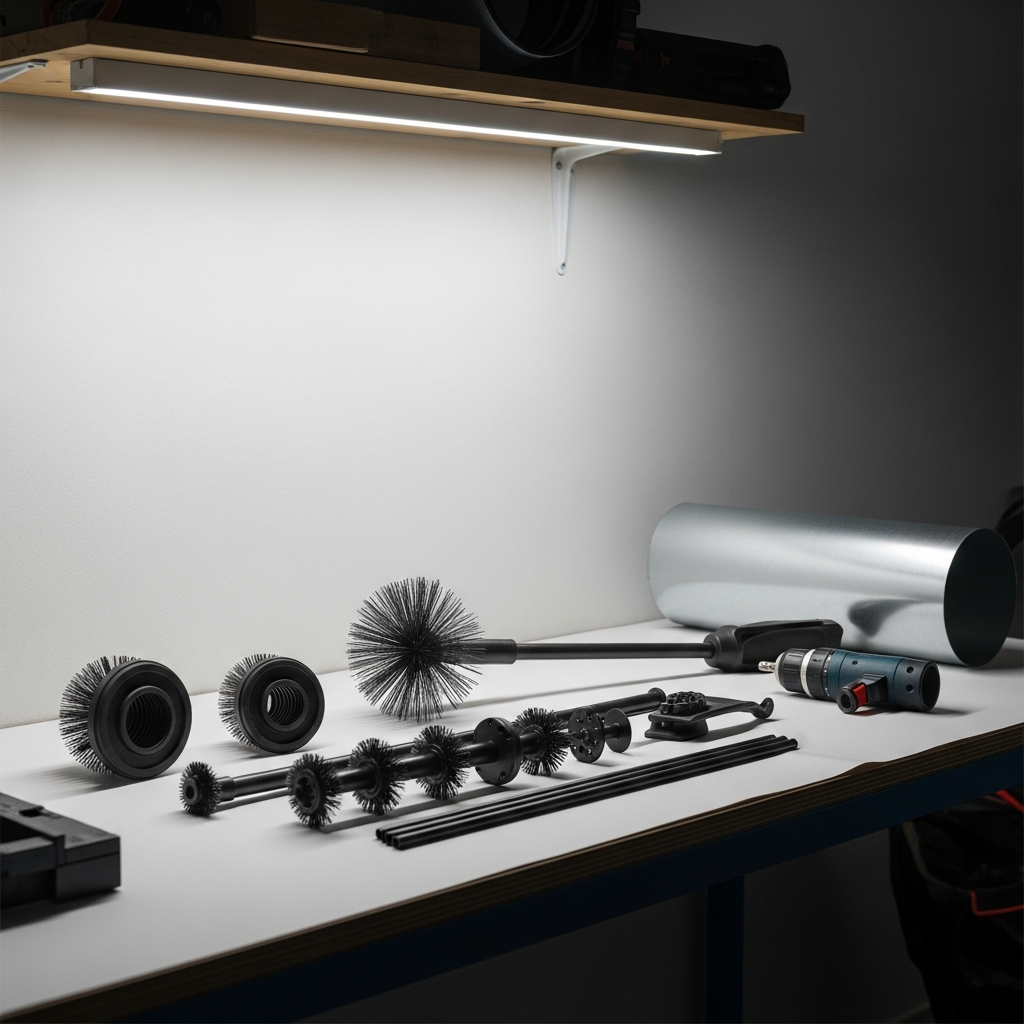
Brush heads vary in material and stiffness. Stiffer brushes can dislodge heavy deposits but risk scraping or damaging delicate ducts, especially older sections. Softer bristles are gentler but may struggle with stubborn, matted lint. Some kits include interchangeable heads, allowing you to start conservatively and adjust as needed. For semi-rigid or smooth-walled metal ducts in good condition, a moderate-stiffness brush often balances cleaning power with safety.
Rod Materials and Flexibility
Rod assemblies—often made of nylon, fiberglass, or composite materials—need to balance flexibility and torsional strength. Too stiff, and the rod may not navigate elbows; too flexible, and it can bind or twist without transmitting enough rotation to the brush head. Sections that lock securely reduce the chance of separation inside the duct, which can push lint deeper or leave a stuck component you must retrieve.
Drill Compatibility and Rotation Control
Many kits connect to common household drills. Controlled, steady rotation is crucial; aggressive speed can cause whipping, separation of sections, or scoring of duct walls. If your drill has a clutch or variable-speed trigger, use it to maintain gentle, consistent rotation. Always test on a short section first to feel how the brush behaves before committing to long reaches inside the duct.
Vacuum Capture and Debris Control
Agitating lint is only half the battle—you also need to capture it. While homeowner vacuums can help with debris at access points, they rarely reach deep inside ducts. Some kits include adapters that couple to a vacuum port to capture loosened lint as you work. Even then, expect to manage dust around the work area and wear appropriate protection. If your goal is a thorough, whole-run cleaning with controlled capture, it may be time to call a professional.
When a Kit Is a Good Fit—and When It’s Not
A kit can be effective for a short, straight run with few bends, particularly when you can access both the dryer side and the termination. Kits are less effective in ducts with multiple tight elbows, very long runs, or roof terminations. In such cases, the brush may bind or fail to reach obstructions, and you risk damaging duct walls. Elizabeth New Jersey homes frequently feature concealed routing through basements or ceilings, which may hide problem joints that only show up under professional inspection.
Safe Use Tips for Homeowners
Before any work, unplug the dryer and, for gas units, close the gas valve. Move the appliance carefully to avoid stressing lines. Keep the transition duct as short and straight as possible, and inspect it after moving the dryer to ensure it has not kinked. Work methodically with gentle rotation, adding rod sections gradually. If you feel strong resistance, stop—forcing the tool can cause breakage or punctures. Reassemble the dryer thoughtfully, ensuring all connections are tight and the transition duct is not crushed when you slide the machine back.
Complementary Maintenance Habits
Cleaning the lint screen every load is essential. Periodically wash the screen to remove residues that reduce airflow. Avoid overloading the dryer; proper tumbling removes moisture efficiently and reduces the time warm, moist air spends in the duct. Check the exterior termination while the dryer runs—the flap should open freely and close when off. Do not install screens over the outlet; they trap lint and can create hazardous blockages.
What to Expect After Using a Kit
With a clear, short vent, you should experience more consistent dry times, a cooler laundry room during cycles, and less lingering moisture in clothing. If these results do not materialize—or if performance declines again quickly—there may be deeper issues such as crushed transitions, hidden elbows packed with lint, or clumped deposits caused by condensation inside metal ducts in unconditioned spaces.
Recognizing the Limits—And Calling in a Pro
Persistent slow dry times, visible lint at the termination that quickly returns, or a dryer cabinet that feels unusually hot suggest the need for expert evaluation. Professionals use agitation tools matched to the duct, high-suction capture, and validation methods that confirm the system’s health. Their work often uncovers issues a homeowner tool cannot address, from loose joints leaking lint into walls to termination flaps that bind under real airflow.
Frequently Asked Questions
Q: Will a kit work on a roof termination? A: Kits struggle with long vertical climbs and tight bends near roof caps. For these routes, professional service is recommended for safety and effectiveness.
Q: How do I prevent a brush head from getting stuck? A: Use consistent, controlled rotation, avoid sudden reversals at elbows, and ensure rod sections lock securely before insertion.
Q: Can I clean from the exterior only? A: Exterior-only attempts often miss lint packed near the dryer end. Two-point access—appliance side and termination—improves results.
Q: Is thin foil flex acceptable behind the dryer? A: It crushes easily and traps lint. Upgrading to a safer, smoother option and keeping it short enhances airflow and safety.
Q: How often should I use a kit? A: Frequency depends on usage, fabrics, and pets. Monitor performance, and supplement with professional service when results diminish or when the run is complex.
Q: Is a household vacuum enough for capture? A: It helps at access points but rarely captures lint deep inside the line. Professional capture systems are designed for whole-run cleaning.
Q: What if I feel strong resistance? A: Stop immediately. Resistance can signal a tight elbow, clumped lint, or a fragile duct section at risk of damage.
Smart Selection, Safer Results
The right kit can be a helpful tool in your maintenance toolkit, especially for straightforward vent paths. But tools work best within their limits. Matching your kit to your vent’s design—and knowing when to seek broader help—delivers the safest, most reliable outcome.
Restore Confident Airflow in Your Home
If your vent route is long, complex, or shows stubborn symptoms, pair homeowner upkeep with professional dryer vent cleaning to ensure complete, verified results for your Elizabeth New Jersey home.
