Introduction: The Complete Guide for Elizabeth, NJ Homes
Elizabeth, New Jersey homeowners navigate humid summers, gusty springs, and long heating seasons, all of which shape what moves through your ductwork. Dust, pollen, dander, construction residue, and fine outdoor particulates can collect in supply and return paths and affect comfort and cleanliness. This comprehensive guide explains how ducts work, why cleanliness matters, what safe cleaning entails, and how to maintain results through the year. If you would rather start with a professional reset and then manage ongoing upkeep yourself, schedule proven air duct cleaning and come back to this guide to keep everything in top form.
We will cover system basics, inspection steps, safe methods for different duct types, moisture control, verification, and how to choose a qualified provider. Elizabeth-specific notes help tailor recommendations to older homes, multifamily buildings, and neighborhoods near major corridors.
How Ducts Move Air Through Your Home
Your HVAC system pulls air from rooms through return grilles, passes it through a filter, conditions it across heating or cooling components, and pushes it back through supply ducts. Returns see the heaviest dust load. Filters catch a large share of debris, but gaps, neglected changes, or high particulate environments allow dust to pass and settle downstream. Supply ducts can collect finer particles, especially where air slows at turns and junctions. The blower cabinet, evaporator coil area, and main trunks are central nodes where dust can accumulate and affect airflow.
Understanding this loop explains why filter discipline and careful return cleaning are key. It also clarifies why moisture control around coils and drain pans matters—humidity can make dust tacky and harder to remove.
Why Air Duct Cleanliness Matters
While ducts are not the only factor in indoor air quality, they influence how quickly dust reappears on surfaces and how evenly air moves through rooms. Clean ducts support smoother airflow, reduce the chance of odors caused by trapped debris, and protect sensitive components by limiting the volume of particulates circulating through the system. If you have pets, allergy sufferers, or live near busy roads, your returns will likely load faster and merit more frequent attention.
Cleanliness is not just about what you see. Attention to sealing and insulation, filter fit, and proper drainage all extend the benefit of a thorough cleaning, ensuring dust does not reaccumulate rapidly.
Inspection: The First Step to a Good Plan
Start with a tour of your registers and returns. Remove a few covers and shine a flashlight into the first foot or two of duct interior. Note visible dust layers, debris like pet hair or renovation residue, and any moisture signs—staining, damp insulation, or musty odors. Check the blower cabinet exterior and surrounding area for dust accumulations and confirm that the filter is properly seated. Photograph conditions to create a baseline for comparison after cleaning.
In older Elizabeth homes, returns may run through building cavities that double as chases. These can leak and draw in attic or basement air. If you find heavy deposits despite consistent filter changes, investigate for air leaks and plan sealing work in tandem with cleaning.
Tools and Materials for Safe Cleaning
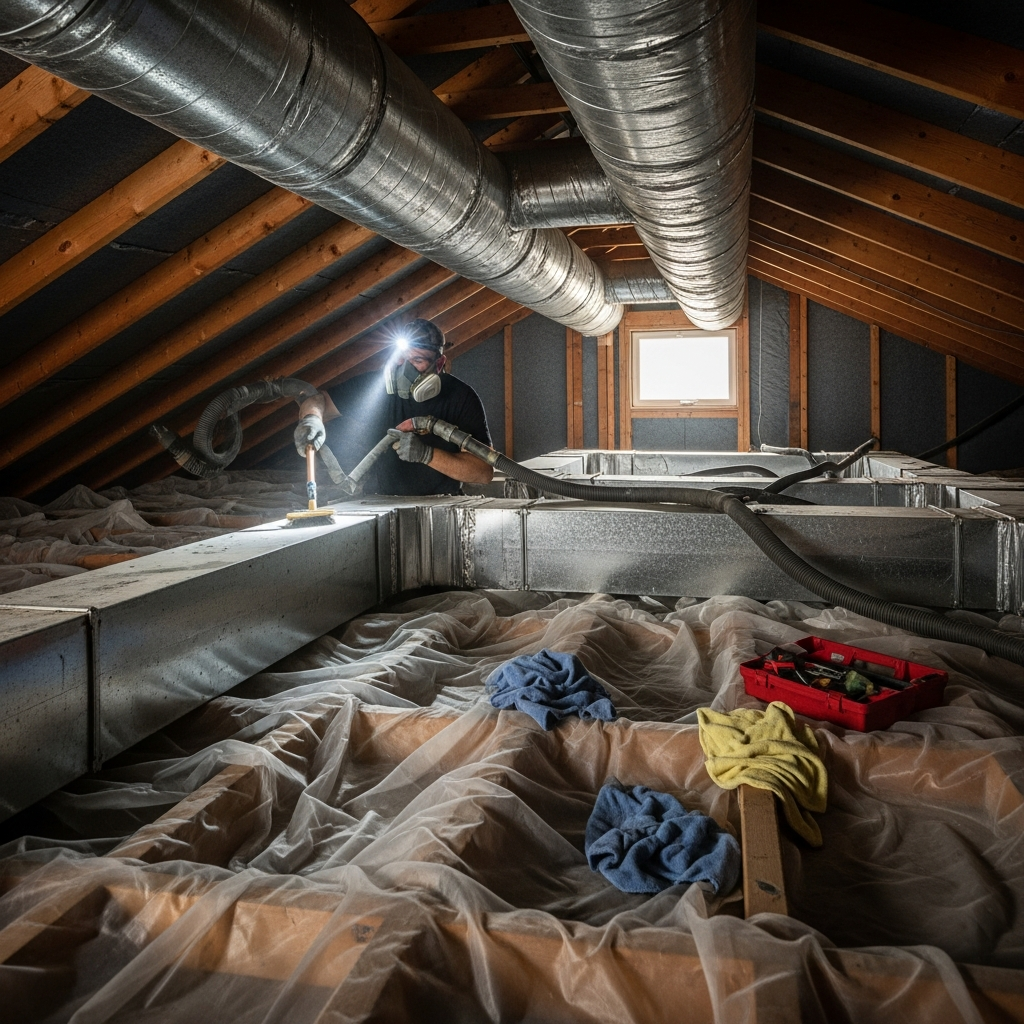
For homeowner-level work, gather a HEPA vacuum with extension hoses and a crevice tool, soft-bristled brushes, screwdrivers, painter’s tape, plastic sheeting, and microfiber cloths. Wear eye protection, a particulate respirator, and cut-resistant gloves. If your ducts include flexible or internally lined sections, avoid aggressive rotary brushes that can tear liners. A camera or phone for documentation and a notepad for a simple room-by-room checklist round out your kit.
Keep replacement filters on hand so you can install a fresh one the moment cleaning is done. Verify size and orientation, and write the installation date on the frame.
Safe Step-by-Step Cleaning
- Shut the system off at the thermostat and, if applicable, the local disconnect.
- Establish light containment by covering most registers with plastic and tape, leaving one or two open in your starting zone.
- Remove the first register. Vacuum the grille thoroughly, then vacuum just inside the opening.
- Use a soft brush to agitate gently while vacuuming near the opening. Avoid forcing tools around tight turns.
- Proceed room by room, marking cleaned registers and returns on your checklist.
- Open the return grille. Expect heavier debris; work slowly to prevent plumes.
- If safe and manufacturer-permitted, open the blower cabinet with power off. Lightly vacuum accessible surfaces without bending fan blades or damaging wiring.
- Visually check the evaporator coil face if accessible. If dirty, apply only coil-safe methods or defer to a technician for deeper work.
- Replace the HVAC filter with a correctly sized, properly seated model.
- Reinstall covers, restore power, and test airflow and sound.
Duct Types and the Right Touch
Metal ducts tolerate careful mechanical agitation. Flexible ductwork requires caution: use soft tools, avoid aggressive rotary heads, and never kink the duct while working. For internally lined or fiberglass duct board, keep agitation minimal to protect fibers and acoustic lining. If a section is sagging, crushed, or water-damaged, prioritize repair or replacement rather than cleaning alone.
Transitions and elbows trap more particles. Work in short strokes and move slowly. When you cannot reach safely or clearly, note the limitation and plan for professional access methods.
Moisture, Odors, and When to Pause
Odors that persist after cleaning usually point to moisture issues—blocked condensate drains, air leaks that draw damp air into returns, or poor insulation on cold ducts through warm spaces. Address these root causes rather than masking odors with fragrances. If you observe staining that grows, standing water, or extensive damp insulation, pause and consult a specialist before continuing.
In Elizabeth’s humid summers, confirm that the drain pan is clear and the line flows. During shoulder seasons, check that switchover from cooling to heating does not leave lingering moisture in low spots.
Sealing and Insulation: Partners to Cleaning
Clean ducts yield the best results when paired with air sealing and proper insulation. Seal return chases that pull in attic or basement air, and insulate supply runs through unconditioned spaces to minimize condensation risk and temperature loss. These upgrades prevent rapid re-dusting and stabilize comfort from room to room.
After cleaning, walk the home and feel for drafts near returns and around equipment closets. Small gaps add up. Addressing them complements your ductwork efforts and enhances overall indoor air quality.
Verification: Know Your Cleaning Worked
Use straightforward checks. With the system off, remove a few registers you cleaned and look inside. You should see far less loose debris and dust mats. With the system running, hold a tissue near registers to confirm steady flow, and listen for rattles that suggest a loose cover. Replace the new filter once more after a week of operation to capture residual particles, then resume your normal filter schedule.
Keep a dated photo set of before and after conditions for future comparison. This makes it easy to decide when your next deeper cleaning should occur.
Choosing a Qualified Provider
When hiring, look for clear explanations of methods, tools appropriate to your duct materials, protective measures for your home, and how results will be verified—photos, visual inspections, or both. Ask how flexible ducts and lined sections are handled and what steps are taken to manage dust during the project. A well-defined scope coupled with transparent communication is a strong quality signal.
Elizabeth’s mix of housing types rewards experience. Providers familiar with older homes and multifamily layouts are more likely to anticipate access constraints and tailor containment effectively.
Elizabeth, NJ-Specific Considerations
Homes near major corridors see higher fine particulate loads. Keep returns cleaner with frequent filter checks during spring pollen and summer humidity. In older houses, pay attention to unconventional returns or shared chases that may need sealing. Multifamily buildings often require coordination for equipment access and work scheduling to minimize disruption to neighbors.
Frequently Asked Questions
Q: How often should duct cleaning be scheduled? A: Base it on inspections and household conditions—pets, renovations, and local particulates. Many homes benefit from periodic deep cleaning supported by consistent filter changes.
Q: Do chemicals or fragrances help? A: Routine duct cleaning should rely on mechanical removal of dust and moisture control. Apply treatments only for specific, verified issues under expert guidance.
Q: Can I damage ducts by cleaning? A: Yes, if you use aggressive tools on flexible or lined ducts or push brushes around tight bends. Gentle methods and patience are key.
Q: Will cleaning improve airflow? A: Removing debris at returns and key junctions can support smoother airflow. The biggest improvements come from pairing cleaning with sealing and proper filter maintenance.
Q: What are signs I should pause and call a pro? A: Standing water, extensive debris beyond your reach, suspected microbial growth, persistent odors after drying, or damaged duct sections.
Take Control of Your Home’s Air
If you want a clean baseline set by experienced hands before you take over routine care, arrange professional air duct cleaning. With a verified reset and a simple maintenance rhythm, you will keep your Elizabeth home’s air fresher, reduce dust recirculation, and help your HVAC system run smoothly through every season.
