Introduction: Safety-First Air Duct Cleaning in Elizabeth, NJ
Clean indoor air matters in every season across Elizabeth, New Jersey. Between humid summers, blustery coastal winds off Newark Bay, and heating-heavy winters, your HVAC system pulls a lot of air—and dust, dander, and debris—through its ducts. A thoughtful, safety-first approach to air duct cleaning helps protect your health, your home, and your equipment. If you are new to this task or simply want a plan that prioritizes safety, use the guidance below to structure your process from preparation to verification. When tasks become too complex or hazardous, consider bringing in professional support. In the meantime, many homeowners can reduce buildup safely with smart preparation, the right tools, and patience. If you prefer expert help from the start, schedule trusted air duct cleaning and focus on maintaining your home’s airflow and cleanliness afterward.
This guide explains risks to watch for, protective gear to use, safe step-by-step cleaning methods, and how to verify results without damaging components. It also addresses the unique home and climate considerations in Elizabeth, including older housing stock, multifamily buildings, and the frequent switchovers between heating and cooling that can create condensation, dust clumps, and microbial concerns if not properly managed.
Understand the Risks Before You Begin
Air duct cleaning touches multiple building systems. Before loosening a single screw, identify hazards so you can avoid injuries and protect your equipment. Common risks include sharp sheet metal edges inside ducts; fast-moving blower components; airborne dust and fiberglass particles; and contaminants such as rodent droppings, bird nesting materials, or heavy accumulations of construction debris. Moisture or discoloration near insulation may also indicate conditions that need special handling.
Because Elizabeth’s climate swings from cold winters to humid summers, condensation can occur on or near cooling coils and in certain duct sections. If you discover persistent moisture, dark staining that spreads, or a musty odor after the system dries, stop and consult a specialist. Likewise, if you suspect lead-based paint around old registers and grilles, or if you encounter damaged, friable insulation that could contain asbestos, do not disturb the area. These conditions require licensed remediation rather than routine cleaning.
Personal Protective Equipment (PPE)
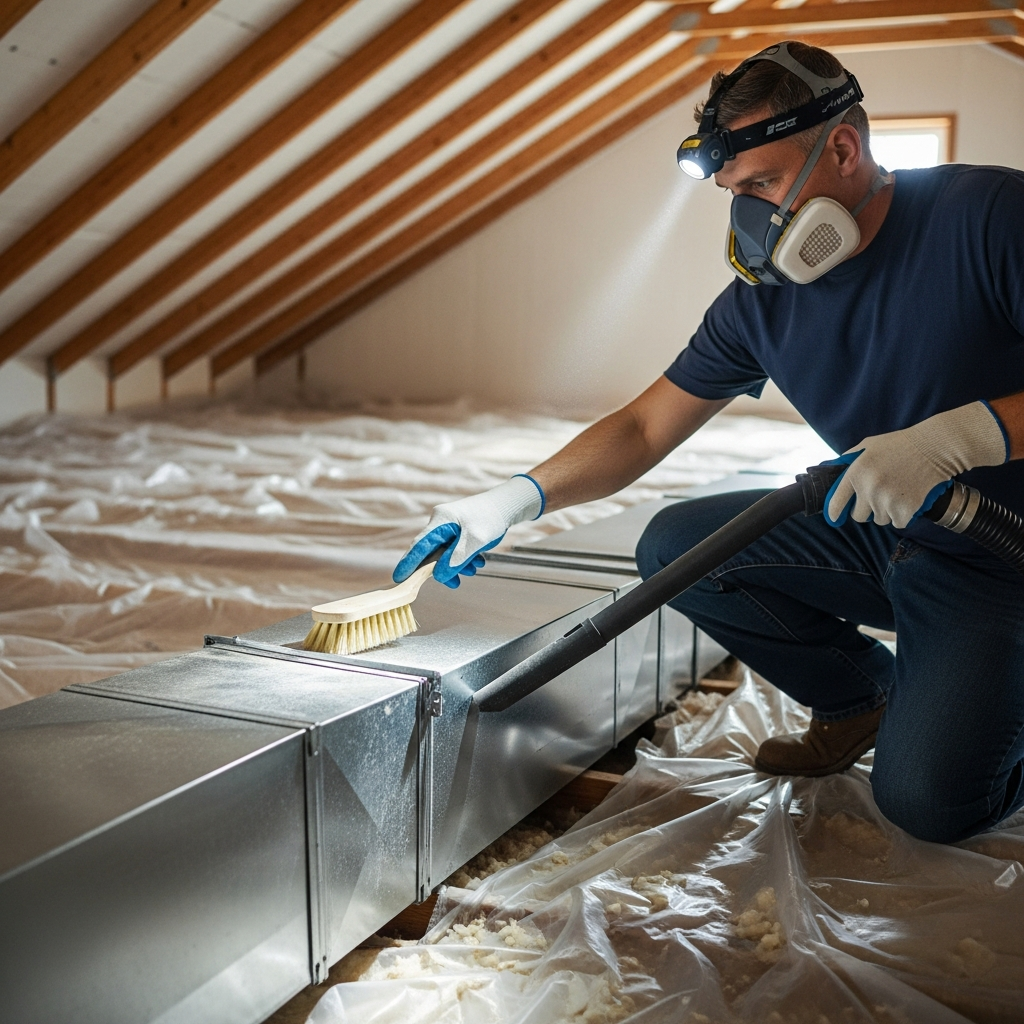
Even a modest cleaning stirs up particles. The right PPE sharply reduces exposure and injury risk. Choose safety glasses or sealed goggles to protect eyes from drifting debris. Wear cut-resistant gloves, as duct edges and screws can be sharp. Use a respirator rated for particulate filtration—at minimum an N95—so you do not inhale dust, dander, or fine fiberglass. Sturdy, closed-toe shoes provide footing on ladders and safe stepping around tools. Long sleeves and pants shield skin from contact irritants.
Keep a first-aid kit nearby in case of scrapes, and position a flashlight or headlamp to preserve visibility while both hands remain free. Many incidents occur when homeowners tilt a handheld light and lose balance on a ladder. Improving lighting and maintaining three points of contact significantly lowers fall risk.
Tools and Supplies to Gather
Choose tools that are effective yet gentle on ducts and HVAC components. A vacuum with a HEPA-rated filter helps capture the fine particles you dislodge. Extension hoses and narrow crevice tools allow access around corners and into branch lines. Soft-bristled brushes of various diameters agitate debris without scouring protective coatings. A small, powered rotary brush can work for metal ducts but should be used cautiously on flexible ductwork. A screwdriver set, nut drivers, and an adjustable wrench allow safe register and panel removal. Painter’s tape and plastic sheeting help seal registers during negative-pressure cleaning, while clean microfiber cloths and a non-abrasive coil-safe cleaner (if manufacturer-approved) support gentle wipe-downs of reachable, exposed components.
Have trash bags on hand for debris, spare HVAC filters to replace dirty ones after the job, and a camera or notepad to document conditions you find. Documentation clarifies what you completed and where further inspection is needed. If you reach a point where the work exceeds your tools or comfort level, it is entirely appropriate to pause and arrange professional air duct cleaning so you do not risk damaging ducts or spreading contaminants.
System Shutdown and Electrical Safety
Before you open any panels or registers, shut the HVAC system off at the thermostat. If your equipment has a disconnect switch nearby, turn it off as well. This prevents the blower from activating while you are working. For added safety in older homes, consider switching the appropriate breaker off after confirming it will not disable other critical circuits. Post a simple note on the thermostat or breaker box so others in your household know not to restart the system during cleaning.
Never insert tools into moving components, and do not force open stuck panels. If a blower compartment seems jammed or misaligned, step back and reassess. Forcing covers can warp housings or damage seals. Take your time and keep hardware organized to ensure safe reassembly.
Establish Containment and Negative Pressure
Dust control is critical. Start by opening a window in your work area if weather permits, which improves ventilation. Next, close all but one or two supply registers at a time and cover the closed ones with plastic and painter’s tape to limit dust escape. When using a home-grade vacuum setup, place the vacuum outside the immediate work area if possible, or at least position it downwind of your breathing space and confirm the HEPA filter is seated properly. This ad-hoc negative pressure strategy keeps dislodged debris from drifting into living spaces.
Keep pets and children away from the work zone. Post a quick note at the room entrance and lay down a floor runner to catch debris. When transitioning between rooms, remove dusty gloves to avoid tracking residue onto surfaces.
Step-by-Step Safe Cleaning Process
- Initial survey: Remove a few supply registers and return grilles to peek inside with a flashlight. Look for heavy debris, visible drywall dust, or signs of pests. Note any flexible duct runs and treat them with extra care.
- Pre-vacuum at registers: Using a crevice tool, vacuum around each opening to capture loose material before it drifts. Work gently and avoid scraping lining materials.
- Agitate and capture: Insert a soft brush into the first few feet of the duct run while vacuuming near the opening. Short, controlled motions dislodge dust without driving it deeper.
- Progress methodically: Move room by room. Keep a simple checklist and mark each register as you clean it. Alternate between supplies and returns so you do not miss any openings.
- Access the main trunk if reachable: Some homes have a convenient panel on the main trunk. If manufacturer-approved and safely accessible, open it carefully, vacuum gently, and avoid disturbing insulation or wiring.
- Address the blower compartment with care: With power off, open the blower cabinet if allowed by your equipment documentation. Lightly vacuum loose dust around the housing exterior and the cabinet floor. Do not bend fan blades or disturb balance weights.
- Check the evaporator coil face visually: If you can see the coil without removing components, look for dust mats. Do not scrub the fins. If permitted by the manufacturer, use a coil-safe cleaner and a very light touch. If the coil is grimy, leave deep cleaning to a qualified technician.
- Replace the filter: Always install a fresh, appropriately rated filter after cleaning. This step protects your newly cleaned passages and quickly improves air quality.
- Reassemble: Reattach registers and panels securely. Ensure gaskets sit flat and fasteners are snug, not overtightened.
- Controlled restart: Power the system on and listen. Airflow should sound smooth, without rattles. Briefly run the system and check for drafts that could indicate loose panels.
Working Safely with Different Duct Types
Metal ducts tolerate gentle brushing and vacuuming. Flexible ductwork demands a softer approach: avoid powered brushes that can snag and tear inner liners. For fiberglass duct board or internally lined ducts, agitation must be extremely light to prevent fiber release and damage to the acoustic lining. If you are unsure which type you have, examine an accessible cross-section carefully or consult documentation from the home’s builder or a past HVAC service record.
Transitions, elbows, and junctions collect more dust. Use patient, short strokes and avoid forcing tools around tight turns. If you cannot access a run without undue pressure, move on rather than risking damage.
Moisture, Odor, and Microbial Caution
If you discover damp insulation, standing water, or an odor that persists after drying and cleaning, do not apply biocides or fragrances casually. Chemical use in ducts should only happen under strict manufacturer and regulatory guidance. Overuse can irritate occupants and pets. Instead, identify the moisture source—drain pan clogs, humidifier leaks, gaps in attic insulation, or air leaks that draw in humid air—and correct those issues first. In Elizabeth’s humid summer months, verify that your condensate drain is clear and the trap is primed as the cooling season begins.
Remember, microbial contamination that appears widespread or persistent calls for professional evaluation. Your goal with homeowner-led cleaning is to remove loose particulates and improve airflow, not to mask an unresolved moisture problem.
Protecting Indoor Air During and After Cleaning
Plan your work in segments so dust has time to settle and be captured. Run a standalone HEPA room purifier nearby during and after the project if you have one. Once you finish, wipe horizontal surfaces with a slightly damp microfiber cloth. Replace the HVAC filter immediately, then again after a week of operation to catch any residual dust you loosened.
Dispose of collected debris in sealed bags and wash your hands and forearms when you are done. Launder work clothing separately to avoid redistributing particles onto upholstery and bedding.
Elizabeth, NJ-Specific Considerations
Many Elizabeth homes are older or have undergone renovations that left drywall dust and sawdust in ducts. Multifamily buildings can also have complex return paths or shared chases where cleanliness varies unit to unit. When feasible in a condo or co-op, coordinate with building management before opening large access points, and follow any established maintenance guidelines.
Proximity to busy corridors and industrial zones means fine soot can accumulate faster than in suburban settings. If you live near high-traffic areas, pay closer attention to returns, which often gather more dust than supplies. Seasonal transitions—especially from spring pollen to summer humidity and from fall leaves to winter heating—are prime times to inspect filters and perform light touch-ups.
Common Mistakes to Avoid
- Running the blower while registers are open, which blasts dust into rooms.
- Using harsh, abrasive tools that scratch duct surfaces and release fibers.
- Forcing rotary brushes through flexible ducts, risking tears and air leaks.
- Neglecting to replace the HVAC filter after cleaning.
- Covering too many registers without maintaining airflow balance when testing.
- Ignoring signs of moisture or pests that require specialized intervention.
Verify Results without Guesswork
After cleaning, conduct simple checks. With the system off, remove a few registers you cleaned and inspect the first 12–24 inches of the run with a flashlight. You should see significantly less loose dust and debris. With the system running, listen for rattles that might indicate a loose panel. Hold a tissue near registers to observe smooth, steady airflow. If airflow improved but musty odors persist, focus on filters, drain lines, and humidity control.
Keep a short log: date of cleaning, tools used, areas accessed, and any concerns discovered. This record informs your next maintenance cycle and helps a professional understand your findings if you request service later.
When to Pause and Call an Expert
Stop and consult a trained technician if you encounter any of the following: visible mold or pervasive musty odors; evidence of vermin nesting; damaged or heavily sagging flexible ducts; broken or missing duct insulation; standing water; or components you cannot safely access without special tools. In such cases, specialized containment and methods are necessary to protect health and restore system integrity.
Additionally, if your efforts do not improve dust levels or if allergy symptoms continue, a comprehensive assessment can uncover hidden leaks, poorly sealed returns drawing attic air, or imbalanced airflow contributing to dust recirculation.
Frequently Asked Questions
Q: How often should I clean ducts in Elizabeth’s climate? A: Focus on inspection first. Many homes benefit from a light touch-up during seasonal transitions and a deeper cleaning every few years, depending on pets, renovations, and air quality.
Q: Can I clean ducts if I have flexible ductwork? A: Yes, but proceed gently. Avoid aggressive brushes and do not force tools around tight bends. If debris is heavy, seek help to avoid tearing liners.
Q: Should I clean my evaporator coil? A: Only if it is accessible and you follow manufacturer-approved methods. The fins are delicate. If the coil is visibly matted, schedule professional service.
Q: Is it necessary to disinfect ducts? A: Not routinely. The priority is removing dust. Only consider approved treatments when a qualified professional identifies a specific microbial issue.
Q: My home still smells musty after cleaning. Why? A: Odors often point to moisture sources, clogged drains, or saturated filters rather than dust alone. Address humidity control and replace filters again after one week.
Q: Will cleaning ducts reduce my utility bills? A: Clean ducts can improve airflow and system performance, which supports efficiency. The biggest gains often come from sealing leaks and maintaining filters.
Q: Are there special rules for condos or multifamily homes? A: Coordinate with building management and verify which ducts and chases serve only your unit. Shared components may require building-wide planning.
Ready to Breathe Cleaner Air in Elizabeth?
If you are committed to a safer, healthier home but prefer expert hands for the heavy lifting, reach out for trusted air duct cleaning. Whether you handled a careful DIY refresh or identified issues that warrant specialized tools, professional attention can finalize the job, confirm results, and set you up with a maintenance rhythm that keeps Elizabeth’s seasonal challenges from building up inside your ducts.
