Indoor air quality
Air Duct Cleaning in Elizabeth, NJ & Across New Jersey
AMG Duct Cleaning is based in Elizabeth, NJ and provides professional air duct cleaning for homes and businesses across New Jersey — removing built-up dust, allergens, pet dander, and construction debris from your HVAC system so your home breathes the way it should.
Why it matters
Real benefits you can actually feel.
- Noticeably fresher indoor air within the first day
- Reduced dust returning through your vents week to week
- Easier breathing for allergy-prone members of the household
- More efficient HVAC operation and balanced airflow
- Less strain on your furnace and AC blower motor
- A cleaner home with less weekly dusting
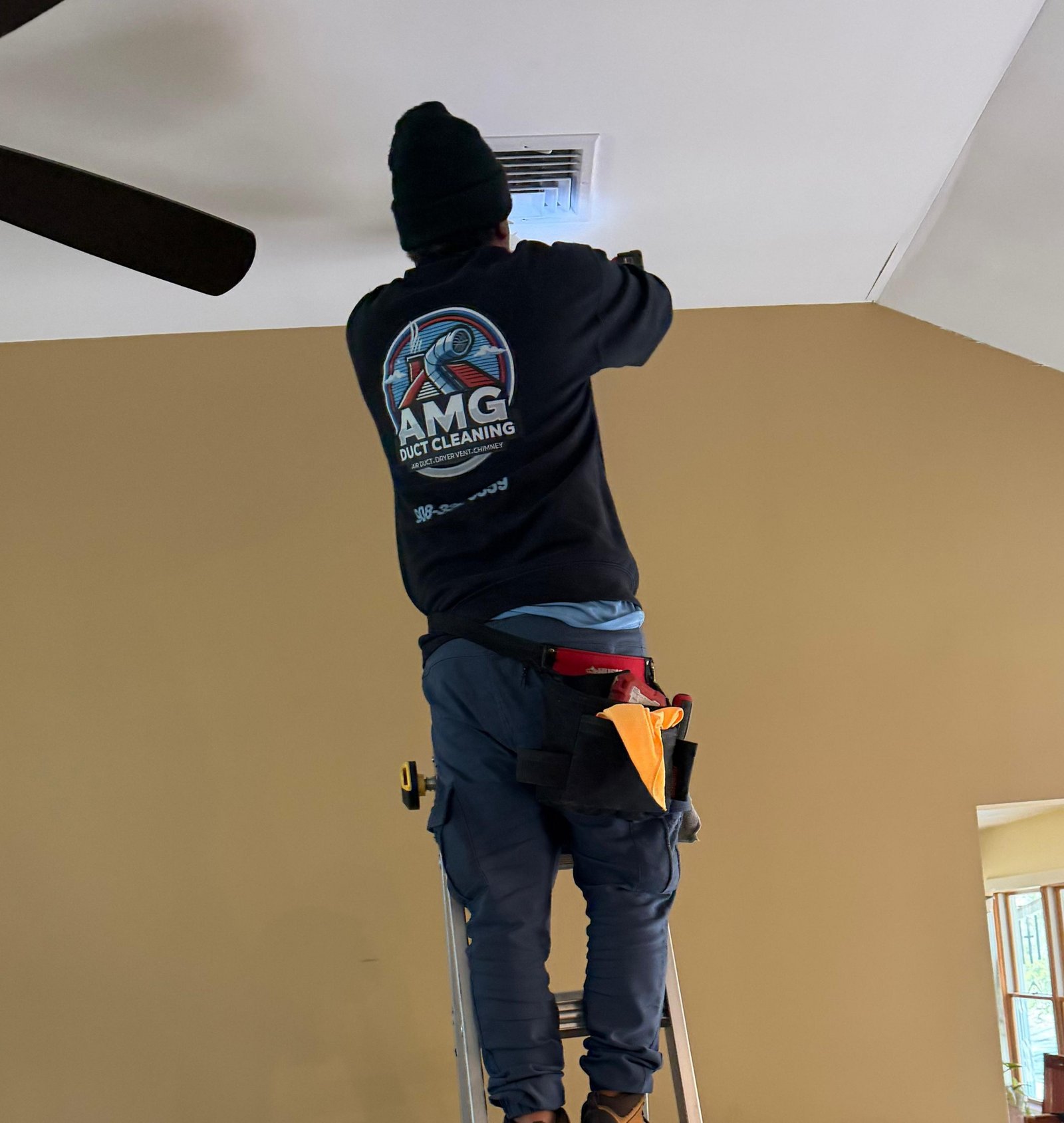
Serving Elizabeth, NJ and surrounding counties.
Open 7 days · Insured & bonded · Same-week scheduling.
Signs you need this
Look for these everyday signals.
Visible dust streaks around supply vents
Allergy or asthma symptoms that flare up indoors
Musty or stale smell when the HVAC kicks on
It's been 3+ years since the last cleaning
You've recently completed a renovation or new build
Uneven temperatures between rooms
Pets shedding heavily in the home
Family members complaining of dry throats or headaches
Our process
How an air duct cleaning visit actually goes.
Every step is specific to this service — no generic checklist, no surprises once we arrive.
- 01
Inspect vents, returns & duct condition
We count supply registers and returns, look at the air handler, and identify access points before quoting anything.
- 02
Protect floors and work areas
Drop cloths over flooring, corner guards on walkways, and clean equipment setup before any vacuum is connected.
- 03
Connect negative-air equipment
We seal the system and attach a truck-mounted or portable HEPA vacuum to the main trunk to pull dislodged debris out of the home.
- 04
Agitate dust, debris & pet dander
Rotary brushes and compressed-air whips work each supply and return branch loose so buildup is removed, not pushed deeper.
- 05
Clean supply and return vents
Every register, grille, and the return plenum is wiped down so what you see at the wall matches what's happening inside the duct.
- 06
Walk through before/after & next steps
We show you photos, explain what we found, and give a clear recommendation on when to service the system next.
Why AMG
Why homeowners choose AMG Duct Cleaning.
We protect your home before work begins, explain what we find, and clean up before leaving. No pressure, no scare tactics — just the work we said we'd do, done cleanly.
Clear estimates
You'll know the scope and the price before any work begins. No surprise add-ons.
Respectful technicians
Uniformed, friendly, locally hired. Trained to work cleanly in lived-in homes.
Residential & commercial
Homes, offices, retail, and multi-family — we scope each job to fit the building.
Detailed inspections
We protect your home, explain what we find, and clean up before we leave.
Dryer vent & chimney safety
Specialists in the systems most commonly skipped on a routine HVAC visit.
Open 7 days
Evenings and weekends available across New Jersey — same-week openings most weeks.
What professional air duct cleaning actually involves
A proper air duct cleaning is much more than a quick vacuum at the register. Our New Jersey technicians use truck-mounted negative-pressure equipment, agitation tools, and HEPA-filtered collection to physically dislodge debris from every supply and return run, then capture it before it ever re-enters your living space.
We start with a walk-through to count vents, inspect the air handler, and locate the trunk lines. Then we seal the system, attach our vacuum to the main duct, and work each individual branch with rotary brushes and compressed-air whips. Coils, blower assembly, and the return plenum are cleaned as well — the parts most companies skip.
The result is a system that's not just cosmetically cleaner but measurably healthier — fewer airborne particulates, fewer allergens recirculating, and an HVAC that doesn't have to push conditioned air through a layer of dust on every cycle.
Why air duct cleaning matters in New Jersey homes
New Jersey's climate is unusually hard on ductwork. Long humid summers feed mold growth on damp coils, freezing winters pull dry, dust-heavy air through your returns, and pollen seasons in the spring and fall load filters faster than most homeowners realize. Add older housing stock in towns like Elizabeth, Newark, and Jersey City, and you have ductwork that often hasn't been touched in a decade.
If anyone in your household has asthma, allergies, COPD, or chemical sensitivities, the air moving through your vents is one of the most important things you can control. The EPA consistently ranks indoor air pollution among the top five environmental health risks — and a dirty duct system is one of the easiest fixes.
How often should you clean your air ducts?
Every 3–5 years is the right baseline for most NJ homes. Homes with pets, smokers, recent construction, known allergies, or families with young children typically benefit from cleaning every 2–3 years. New homeowners should always have ducts inspected and usually cleaned before moving in — you don't know what the previous owners' system carried.
Where we work
Serving homes across New Jersey.
Elizabeth, NJ — covering every county in the state.
Related services
Other ways we help.
Air Duct Repair
Seal leaks, fix damaged sections, and restore airflow across your HVAC system.
See Air Duct Repair detailsAir Duct Installation
Custom ductwork installed for efficient airflow in new builds and renovations.
See Air Duct Installation detailsDryer Vent Cleaning
Clear lint buildup to reduce fire risk and help your dryer run efficiently again.
See Dryer Vent Cleaning detailsFAQ
Questions homeowners ask.
How long does a typical air duct cleaning take?
Most single-family homes in New Jersey take 2–4 hours depending on system size and access. We'll give you a clear time estimate before we begin.
How often should I clean my air ducts?
Every 3–5 years is a healthy baseline for most NJ homes. Homes with pets, allergies, or recent renovations may benefit from more frequent service.
Will the work make a mess?
No. We protect floors and surfaces with drop cloths, use sealed vacuum equipment, and clean up thoroughly before we leave.
Is air duct cleaning worth it?
If you're noticing dust, allergy issues, or uneven airflow, yes — cleaner ducts directly improve indoor air quality and HVAC efficiency.
Do you clean the coils and blower as well?
Yes — we clean the evaporator coil, blower compartment, and return plenum. These are commonly skipped but they're where most contamination collects.
Will it lower my energy bills?
It often does. A clean blower and clean coils move air with less resistance, which means shorter cycles and lower utility costs.
From the blog
Helpful reads from our team.
Free estimate
Get a free estimate from AMG Duct Cleaning.
Tell us a little about your home or business and the service you're considering. We'll follow up quickly with clear next steps. No pressure. Clear scheduling. Friendly local service.
Need faster help?
(877) 824-9359- Elizabeth, NJ · Serving New Jersey
- info@amgductcleaning.com
- Mon–Sun, 8:00 AM – 8:00 PM
Request your free estimate
We typically reply same day, 7 days a week.