Warning Signs of a Clogged Dryer Vent Line in Westfield, NJ
The U.S. Fire Administration attributes thousands of residential fires each year to dryer vents, with lint accumulation listed as the leading contributing factor. For homeowners in Westfield, where colonial and Tudor-style homes often feature long, routed vent runs through finished walls and attics, a partially blocked line can go unnoticed for months. Knowing the early warning signs gives you time to act before a slow restriction becomes a genuine hazard.
Why does lint build up in a dryer vent line in the first place?
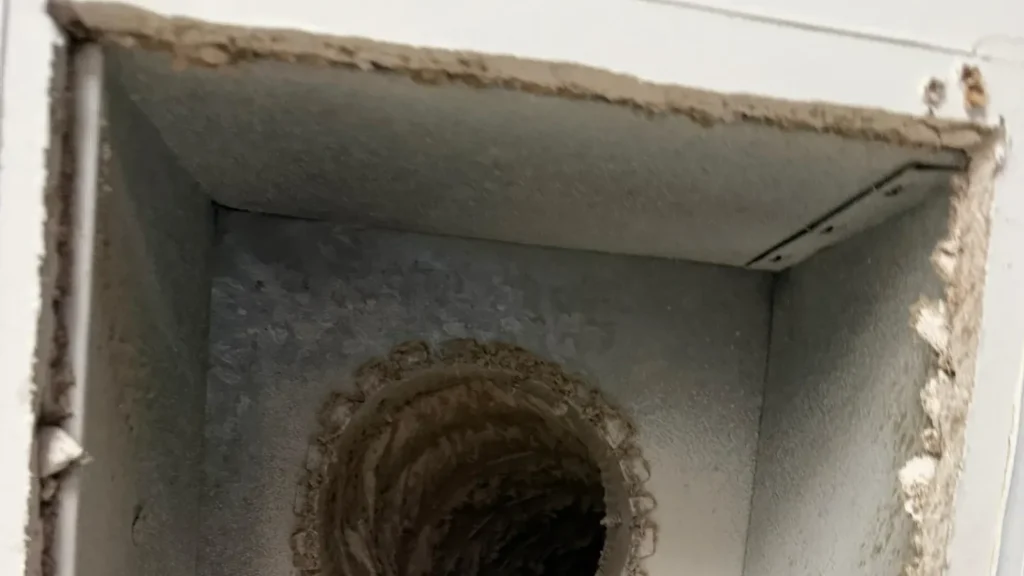
Every load of laundry sheds microscopic fibers. Your lint trap catches the bulk of them, but fine particles still pass through and coat the interior of the exhaust duct with each cycle. Over time, those layers compress, narrow the airflow channel, and trap heat. The longer the vent run and the more bends it contains, the faster buildup accumulates. Homes with flexible foil or plastic ducting (common in older Westfield construction) are especially prone because the ridged interior catches lint more readily than smooth rigid metal.
What does it feel like when clothes take too long to dry?
A single drying cycle that runs longer than usual is easy to dismiss. When it becomes the norm, restricted airflow is usually the cause. Moisture-laden air that cannot exhaust freely stays trapped in the drum, which means the dryer has to run multiple cycles to finish what it once handled in one. Homeowners often notice towels and denim staying damp after a full cycle, or the dryer running hot while clothes still feel cool and wet at the end. This symptom alone warrants a vent inspection, because the machine is working harder than it should and the heat has nowhere to go. For a closer look at what a professional inspection and cleaning involves, see dryer vent cleaning in Westfield NJ.
Why does the outside of the dryer feel unusually hot?
If you want it handled correctly the first time, consider professional dryer vent cleaning in Westfield.
A dryer that is too hot to touch on its top or side panel is signaling that exhaust heat is backing up into the cabinet rather than venting outdoors. Under normal operation, heat exits through the duct almost as fast as it is generated. When the line is clogged, that heat recirculates. The drum temperature rises, the motor works harder, and the exterior of the machine becomes noticeably warm. This is one of the more urgent warning signs because sustained high cabinet temperatures accelerate wear on internal components and raise the risk of a lint ignition inside the duct itself.
What does a burning smell from the laundry room mean?
A faint burning or musty odor coming from the dryer area during or after a cycle is worth taking seriously. Lint is highly flammable, and when it accumulates near the heating element or inside a vent line that is running hot, it can begin to scorch before it ignites. A burning smell is not always a sign that a fire has started, but it is a reliable indicator that temperatures inside the system are higher than they should be. Stop using the dryer, check the exterior vent hood for obvious blockages, and schedule a professional cleaning. Do not continue running the machine until the cause has been identified. If you are weighing whether to handle the inspection yourself, DIY versus professional lint removal covers the practical differences in detail.
How do Westfield’s older homes affect dryer vent risk?
Westfield’s residential housing stock skews older, with a significant share of homes built between the 1920s and 1970s. In these properties, laundry rooms were often added or relocated during renovations, which frequently resulted in vent runs that travel through exterior walls, up through finished attics, or around multiple corners before exiting the building. Longer runs with more elbows create more surface area for lint to cling to and more resistance for the blower motor to overcome. Some of these homes also retain original flexible foil ductwork that has never been replaced. If your Westfield home falls into this category and you cannot confirm when the vent was last cleaned, that history alone is a reason to schedule a service.
Many Westfield homeowners rely on expert dryer vent cleaning in Westfield for exactly this.
Is a slow or no-moving exterior vent flap a warning sign?
The damper flap on your exterior vent hood should open freely every time the dryer runs and close completely when it stops. Step outside during a cycle and watch it. If the flap barely moves, opens only partway, or stays closed entirely, airflow through the line is severely restricted. A flap that stays open when the dryer is off is a different problem, as it allows outdoor air, pests, and moisture to enter the duct, which accelerates lint compaction. Both conditions indicate the vent system needs attention. This is a quick, no-tools check any homeowner can do without getting on a ladder or opening walls.
Can increased energy use point to a clogged vent line?
A dryer running extended or repeated cycles to finish a load consumes significantly more energy than one that exhausts freely. If your utility bills have crept up without an obvious explanation, and you are also noticing longer dry times, the two are likely connected. The dryer’s heating element cycles on more frequently when moisture cannot escape, which draws more power over the course of a load. While many factors affect energy use, a blocked vent line is one of the more straightforward ones to rule out. After a cleaning, homeowners commonly find that loads finish in a single normal cycle again. For more on what affects the overall cost of maintaining your system, dryer vent cleaning cost factors in Westfield is a useful reference.
Ready for the next step? Learn how dryer vent cleaning services in Westfield can help and reach out to the team.
What happens if a clogged vent line goes unaddressed?
A partial blockage that is ignored does not stay partial. Lint continues to accumulate on top of existing buildup, and what started as reduced airflow eventually becomes a near-complete obstruction. At that point, the dryer may stop heating effectively, trigger error codes, or shut off mid-cycle on thermal overload protection. Beyond appliance damage, a fully blocked line with residual heat is the scenario most associated with dryer fires. The vent line itself, not just the drum, can be the ignition point when lint inside the duct reaches a sufficient temperature. Addressing the warning signs early is far less disruptive than dealing with the consequences of a fire or a failed appliance. Understanding the broader safety standards that apply to vent installations can also help, and dryer vent safety standards for Westfield homes walks through what those look like in practice.
When should a Westfield homeowner call a professional instead of checking it themselves?
Light maintenance, such as cleaning the lint trap after every load or clearing an accessible exterior vent hood of debris, is reasonable homeowner territory. But once you suspect a restriction inside the duct run itself, the situation calls for professional equipment. Rotary brush systems and high-powered vacuums reach the full length of the line, including sections behind walls and above ceilings that a homeowner cannot safely or practically access. If you are seeing two or more of the warning signs described above, such as long dry times, a hot cabinet, a burning smell, or a sluggish vent flap, that combination is a reliable signal to schedule a cleaning rather than wait. AMG Duct Cleaning offers free estimates for Westfield homeowners, so there is no cost to getting a professional assessment of what the line actually looks like.
Catching a restricted vent line early keeps your dryer running efficiently and removes a genuine fire risk from your home. The warning signs, longer cycles, excessive heat, unusual odors, and a sluggish exterior flap, are easy to observe once you know what to look for. If any of them sound familiar, the next step is a professional inspection. Reach out to schedule dryer vent cleaning in Westfield to get a free estimate and find out what is actually inside your vent line.
