Introduction
Every time your furnace or air conditioner turns on, a quiet highway of ducts moves air to and from each room. If that highway is full of potholes—loose seams, gaps around boots, and failing tape—your home pays the price in comfort and cleanliness. In Elizabeth, New Jersey, where winter winds and summer humidity test HVAC systems, sealing and reinforcing ductwork is one of the highest-impact upgrades you can make. If you are exploring options to improve comfort and air quality, professional air duct repair delivers results you can feel in days, not months.
This guide highlights the key benefits of sealing and repair, the materials and methods pros use, and the simple habits that protect your investment. You will also see how technicians verify improvements and what to expect during a typical visit.
Benefit 1: Consistent Comfort in Every Room
Leaky supply ducts lose cooled or heated air before it reaches far rooms, while return leaks pull in unconditioned air that throws temperatures off balance. Sealing restores the intended pressure and flow, reducing hot and cold spots. Bedrooms far from the air handler receive their fair share of conditioned air, and open concept spaces stabilize more quickly after a system cycle.
Benefit 2: Cleaner Indoor Air
When return ducts leak, they can draw dusty, musty air from attics, basements, or wall cavities. Those contaminants bypass filters and circulate through your home. Sealing returns, reinforcing joints, and ensuring tight connections around the air handler help keep pollutants out. Many homeowners report less dust on furniture and clearer air shortly after repairs.
Benefit 3: Quieter Operation
Loose boots, rattling grilles, and whistling seams create background noise that is easy to tune out—until the system cycles on at night. By securing connections, smoothing transitions, and reducing turbulence, sealing work lowers noise at the source. You will hear more of what you want and less of what you do not.
Benefit 4: Reduced Wear on Equipment
When ducts leak, your blower works harder and longer to meet thermostat demands. Over time, this strain contributes to premature wear on motors and controls. Sealed ducts help your equipment operate within its intended range, supporting longevity and fewer service visits prompted by airflow-related issues.
Benefit 5: Better Moisture Control
In summer, return leaks can invite hot, humid air into the system, pushing indoor humidity higher. Sealing returns and repairing insulation on cold supply lines limits condensation risks and helps your air conditioner dehumidify more effectively. The result is a home that feels cooler at the same thermostat setting.
Where Sealing Delivers the Biggest Wins
- Boots and registers: Gaps at the connection to walls or floors can be surprisingly large and are easy to overlook.
- Plenums: The main supply and return boxes at the air handler are common sources of leakage.
- Takeoffs and collars: Branch connections to trunks need screws, mastic, and, for flex, proper drawbands.
- Flexible duct transitions: Tears, kinks, or loose outer jackets reduce airflow and invite leakage.
- Accessible trunks in basements and attics: Sealing here is straightforward and often highly effective.
Materials and Methods That Last
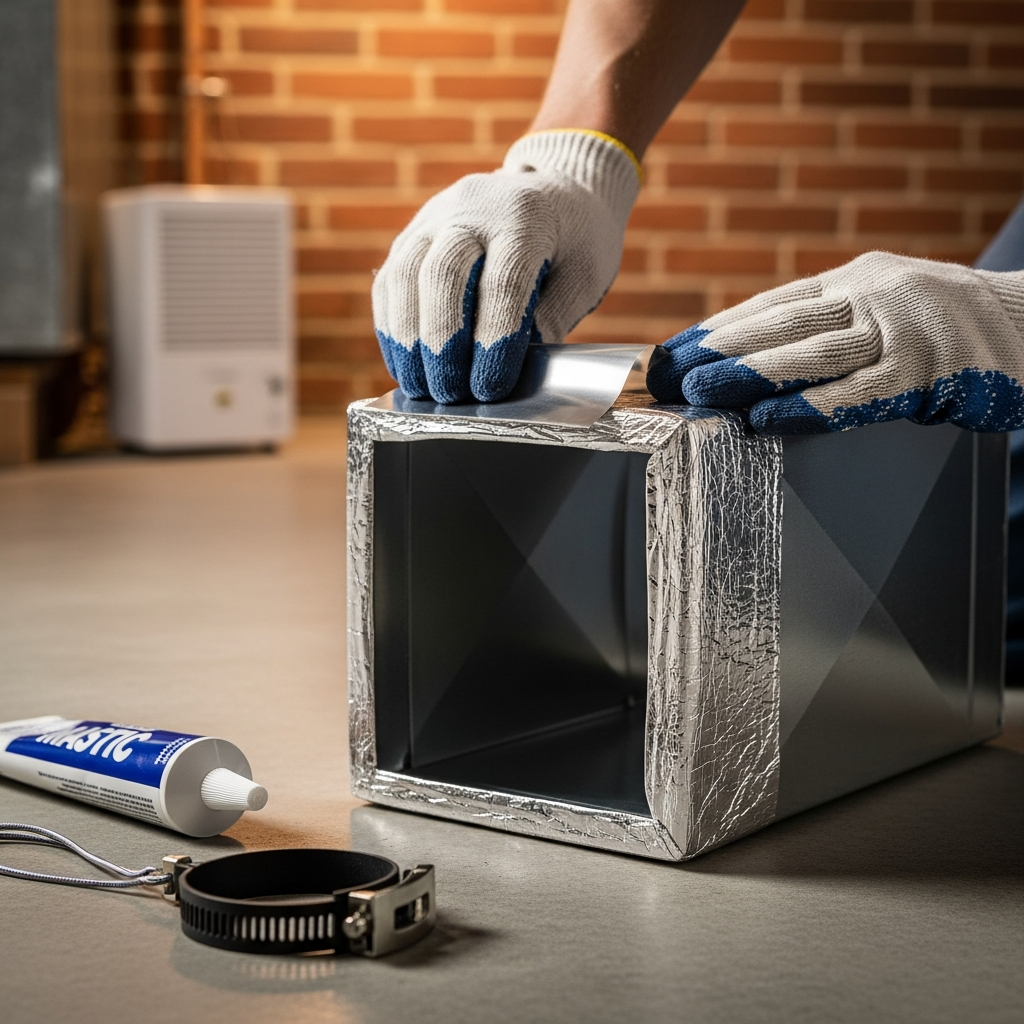
- Mastic sealant: A heavy, paintable sealant that stays flexible and adheres well to clean metal.
- UL 181-rated foil tape: Designed for HVAC temperatures and airflow; far more durable than common duct tape.
- Mechanical fasteners: Sheet-metal screws and clamps keep joints tight through seasons of expansion and contraction.
- Aerosol internal sealant: In certain cases, a fogged sealant can plug micro-leaks from the inside where access is limited.
- Insulation restoration: After sealing, repairing or replacing damaged insulation protects gains and prevents condensation.
Verification: Proving the Improvement
Quality contractors do not just promise results—they measure them. Duct leakage testing compares airflow lost before and after sealing, while static pressure and register readings confirm better delivery to rooms. Photos of key repairs and a summary of findings help you see exactly what changed and why it matters.
Elizabeth, NJ Considerations
Local homes range from pre-war brick to newer townhomes, each with unique duct routes. Attic runs face summer heat; basement trunks contend with winter cold and moisture. Building movement and seasonal expansion can loosen seams over time. A sealing strategy that focuses on high-leakage zones and finishes with airflow balancing produces the most reliable comfort across the calendar.
Middle Spotlight: A Practical Example
A two-story home near the waterfront in Elizabeth struggled with warm upstairs bedrooms each July. Testing found return-side leaks in the attic and loose collars feeding second-floor supplies. After mastic, new drawbands, and insulation touch-ups, the technician rebalanced dampers. Nighttime temperatures stabilized, the blower cycled less often, and the family reported less dust on nightstands. Strategic air duct repair turned a persistent summer headache into consistent, quiet comfort.
What to Expect During a Sealing Visit
- Walkthrough and symptom review: Identify rooms with comfort issues and inspect accessible ducts.
- Setup and protection: Place coverings, isolate sections, and ensure safe access to attics or basements.
- Leak detection: Use smoke, thermal cues, and visual inspection to prioritize the biggest gaps.
- Sealing and reinforcement: Apply mastic and UL 181 tape, add screws and drawbands where needed.
- Insulation and support repairs: Restore jackets and add hangers to correct sagging or kinks.
- Balancing and verification: Adjust dampers, measure airflow, and perform a final check for noise and stability.
- Cleanup and report: Provide photos, test results, and maintenance recommendations.
Maintenance That Protects Your Investment
- Replace filters on schedule to prevent high static pressure that stresses joints.
- Keep returns and supplies free of obstructions to maintain healthy airflow.
- Inspect accessible runs annually for loose tape, torn insulation, or moisture signs.
- Plan a checkup after renovations or equipment changes that disturb ducts.
Frequently Asked Questions
- Q: Do I need sealing if my home is new? A: Yes, sometimes. Even newer homes can have overlooked gaps or loose connections that respond well to targeted sealing and balancing.
- Q: Will sealing make my home too tight? A: Duct sealing targets the distribution system, not the building envelope. It prevents air from escaping where it should not and does not reduce necessary fresh-air ventilation.
- Q: Is aerosol sealing better than mastic? A: Each has its place. Mastic and tape excel at accessible joints; aerosol can address micro-leaks in hard-to-reach areas. A professional will recommend the best mix for your ducts.
- Q: Can I DIY with standard duct tape? A: Avoid it. Household duct tape degrades quickly. Use mastic and UL 181 foil tape for durable results.
- Q: How soon will I notice changes? A: Many homeowners report steadier temperatures and quieter operation after the first few cycles post-repair.
The Bigger Picture
Sealing and repair complement other energy and comfort upgrades, like insulation and air sealing in the attic or basement. Together, these measures help your HVAC system deliver the right temperature and humidity with fewer run times and less noise.
Take the Next Step Toward Better Comfort
When you are ready to stabilize room temperatures, reduce dust, and quiet your HVAC, schedule professional air duct repair to seal and reinforce your duct network. With the right attention in the right places, your Elizabeth home can feel balanced and comfortable in every season.
