Complete Care for Your Ductwork in Elizabeth, New Jersey
Clean, well-repaired ducts are the pathways your HVAC system relies on to deliver healthy, comfortable air to every room. When those pathways are blocked with dust, compromised by leaks, or restricted by crushed sections, performance suffers and indoor air quality declines. In Elizabeth, New Jersey—where weather shifts demand reliable heating and cooling—pairing thoughtful cleaning with targeted repairs produces the best results. If you are getting started and want a clear picture of what matters, resources focused on professional air duct repair can help you understand how cleaning and sealing work together to restore comfort and efficiency.
Cleaning alone is not a cure-all, and neither is repair in isolation. Dust and debris can accumulate for years in supply trunks and returns; meanwhile, leaks and disconnections let unconditioned air into the system and send conditioned air into attics or basements. Combining both services as needed closes the loop: you remove contaminants and then protect the pathway, ensuring clean air actually reaches the rooms where you want it.
Why Cleaning and Repair Are Stronger Together
Duct cleaning removes debris from the system; duct repair keeps new debris from intruding and air from escaping. Together, they protect airflow quality and integrity. Here is how they complement each other:
- Cleaning clears obstructions so air can move freely; repair ensures the air follows the intended route.
- Cleaning reduces dust that might otherwise circulate; repair prevents dust-laden attic or crawlspace air from entering through leaks.
- Cleaning makes inspection easier by revealing seams, joints, or transitions needing sealing; repair locks in gains by stabilizing those points.
In practice, technicians often begin with a careful inspection to decide the right sequence. If leaks are severe, a stabilization repair may come first, followed by cleaning, and then final sealing. The goal is simple: deliver cleaner, conditioned air to every register without loss along the way.
Understanding What Duct Cleaning Involves
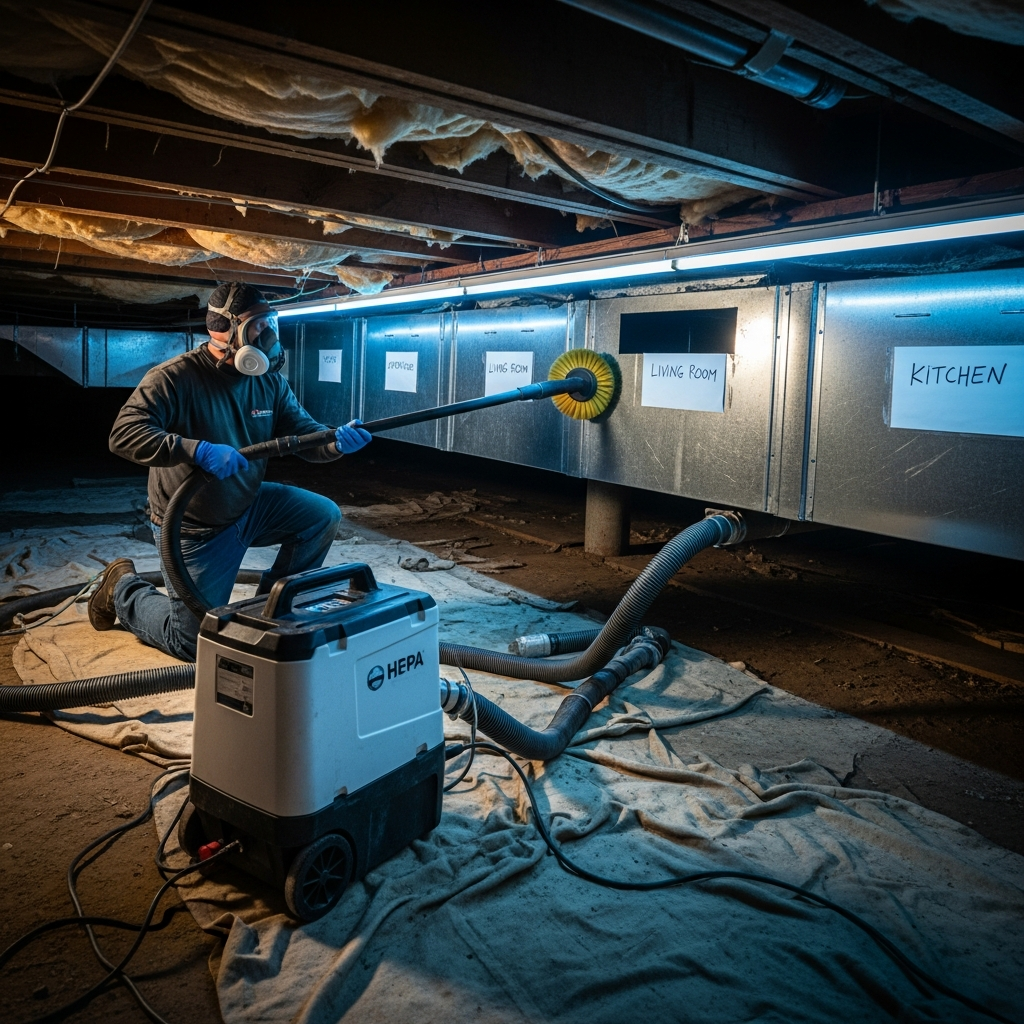
Quality duct cleaning is methodical, not guesswork. It typically includes:
- Inspection: Identifying heavy dust zones, microbial growth concerns, or physical damage that could complicate cleaning.
- Protection: Placing covers and drop cloths, and ensuring equipment will not spread dust inside living spaces.
- Agitation: Using brushes or air whips to dislodge debris from duct walls and components.
- Collection: Vacuum systems with proper filtration remove dislodged material without reintroducing it to the home.
- Follow-Up: A visual check of cleaned sections and documentation, such as photos.
Cleaning is especially impactful after renovations, when sawdust and drywall dust can find their way into returns. It also benefits homes where filters were neglected or where previous leaks pulled in debris from non-living spaces.
What Duct Repair and Sealing Include
Repair focuses on mechanical integrity and airtightness. Expect a qualified technician to:
- Secure loose joints with metal screws, collars, and draw-bands before sealing.
- Apply mastic sealant or UL-listed foil tape to seams, boots, and transitions for durable seals.
- Straighten, support, or reroute crushed or kinked flexible runs.
- Reinstall or replace insulation on ducts in unconditioned spaces to control heat gain or loss and prevent condensation.
- Verify results with airflow checks and, when useful, temperature measurements at key registers.
Solid repair work raises the effectiveness of cleaning by protecting the newly cleared pathway and channeling air to your rooms without detours or leaks.
What Makes Elizabeth Homes Unique
The city’s blend of older homes and newer builds creates varied duct landscapes. Older structures may have tight chases and creative transitions from previous renovations; newer homes may lean on flexible duct systems that require good support to prevent sagging. Seasonal extremes—hot, humid summers, and brisk winters—stress seals, tapes, and plastics. Good service teams recognize these factors and plan accordingly, choosing materials and methods that can stand up to local conditions.
In basements, returns may run near laundry areas, and in attics, supply runs may cross paths with storage zones. Household activity can compress ducts or disturb insulation, leading to performance changes. A thorough service visit considers these realities and offers tips to keep the system resilient after work is done.
How to Decide What You Need: Cleaning, Repair, or Both
Start with symptoms and inspection findings. Consider cleaning if you notice persistent dust buildup on surfaces even after regular housekeeping, musty odors when the system starts, or if you have recently renovated. Consider repair if certain rooms are consistently uncomfortable, if you hear whistling or hissing near duct joints, or if visible ducts show damage, kinks, or loose connections. In many cases, a blended plan is best: repair first to stabilize pathways, then cleaning to remove contaminants, followed by final sealing and insulation improvements.
Ask your technician for a clear sequence. A step-by-step plan avoids stirring up dust only to have new leaks reintroduce it later. The best providers explain what they will do, in what order, and why.
Benefits You Can Expect After Combined Service
When cleaning and repair work together, homeowners commonly report:
- More even temperatures from room to room and less need to “ride the thermostat.”
- Quieter operation as air travels a sealed, supported path instead of whistling through gaps.
- Improved freshness, with fewer musty odors at startup.
- Dust settling more slowly on furniture and floors due to cleaner air and sealed returns.
- HVAC cycles that feel smoother and reach setpoint more predictably.
Results vary by home, but a methodical approach nearly always brings noticeable comfort and cleanliness gains.
Preparing for Your Appointment
A little preparation goes a long way. Before the crew arrives:
- Clear access to basements, utility closets, and attic hatches.
- List rooms with the biggest comfort differences and any odor hot spots.
- Replace an overdue air filter and ensure all registers are open.
- Secure pets and plan for short periods of testing noise.
These steps allow the team to focus time on diagnostics and quality work rather than moving obstacles or hunting for access points.
How Professionals Protect Your Home During Service
Respect for your space is part of professional delivery. Technicians use drop cloths, maintain clean pathways, and handle registers and grilles carefully. If cutting an access point is necessary for cleaning or inspection, they do so neatly and restore the surface as agreed. They also isolate work areas as much as possible to limit dust migration to living spaces.
Documentation You Should Expect
Thorough teams provide photo evidence of problem spots and the completed fixes. That documentation supports future maintenance and gives you confidence that improvements are real and not just theoretical. You also gain a reference for seasonal check-ins, so you can glance at past repair areas to verify they still look solid.
Mid-Project Guidance for Homeowners
As work progresses, good technicians share discoveries that may shape your decisions. For example, while cleaning a return trunk, they may find an unsealed seam pulling basement air. By addressing that seam immediately with proper fastening and mastic, they protect the cleaning effort that just took place. If rerouting a kinked run would dramatically improve a room’s comfort, they explain options and likely outcomes.
In this way, cleaning and repair are collaborative. You set priorities based on comfort goals, and the team proposes tactics to achieve them in the smartest sequence.
Frequently Asked Questions
Do I need cleaning every year? Not necessarily. Frequency depends on lifestyle, filtration habits, and recent projects. Many homes benefit from periodic inspection, with cleaning scheduled when debris or dust accumulation justifies it.
Will sealing ducts after cleaning make a difference? Yes. Sealing preserves the gains of cleaning by keeping outside air out and conditioned air in, improving comfort and air quality.
Is it safe to clean ducts in older homes? Yes, with care. Experienced teams use methods and equipment that protect fragile areas and explain any access limitations before starting.
Can repairs reduce odors? Often. Leaks can draw musty air into returns. Sealing those points and cleaning affected sections can noticeably improve freshness.
How long does combined service take? It varies by home size, duct accessibility, and the extent of debris or damage. Your provider will outline an expected timeline after inspection.
Simple Post-Service Habits That Help
- Replace filters on schedule and choose appropriate ratings for your system.
- Keep registers clear of rugs and furniture.
- During attic or basement storage, protect ducts from weight or compression and mark “no-step” zones.
- Do a quick monthly visual check of accessible runs and supports.
- Call early if you hear new noises or notice airflow changes.
These small steps extend the life of your improvements and keep airflow predictable through the seasons.
Plan Your Path to Cleaner, Stronger Airflow
If your home feels dusty, rooms are inconsistent, or the system sounds different from usual, it may be time to address both debris and defects. Begin with a clear inspection, then schedule the right sequence of cleaning and sealing. For a dependable outcome and a team that explains each step, consider booking professional air duct repair along with cleaning where needed. With the right approach, you can breathe easier and enjoy steadier comfort across every room in your Elizabeth home.
