Understanding Air Duct Installation in Elizabeth, New Jersey
Installing new air ducts is one of the most effective ways to improve comfort, energy efficiency, and indoor air quality in Elizabeth, New Jersey homes. Between humid summers and chilly winters, a properly designed and sealed duct system helps your HVAC equipment move conditioned air efficiently to every room. Whether you are renovating an older house near North Broad Street or upgrading a newer townhouse on the waterfront, the installation process benefits from careful planning, proper sizing, and attention to local building conditions.
Before you pick up tools, it is helpful to understand the role ducts play in distributing supply air, returning stale air to the air handler, and balancing static pressure across the system. It is also wise to consider whether to do it yourself or hire an expert. If you want professional guidance or a full-service approach, you can explore air duct installation providers who understand the building styles and code requirements unique to Union County.
Assess Your Home and HVAC Needs
Start by evaluating your home’s layout, envelope, and heating and cooling load. An energy audit or Manual J load calculation will reveal how much airflow each room needs to stay comfortable year-round. In Elizabeth, consider solar exposure, attic insulation levels, window performance, and infiltration through older framing. Rooms over garages often need more supply air in winter, while top-floor bedrooms can require additional airflow in summer.
Identify the location of your air handler or furnace, typically in a basement, utility closet, or attic. Decide where the main supply trunk and return trunk will run, and whether they should be routed through a basement ceiling, a crawlspace, or a conditioned chase. Take note of potential obstacles like structural beams, plumbing, electrical runs, and fire stops common in older Elizabeth homes. Understanding these constraints early will help you design an efficient, low-resistance duct layout.
Plan the Duct Layout
A well-planned layout limits turns, minimizes long runs, and keeps static pressure under control. Place supply registers on exterior walls or under windows when possible to counteract drafts and temperature swings. Returns should be centrally located and not in kitchens or bathrooms. Hallway returns can be effective for multiple rooms if transfer grilles or undercut doors allow air to move freely back to the return.
Use a main trunk-and-branch design or a radial layout depending on your home’s structure. A trunk system uses a large main duct with smaller branches to each room, while a radial layout runs similar-length ducts from a central plenum to each register. In tighter homes, a radial system can help balance airflow by equalizing path lengths. In older homes with irregular framing, a trunk layout might be easier to route around obstacles.
Size Ducts the Right Way
Proper sizing is essential for quiet operation and even temperatures. Use Manual D methods to translate each room’s airflow needs (CFM) into duct sizes. Select diameters that keep air velocity in a comfortable range and total external static pressure within your air handler’s rated capacity. Oversized ducts can reduce velocity too far, leading to poor throw at registers, while undersized ducts increase resistance, noise, and energy use.
When transitions are necessary, keep them smooth and gradual. Avoid right-angle takeoffs without turning vanes, and prefer long-radius elbows to reduce turbulence. Balance dampers in branch lines provide control during commissioning. For multi-level Elizabeth homes, consider separate zones or bypass-less zoning strategies to keep floors at consistent temperatures without over-pressurizing ducts.
Select Materials and Tools
Common duct materials include sheet metal, rigid fiberglass duct board, and flexible duct. Sheet metal is durable and low-resistance, making it ideal for trunks. Flex duct can be useful for short, final connections to registers, but must be pulled tight, properly supported, and kept as straight as possible to avoid pressure penalties. Use mastic or UL 181-rated foil tape for all joints and seams, and add insulation appropriate to the installation location, especially for unconditioned basements or attics.
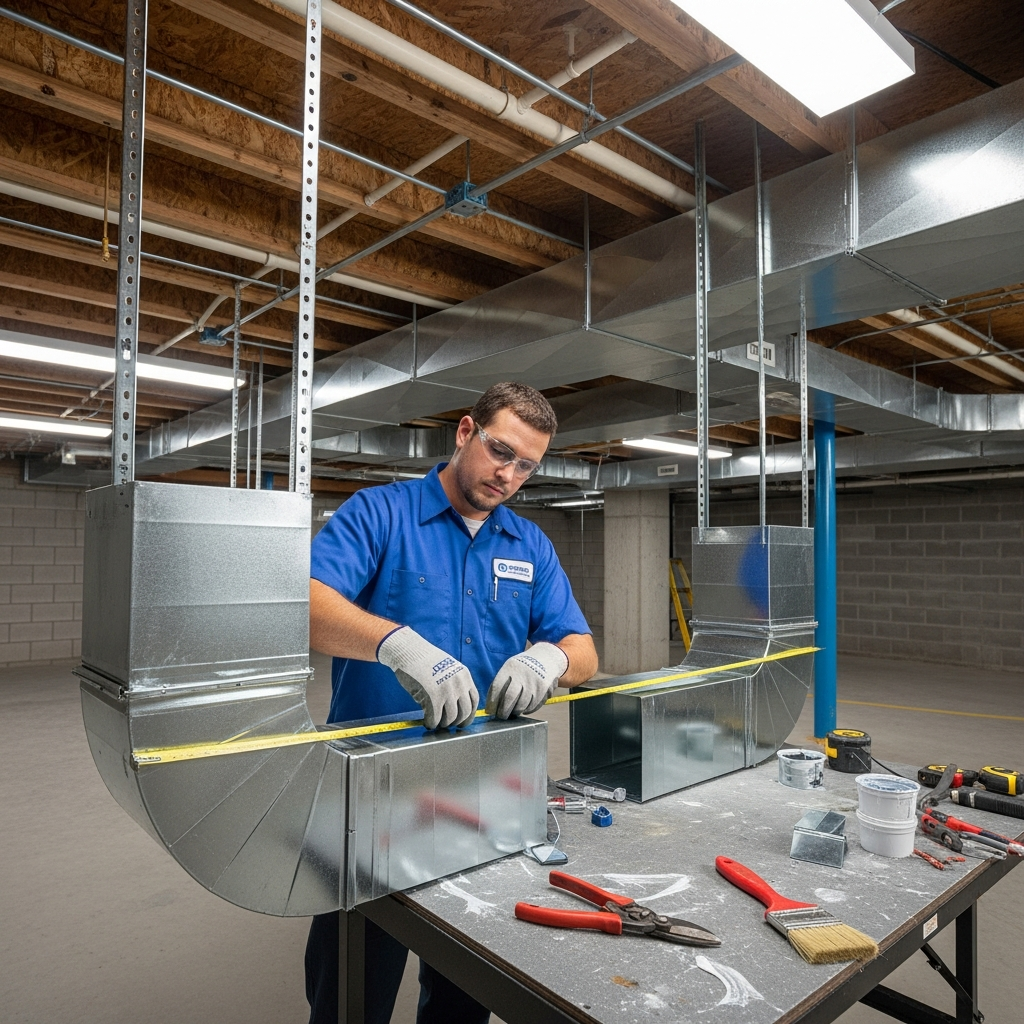
Gather essential tools: tin snips, a crimper, brake or hand seam tools, a drill/driver, a hole saw for takeoffs, aviation snips, a stapler for flex duct straps, a duct knife, zip ties, hangers, a vacuum for debris, PPE (gloves, eye protection, and a respirator when cutting fiberglass), and a manometer for testing. Having the right tools ready makes the job safer and more precise.
Safety and Code Considerations
Safety starts with shutting off HVAC power, following lockout/tagout procedures if available, and wearing protective gear. In Elizabeth, respect local mechanical codes, fire-blocking requirements, and combustion air guidelines when working near gas appliances. Maintain required clearances around flues and never use building cavities such as panned floor joists as returns unless permitted by code and appropriately lined and sealed.
Where ducts penetrate fire-rated assemblies, use approved fire collars and sealants. If you plan to add returns in bedrooms, verify compliance with local smoke-return restrictions. Always obtain permits when required and schedule inspections to ensure work meets municipal standards.
Step-by-Step Installation Overview
Begin by mounting the supply plenum to the air handler using gasket material or mastic for an airtight seal. Transition smoothly from the unit’s outlet size to the plenum size. Next, run the main supply trunk, keeping it as straight and level as possible. Use galvanized straps or angle supports at intervals to prevent sagging. Install branch takeoffs at angles that encourage smooth airflow and avoid locating them immediately after elbows.
For return air, build a return plenum sized to handle the system’s full airflow. A starved return causes noise, temperature problems, and equipment strain. Run return trunks and drops to central locations, and line return boxes with duct liner where noise control is needed. Keep returns clear of kitchens, garages, and bathrooms to prevent odor and contaminant spread.
Cut openings for registers and grilles carefully, using templates and a level to ensure square, flush mounting. Seal boots to subfloors or drywall with mastic and a bead of sealant to prevent air leakage and dust infiltration. When connecting flex duct, slide the inner core fully over the collar, secure with a draw band, tape with UL-181 tape, and then pull the outer jacket tight before taping again and strapping. Support flex every 4 feet or less and limit bends to maintain performance.
Working with Elizabeth Home Styles
Elizabeth’s housing stock includes historic colonials, mid-century capes, and newer multi-family units. In historic homes, prioritize minimally invasive routes and use existing chases where possible to protect finishes. In capes, knee walls and sloped ceilings complicate routing; consider short, insulated supply runs to perimeter rooms and a generous, quiet return path. In basements common to the area, maintain headroom by hugging trunks to the joists and using compact, smooth transitions.
Mid-project adjustments are common when framing doesn’t match plans. Keep fittings on hand for alternatives and document changes for future maintenance. When surprises arise, or when you want a quality check in the middle of your project, it can be helpful to consult local specialists experienced in air duct installation who can validate sizing, layout, and sealing strategy before you close up walls or ceilings.
Sealing, Insulating, and Noise Control
Air leakage is the enemy of efficiency. Use water-based mastic on all metal-to-metal joints, s-cleats, drive cleats, and around takeoffs. Foil tape must be UL 181-rated for duct use; avoid cloth duct tape. After sealing, insulate ducts that pass through unconditioned spaces to prevent heat gain or loss and to reduce the risk of condensation during humid New Jersey summers.
For noise control, avoid undersized returns and sharp transitions. Line return plenums near living spaces with acoustic duct liner. Use long-radius elbows, turning vanes in square elbows, and locate supply registers to minimize whistle and rumble. Balance airflow with dampers rather than choking registers, which can produce noise and reduce comfort.
Balancing and Commissioning
Once installation is complete, verify airflow and pressure. Use a manometer to check static pressure across the air handler and compare with manufacturer limits. Measure supply and return temperatures to confirm acceptable temperature rise or drop. Adjust dampers to fine-tune room-to-room balance. Smoke pencils or theatrical fog can help visualize leakage around seams and boots, allowing you to correct issues before they waste energy.
Document damper positions, filter sizes, and duct routes with photos and a simple schematic. This record will be invaluable for future maintenance or upgrades. Replace the air filter, confirm thermostat operation, and run the system through heating and cooling modes to ensure quiet, even performance.
Common Mistakes to Avoid
Frequent pitfalls include using wall cavities as returns without proper lining, overusing flexible duct with excessive sag and bends, placing takeoffs too close to elbows, and neglecting the return side entirely. Another common error is skipping mastic and relying only on tape. Finally, failing to insulate ducts in basements or attics reduces system efficiency and may lead to condensation issues.
Avoid these mistakes with solid planning and a commitment to testing. Keep duct runs short and straight, use quality fittings, and verify airflow after installation. Resist the temptation to oversize the system to mask duct issues; proper duct design and sealing are the real solutions to comfort complaints.
Maintenance After Installation
Good maintenance preserves performance. Replace or clean filters regularly, vacuum return grilles, and inspect visible ducts annually for loose straps, damaged insulation, or condensation. Every few years, re-check mastic and tape at accessible joints. If you remodel, revisit your duct layout to keep new rooms balanced and comfortable.
Seasonal humidity in Elizabeth can put stress on uninsulated or poorly sealed ducts. If you notice dust streaks near registers, hot or cold spots, or rising energy bills, it may be time for a tune-up. Periodic professional inspections can reveal hidden restrictions, damper issues, or leaks that compromise performance.
Frequently Asked Questions
How long does a typical air duct installation take? The timeline varies with home size, access, and complexity. A straightforward single-story install can be completed relatively quickly, while multi-level homes with finished spaces require more careful routing, sealing, and finishing.
Do I need permits in Elizabeth, NJ? Many duct installations, especially those connected to new or upgraded HVAC equipment, require permits and inspections. Check with the City of Elizabeth Building Department to confirm current requirements and arrange inspections as needed.
What duct material is best? Sheet metal trunks with short, properly supported flex branches often provide a good balance of durability, low resistance, and ease of installation. Duct board can work well for plenums and some trunks when carefully fabricated and sealed.
How can I make ducts quiet? Keep velocities within recommended ranges, size returns generously, use long-radius fittings, and line returns near living spaces. Balance the system with dampers and avoid blocking registers with furniture or drapes.
Can I reuse existing registers and grilles? Yes, if they are the correct size and in good condition. However, undersized or outdated registers can increase noise and reduce comfort. Upgrading to appropriately sized, adjustable registers often helps fine-tune airflow.
What signs indicate poor duct performance? Uneven room temperatures, whistling registers, dust around seams, and high energy bills suggest leakage or sizing problems. A quick static pressure check and visual inspection typically identify the root causes.
Ready to Improve Comfort in Your Elizabeth Home?
If you are prepared to take on a careful, code-compliant project, the steps above will guide you from planning to commissioning. If you prefer expert support, or you want an experienced team to confirm sizing, sealing, and balancing, reach out to a trusted local provider of air duct installation. With the right design and execution, you will enjoy quieter operation, even temperatures, and healthier indoor air across every season in Elizabeth, New Jersey.
