Introduction: Making Smart Decisions in Elizabeth, NJ
When you explore air duct cleaning near Elizabeth, New Jersey, you will find a range of methods, scopes of work, and quality levels. The right choice protects indoor air, preserves equipment, and aligns with your goals for cleanliness and comfort. Instead of focusing on numbers, look closely at what drives project complexity, how to evaluate providers, and which preparation steps maximize your outcome. If you prefer to start with experienced hands and a clear scope, consider arranging trusted air duct cleaning and use the tips below to understand the process and maintain results.
Elizabeth’s blend of older homes, multifamily buildings, and neighborhoods near major corridors calls for attention to access, dust load, and materials. The following guidance helps you compare services, prepare your home, and avoid common pitfalls that can undermine results.
What Shapes the Scope of an Air Duct Project
Several factors determine how involved a cleaning will be. Home size and layout influence the number of supply and return runs and how easily technicians can reach main trunks. The type of duct material matters: metal ducts tolerate controlled brushing; flexible or internally lined ducts require gentler methods to prevent damage. Contamination level—pet hair, renovation dust, or signs of nesting—adds to the effort needed for thorough removal. Finally, access to the blower cabinet, evaporator coil, and key junctions dictates whether the project includes cabinet cleaning and detailed brushing of trunks and branches.
Older Elizabeth homes may have creative duct runs added during renovations. Locating and opening safe access points while protecting finishes and insulation becomes part of the plan. In multifamily buildings, rules for mechanical closets and shared chases can also shape what is feasible.
Home and System Variables
Before any cleaning, evaluate system condition. Are registers damaged or painted over? Do returns show signs of leaks drawing air from basements or attics? Are there sections that pass through hot attics or damp basements without proper insulation? Each of these variables alters the approach. Sealing and insulation improvements often complement duct cleaning, preventing rapid reaccumulation of dust and supporting steadier temperatures and airflow.
Filter history is another key variable. If filters were neglected or poorly fitted, more debris may have settled downstream. Start future maintenance with correctly sized, well-seated filters and change them at a frequency that reflects your household conditions.
Access and Containment
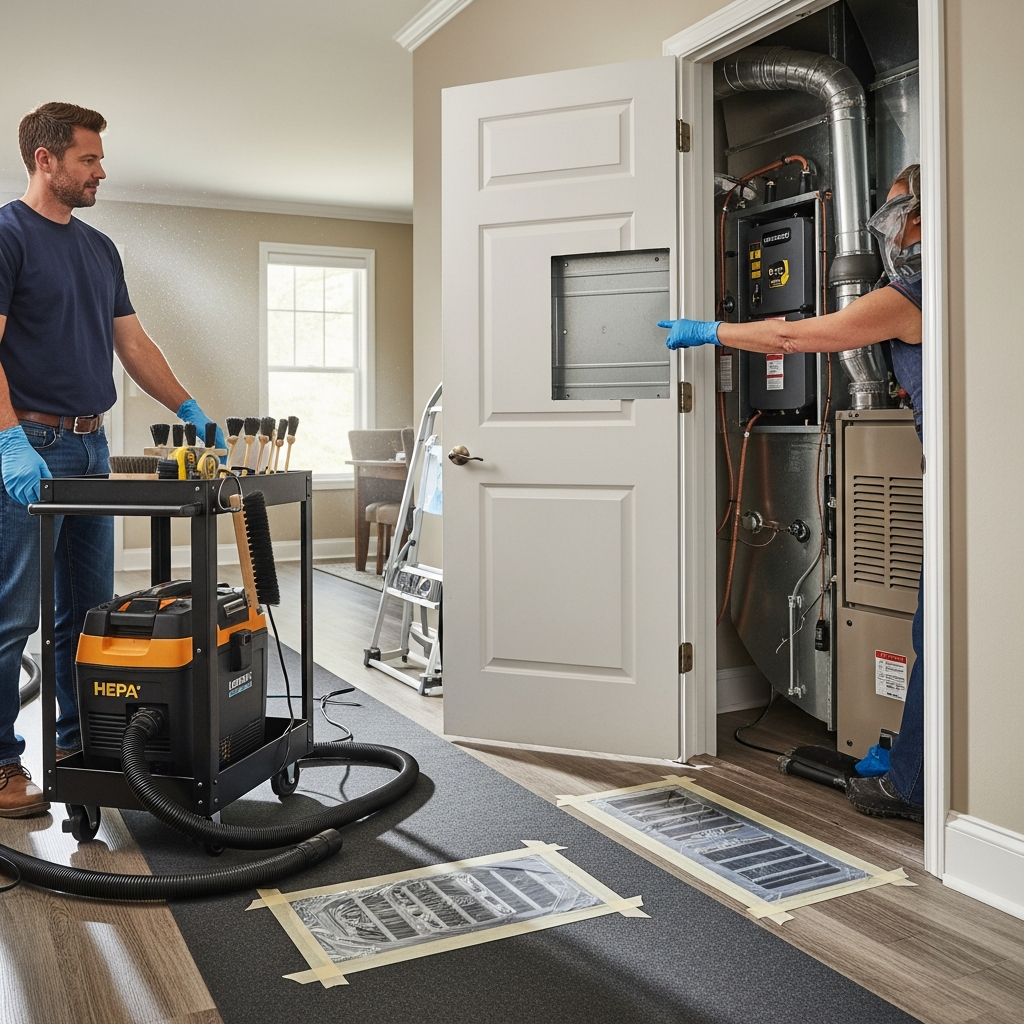
Effective containment protects your living spaces during cleaning. Register coverings, plastic sheeting, and tape help isolate dust. When possible, technicians create negative pressure so loosened debris flows toward capture equipment rather than drifting into rooms. In your preparation, clear furniture away from registers and provide straight paths to equipment rooms to reduce time spent moving items and to lower the risk of accidental bumps or scratches.
If your system’s main trunk lacks convenient access, a professional may recommend installing an appropriately sized panel to enable thorough brushing and vacuuming. When done properly, this improves future maintenance without compromising duct integrity.
Understanding Methods Without the Jargon
Most thorough cleanings combine controlled agitation with high-filtration vacuum collection. Soft-bristled brushes, air whips, or rotary tools dislodge dust; suction captures it. For flexible ducts and internally lined sections, gentler techniques are essential. The blower cabinet and evaporator coil area receive careful attention if allowed by manufacturer guidance, but deep coil cleaning and adjustments are separate tasks that require specific methods to avoid fin damage.
You might also hear about sealants or chemical treatments. These are not routine and should only be considered for defined issues under clear guidance. In many homes, careful mechanical cleaning and moisture control deliver the desired air quality improvements.
Preparation Tips That Improve Outcomes
- Declutter access areas around registers and the air handler.
- Mark unusual vents or hard-to-reach spots on a simple floor plan.
- Identify rooms where occupants have sensitivities so project sequencing can minimize disruption.
- Replace or have a new filter ready so it can be installed immediately after cleaning.
- Plan basic housekeeping—dusting and vacuuming—after the project to catch any residual particles.
Clear communication is part of preparation. Share any history of leaks, recent renovations, or pest issues. Observations from daily living—hot or cold spots, musty odors, or visible dust puffs at certain registers—offer clues that help tailor the cleaning approach.
Quality Signals to Look For
When comparing providers, focus on process transparency. A credible company explains how they will protect your home, what parts of the system they will access, and how they will verify results. Look for mention of high-filtration vacuums, appropriate brush tools for your duct type, register sealing during work, and post-cleaning verification. Clear documentation and before/after photos build confidence and create a reference for future maintenance.
Ask how they handle flexible ducts, lined sections, and delicate components. The right approach recognizes that one method does not fit all materials and conditions.
Common Pitfalls and How to Avoid Them
- Relying solely on fragrance or chemicals to “freshen” ducts rather than removing dust and fixing moisture sources.
- Forcing aggressive brushes through flexible ducts, risking tears and leaks.
- Skipping return paths, which often hold the most debris.
- Neglecting filter replacement immediately after cleaning.
- Ignoring signs of water issues, which quickly undo cleaning efforts.
Another pitfall is starting without a clear scope. Make sure all parties understand which components will be accessed, what level of brushing will occur, and any limitations due to materials or building rules.
Elizabeth, NJ-Specific Context
Homes near high-traffic areas tend to accumulate fine soot and brake dust that travel easily into returns, especially where air sealing is incomplete. Row homes and multifamily units may have compact mechanical closets that require careful equipment placement. In older houses, returns may run through building cavities or chases that lack proper sealing; addressing those gaps after cleaning can reduce dust load significantly.
Seasonal shifts also matter. The spring-to-summer transition brings humidity and pollen that challenge filters and can make dust tackier. Fall introduces leaf debris and the warm-up cycle for heating equipment, sometimes shaking loose particles that settled during summer.
DIY vs. Professional Work
Homeowners can perform light maintenance—vacuuming registers, cleaning grilles, and inspecting accessible sections. Deeper work that requires specialized brushing tools, powerful vacuum collection, and careful access to trunks and cabinets is often better left to trained technicians. If you begin a DIY project and encounter moisture, extensive debris, or inaccessible runs, pausing and calling for help protects your system and your home’s air.
Think of professional service as a reset point. Once the system is thoroughly cleaned and verified, your ongoing tasks become simpler: frequent filter changes, seasonal checks, and quick touch-ups at registers.
Questions to Ask Before You Hire
- Which parts of the system will you access and how will you protect the home during work?
- What methods and tools do you use for metal versus flexible or lined ducts?
- How do you verify results—photos, visual inspections, or other checks?
- What are the recommended post-cleaning maintenance steps for my home type?
- How do you handle findings like moisture, damaged insulation, or vermin evidence?
The answers should be specific and reflect practical experience in homes similar to yours in Elizabeth.
Post-Cleaning Practices that Preserve Results
Immediately install a fresh filter and log the date. Wipe horizontal surfaces with a damp microfiber cloth to remove any residual particles. Consider running a HEPA room purifier in common areas for a few days. Walk the home and listen for new rattles or whistling at registers; fix loose covers or pinched gaskets promptly. Keep a simple record of before/after observations to inform the next maintenance cycle.
Frequently Asked Questions
Q: How often should I schedule cleaning? A: Base the interval on what you find during inspections, the presence of pets, nearby traffic or construction, and any sensitivities in your household. Many homes benefit from periodic deep cleaning with filter-centric maintenance in between.
Q: Can ducts be over-cleaned? A: Excessive or overly aggressive cleaning can damage flexible or lined ducts. Focus on careful methods and inspection-driven intervals rather than a rigid calendar.
Q: Do I need chemicals? A: Usually not. Mechanical cleaning and moisture control address most concerns. Consider treatments only for specific, verified issues under professional guidance.
Q: Why do some rooms stay dustier? A: Returns or supply paths may be pulling in unconditioned air through leaks, or airflow may be imbalanced. Sealing and system tuning can help after cleaning establishes a baseline.
Q: Is this worthwhile in older Elizabeth homes? A: Yes, provided the approach respects materials and includes attention to sealing and insulation improvements where needed. Older ducts can perform well when gently cleaned and supported by sound air sealing.
Make an Informed Choice for Cleaner Air
If you want an experienced team to establish a clean baseline and guide your maintenance afterward, book dependable air duct cleaning. With a thoughtful scope, good preparation, and clear verification, you will protect your Elizabeth home’s comfort, reduce dust recirculation, and set yourself up for simple, effective upkeep in every season.
