Introduction: A Practical Checklist for Elizabeth, NJ Homes
From winter heating to summer cooling, your HVAC system works hard to keep your Elizabeth, New Jersey home comfortable. Over time, dust, pet dander, renovation residue, and outdoor particulates settle in supply and return lines. A clear, actionable checklist keeps your air duct cleaning organized and safe, whether you handle light maintenance yourself or prepare for a professional visit. Use the following steps to plan, perform, and verify a thorough cleaning while protecting your equipment and indoor air. If you decide the job is better left to an expert, you can jump straight to scheduling comprehensive air duct cleaning and then use this checklist for post-service upkeep.
This guide breaks the process into preparation, safety, tools, step-by-step cleaning, and quality checks. It also includes Elizabeth-specific notes around seasonal transitions, humidity, and multifamily buildings to help you prioritize what matters most for your home type and neighborhood.
At-a-Glance Duct Cleaning Checklist
- Confirm safe access and turn HVAC system off at the thermostat.
- Gather PPE: respirator, gloves, eye protection, long sleeves.
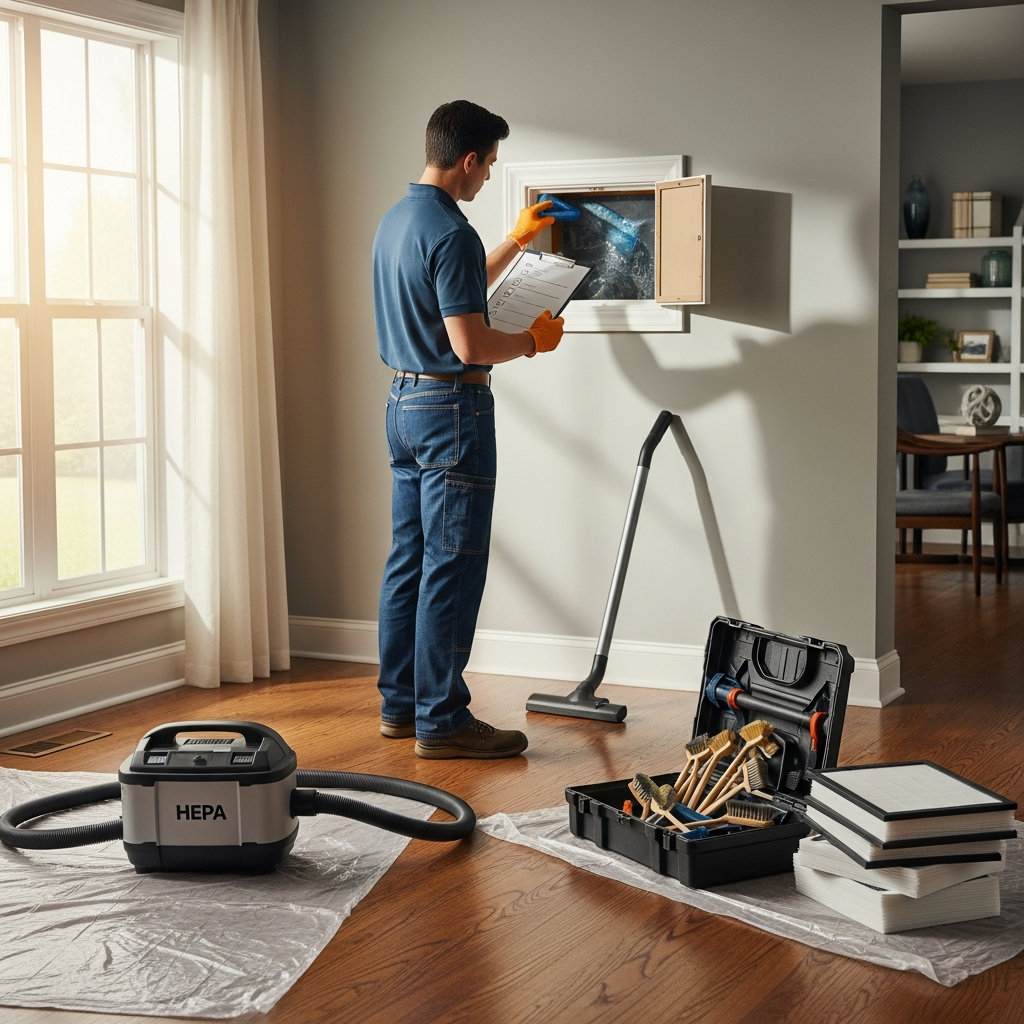
- Assemble tools: HEPA vacuum, brushes, screwdrivers, tape, plastic sheeting.
- Protect rooms with drop cloths and close doors to contained areas.
- Open and inspect a few supply registers and return grilles.
- Pre-vacuum at openings; agitate gently with soft brushes.
- Work room by room, marking each register as completed.
- Inspect blower cabinet only if manufacturer-permitted and safe.
- Replace HVAC filter immediately after cleaning.
- Verify results and log date, findings, and next tasks.
Preparation: Planning and Access
Pick a day with mild weather if possible so you can open windows for ventilation. Walk the home and note all supply registers and return grilles. In older Elizabeth homes, returns may be concentrated in hallways or common areas; in newer layouts, each major room may have its own return. Clear furniture away from vents for safe access and set aside clean containers for screws and hardware so reassembly is easy.
Place a trash bag, microfiber cloths, and a flashlight near your work area. If you live in a multifamily building, review any property rules about accessing equipment closets or shared chases before you start.
Safety First: Protect People and Property
- Turn the HVAC system off and label the thermostat so no one starts it mid-project.
- Wear a particulate respirator (N95 or better), cut-resistant gloves, and eye protection.
- Stabilize ladders on flat surfaces and maintain three points of contact.
- Keep pets and children away from the area until you finish and clean up.
- Do not disturb suspicious materials such as friable insulation or stained duct liners.
Any moisture or strong musty odors should prompt a pause. Elizabeth’s humid summers can lead to condensation on cooling components, and that moisture must be managed properly. If you suspect persistent dampness or microbial growth, plan for a specialty assessment rather than proceeding.
Tools and Supplies
- HEPA vacuum with extension hose and crevice tools
- Soft-bristled brushes of various diameters
- Screwdriver set, nut drivers, adjustable wrench
- Plastic sheeting and painter’s tape for register covers
- Microfiber cloths and a coil-safe cleaner (only if manufacturer-approved)
- New HVAC filters matched to your system’s specifications
Check your vacuum’s filter and bag status before beginning. A clogged vacuum compromises dust capture and can throw particles back into the room. If your toolkit feels insufficient or you have extensive ductwork with hard-to-reach runs, you can instead arrange air duct cleaning and then follow the verification and maintenance parts of this checklist after the service is complete.
Room-by-Room Cleaning Steps
- Close most supply registers with tape and plastic, leaving one or two open in your starting area. This focuses airflow and dust capture where you work.
- Remove the grille or register cover. Vacuum the grille itself first, including louvers and corners.
- Vacuum just inside the duct opening with a crevice tool, then agitate lightly with a soft brush. Avoid aggressive motion that might damage lining or flexible ducts.
- Repeat for each register, checking off rooms as you go. Keep hardware organized.
- Move to return grilles. These often hold more dust, so pre-vacuum carefully and take your time loosening buildup.
- If safe and permitted by your manufacturer, open the blower cabinet with power off. Lightly vacuum visible, loose dust on the cabinet floor and surrounding surfaces. Do not bend or scrub fan blades or coil fins.
- Visually check the evaporator coil face if accessible. If dirty, use only approved methods or pause for a technician to prevent fin damage.
- Replace the HVAC filter with a fresh, correctly sized model. Note the installation date.
- Reattach all registers and grilles, ensuring a snug fit without overtightening.
- Power the system back on. Listen for rattles and check for consistent airflow at each room.
Quality Control and Verification
When complete, select a few registers to re-open and inspect with a flashlight. You should see noticeably less loose dust and debris in the first foot or two of the run. With the system operating, hold a tissue at the register to confirm steady airflow. Replace the filter again after about a week to capture any residual dust you dislodged. Wipe room surfaces with a damp microfiber cloth and launder work clothes separately.
Keep a log of your activities—date, areas cleaned, tools used, and issues noted. This simple record clarifies what remains for next time and provides context if you later schedule a professional to address inaccessible sections.
Special Notes for Elizabeth, NJ Homes
Elizabeth’s location near major roadways can mean more fine particulates entering homes, particularly in houses with older windows or air leaks. Consider sealing gaps and upgrading weatherstripping to reduce infiltration. For homes with attics, verify that return chases and attic bypasses are sealed to prevent the system from pulling dusty attic air into circulation.
Seasonally, plan light inspections at the transition to cooling and again at the start of heating. Pollen accumulation in spring and leaf debris in fall can contribute to buildup at returns and around outdoor equipment. Consistent filter changes do much of the heavy lifting to keep ducts cleaner between deeper cleanings.
Post-Cleaning Maintenance Checklist
- Replace the HVAC filter on schedule, adjusting frequency for pets, allergies, or nearby construction.
- Vacuum register grilles with a brush attachment during routine house cleaning.
- Inspect a sample of ducts quarterly by removing a couple of registers for quick checks.
- Control indoor humidity with dehumidification in summer if needed.
- Encourage a no-shoes policy or entry mats to reduce tracked-in dust.
Troubleshooting Checklist
- Persistent musty odors: Inspect for moisture sources and clear condensate drains.
- Uneven airflow: Check for closed or obstructed registers and ensure the new filter is properly seated.
- Rattles or vibration after reassembly: Verify panels and registers are snug and gaskets are not pinched.
- Recurring dust quickly after cleaning: Inspect returns for gaps or missing seals drawing air from attics or basements.
Frequently Asked Questions
Q: How long does a typical DIY cleaning take? A: Plan several hours for a small home and longer for larger or more complex layouts. It is okay to break the job into multiple sessions.
Q: Do I need special chemicals? A: No. Most of the benefit comes from careful agitation and HEPA vacuuming. Only consider approved treatments if a qualified professional identifies a specific issue.
Q: Can I clean flexible ducts? A: Yes, but be gentle. Avoid powered brushes that can tear liners. If buildup is extensive, consider professional service.
Q: How do I know it worked? A: Visual checks near openings, smoother airflow, and reduced dust settling in rooms within the following week are good signs. Replace the filter again after a week to capture residual particles.
Q: Are there extra steps for homes with pets? A: Increase filter change frequency and pay special attention to returns, which gather pet hair quickly.
Q: Should condos follow the same checklist? A: The fundamentals apply, but coordinate with building management about access and any shared components.
Put This Checklist to Work for Cleaner Air
If you want a professional head start before transitioning to ongoing maintenance, book reliable air duct cleaning and then follow this checklist to keep results strong for seasons to come. Whether you handle the basics yourself or combine them with expert service, a clear, methodical process is the surest route to healthier air throughout your Elizabeth home.
