Dryer vent issues can show up as slow drying, excess heat in the laundry area, musty smells, or even tripped safety sensors. In Elizabeth, New Jersey—where homes range from older brick buildings to newer townhomes—unique layouts and materials sometimes make venting more complicated. This troubleshooting guide helps you diagnose common problems, correct installation errors, and restore strong airflow. If you would rather skip guesswork, consider scheduling expert dryer vent installation to evaluate your current setup and complete any corrections.
How to Recognize a Venting Problem
Most problems surface as symptoms you can observe without tools. Watching for these signs and acting quickly helps prevent damage and safety risks:
- Drying takes longer than normal even after cleaning the lint screen.
- The laundry room feels unusually warm or humid.
- A burning or musty smell appears during cycles.
- Lint accumulates around the dryer or at the exterior hood.
- The exterior damper barely opens during operation.
- The dryer shuts off unexpectedly or shows airflow-related error codes.
First Checks: Simple Fixes Before Major Work
Begin with quick wins that often solve performance issues:
- Clean the lint screen thoroughly, including washing it with mild soap if fabric softener residues are present.
- Inspect the transition connector for kinks or crushing; re-route to maintain a gentle radius.
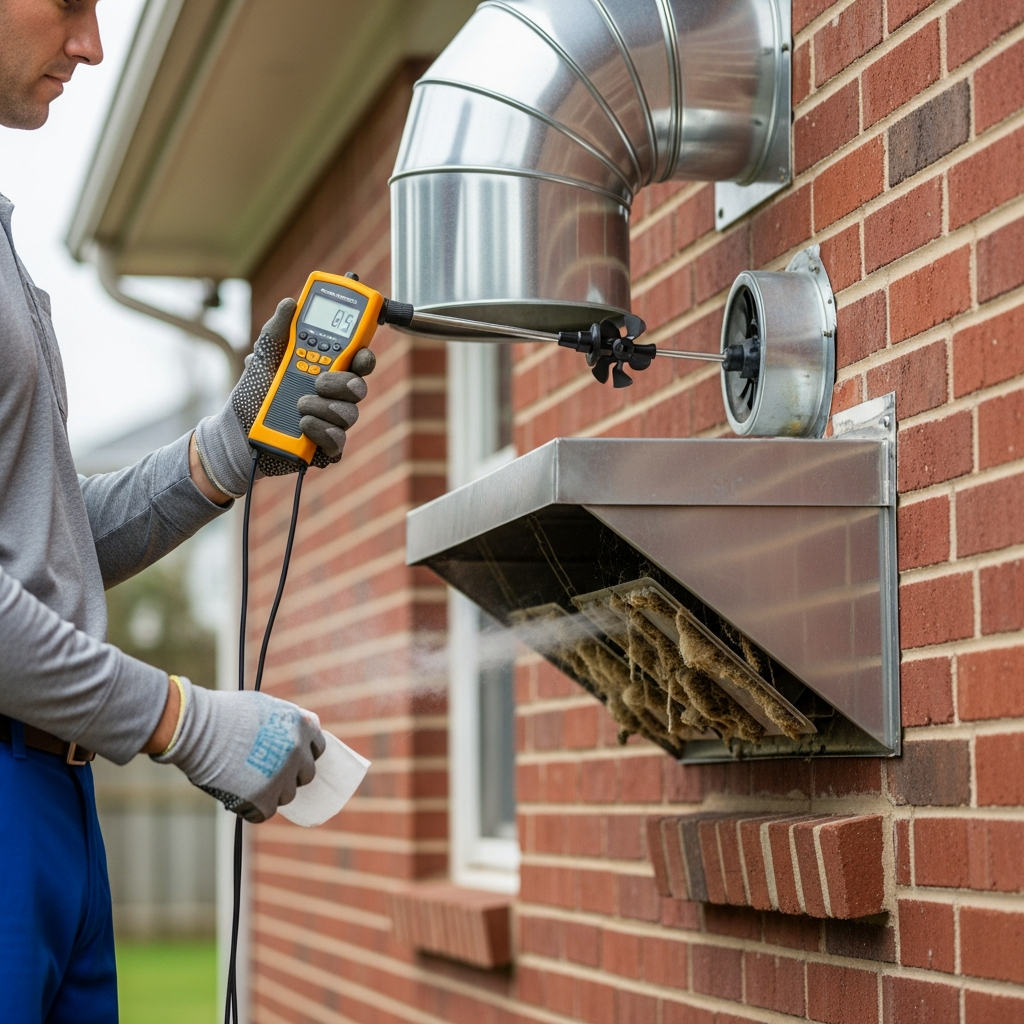
- Examine the exterior hood for stuck dampers or visible lint mats and remove any buildup.
- Confirm the damper moves freely in cold weather; ice or snow in Elizabeth winters can impede it.
Diagnosing Airflow Restrictions
If basic steps do not restore performance, locate the restriction. Start at the dryer and move outward. Check each joint for air leaks by running the dryer on an air cycle and feeling for escaping air. Weak exterior airflow may indicate long runs with too many elbows, a crushed section hidden behind the dryer, or a stuck damper.
- Transition connector: Replace long or flimsy connectors with a short, listed piece.
- Rigid duct: Look for sharp bends and unsupported spans that may have shifted.
- Exterior hood: Replace a damaged or non-listed hood lacking a proper backdraft damper.
Common Installation Errors in Elizabeth Homes
Certain installation mistakes show up repeatedly in older or space-constrained houses:
- Using plastic or thin foil duct for the permanent run, which sags and traps lint.
- Excessive elbows in tight laundry closets and long interior runs to exterior walls.
- Terminating the duct into attics or crawlspaces to save time, creating moisture and fire risks.
- Screws penetrating into the airstream, snagging lint and reducing diameter.
- Exiting too close to grade so snow and leaves block the hood.
Step-by-Step Correction Strategy
- Map the current route. Sketch every elbow and measure section lengths.
- Identify problem segments. Mark crushed areas, long unsupported spans, or elbows that could be replaced with gentler angles.
- Replace noncompliant materials. Use 4-inch smooth metal duct for the main run and a short, listed transition connector.
- Reduce elbows where possible. Two 45-degree turns may perform better than a single tight 90-degree bend.
- Support the run. Install hangers every 4 to 6 feet to prevent sagging and separation at joints.
- Seal joints correctly. Use foil-backed HVAC tape rated for dryer ducts; avoid cloth duct tape and protruding screws.
- Upgrade the termination. Install a listed exterior hood with a backdraft damper and no screen.
- Pitch the duct slightly toward the exterior to manage condensation in Elizabeth’s seasonal climate.
- Test airflow and drying times. Revisit any weak spots you detect.
Special Situations: Brick, Roof Vents, and Multifamily
Brick exteriors require careful coring or drilling, sometimes with a sleeve to protect the duct. Roof terminations must be properly flashed and use listed caps designed for dryers. In multifamily buildings, obtain permissions and ensure the route does not invade shared spaces or violate house rules. Tighter lots or shared walls may dictate specific termination locations to avoid nuisance exhaust near neighboring windows.
Condensation and Water in the Duct
Water pooling inside a dryer duct usually indicates a long, flat run without enough slope or sections passing through unconditioned spaces without protection. Over time, condensation can cause corrosion and trap lint. Solutions include re-pitching the run slightly toward the exterior, insulating around ducts in cold zones where allowed, or relocating the route to shorten distance and reduce elbows.
Noise, Vibration, and Rattling
Buzzing or rattling often signals a loose elbow or an unsupported span. Re-check hangers and tape joints carefully. Make sure joints are oriented in the direction of airflow with the crimped end facing outward. If the exterior hood flaps loudly, ensure it is the correct model for dryers and that it swings freely without binding on siding or mortar edges.
Persistent Poor Performance After Corrections
If airflow still seems weak after you shorten runs, replace elbows, and service the exterior hood, reassess the total equivalent length versus the dryer manufacturer’s specification. Some routes in tight homes exceed recommended lengths. At that point, a redesigned route may be the best fix. Complex re-routing is often faster with professional help and diagnostic tools.
When your time is limited or the project involves masonry penetrations, you may save effort by arranging experienced dryer vent installation to address lingering issues and verify operation.
Preventive Maintenance After a Fix
Once you correct the installation, protect that effort with a simple maintenance plan:
- Clean the lint filter before every load.
- Inspect the exterior hood monthly and remove lint mats.
- Vacuum the transition connector and first duct section every few months.
- Schedule a full cleaning annually, especially for heavy laundry use.
- After snow or storms, confirm the damper moves freely and the outlet is clear.
FAQ
Q: My dryer is new but drying is slow. What should I check first? A: Verify the lint screen, the transition connector for kinks, and the exterior damper operation. New dryers still need a clear exhaust path.
Q: Is plastic duct ever acceptable? A: Avoid plastic for permanent runs. Use smooth metal for the duct and a short, listed transition connector.
Q: How many elbows are too many? A: Follow the appliance manufacturer’s maximum equivalent length. Each elbow counts against the total allowed.
Q: The exterior hood is noisy. Is that normal? A: Some sound is normal, but loud flapping suggests a misfit hood or binding flap. Replace with a listed, dryer-rated hood.
Q: Can I vent into my attic temporarily? A: No. Moisture and lint must discharge outdoors to prevent damage and hazards.
Q: Water drips from the duct. Why? A: Condensation forms in flat or uninsulated runs exposed to cold. Re-pitch the duct and consider insulating the pathway where appropriate.
Q: I smell burning during cycles. What now? A: Stop the dryer, inspect for lint buildup in the duct, and verify the exterior hood is clear. If the odor persists, discontinue use and investigate further.
Q: Do I need a professional inspection after fixing issues? A: If you changed routing or penetrations, or if the run is long, a professional assessment can confirm safe performance.
Q: How often should I clean the duct? A: At least annually, more often with heavy use or pets.
Q: What is the best way to test airflow? A: Run the dryer on an air cycle and verify strong exhaust and full damper opening at the termination.
Restore Strong Airflow and Peace of Mind
With a careful inspection, targeted corrections, and a simple maintenance routine, most dryer vent problems in Elizabeth can be resolved quickly. If your system is complex, space is tight, or masonry penetrations are required, save time by arranging help and schedule your dryer vent installation so your home benefits from safe operation, efficient drying, and reliable performance in every season.
