Build It Right, Fix It Right: Duct Repair and Installation in Elizabeth, NJ
Whether you are dealing with a few stubborn rooms that never feel right or planning a renovation that calls for new duct runs, your home’s comfort depends on the strength of its ductwork. Repair stabilizes what you have; installation shapes the pathway for decades to come. In Elizabeth, New Jersey—where seasonal swings challenge HVAC systems—thoughtful design, proper materials, and precise workmanship make all the difference. If you want a primer on the essentials before you commit to a plan, guides focused on professional air duct repair will orient you to the techniques and standards that deliver reliable, quiet, and balanced airflow.
Good ductwork is not just metal and flex runs; it is a system. Sizing, layout, sealing, and support all interact to determine how air moves through your home. Repair corrects faults—leaks, disconnections, kinks—while installation crafts an efficient route that avoids future bottlenecks. Together, they ensure your HVAC can deliver clean, conditioned air to each room with minimal loss.
When to Repair and When to Install New
Deciding between repair and new installation begins with assessment. If you have isolated leaks, loose boots, or a kinked flex run, targeted repairs are typically the fastest, least disruptive choice. If problems are systemic—undersized returns, widespread damage, or major layout flaws—installation or a partial rework may be smarter. A clear diagnostic walk-through helps you weigh immediate comfort gains against long-term performance goals.
Many homes benefit from a hybrid approach: stabilize the most impactful faults now to restore comfort, then phase in strategic upgrades like adding a return in a starved zone or replacing a severely compromised trunk line during a renovation window.
Principles of Effective Duct Installation
The best installations follow a few universal principles that keep air moving freely and quietly:
- Right-sizing: Supply and return dimensions match equipment capacity and room loads, avoiding excessive velocity and noise.
- Straight, supported runs: Flex is kept as straight as possible with gentle bends, and metal trunks are aligned and braced.
- Sealed connections: Joints, boots, and transitions are mechanically fastened and sealed with mastic or rated foil tape.
- Balanced design: Registers and returns are planned so rooms receive and remove air appropriately, minimizing pressure imbalances.
- Insulation: Ducts in unconditioned spaces are insulated to protect against heat gain/loss and condensation.
These fundamentals are the backbone of comfortable, efficient homes. Following them from day one prevents the need for excessive tinkering later.
Repair Techniques That Deliver Lasting Results
On the repair side, quality work is specific and methodical. Expect technicians to:
- Secure connections with screws, collars, or draw-bands before sealing.
- Apply mastic or UL-listed foil tapes to close gaps, seams, and penetrations.
- Straighten and support flexible runs to eliminate kinks and sag.
- Replace damaged sections that cannot be reliably restored.
- Verify airflow and observe the system through a cycle to confirm improvements.
These steps do more than stop a leak—they restore the designed pathway so the system can do its job with less strain and noise.
Elizabeth Homes: Common Duct Scenarios
In older neighborhoods, you might find transitions from past add-ons that were improvised rather than engineered, leading to odd turns or mismatched sizes. In newer homes, long flex runs may have been installed too loosely, inviting kinks, compression, or vibration. The best teams in Elizabeth recognize these patterns and recommend solutions that respect your home’s character while elevating performance.
Basements and attics are typical risk areas. Basements can introduce dust to returns if seams are open; attics can overheat in summer, prematurely aging certain materials. Solid sealing, support, and insulation go a long way in both environments.
Designing for Quiet Operation
Noise is a comfort issue as real as temperature. Good design limits sharp turns, avoids bottlenecks, and places transitions where turbulence will be lowest. On repairs, tightening a rattling boot or sealing a whistling seam can reduce noise immediately. On new installs, thoughtful sizing and smooth pathways keep velocity in check so the system sounds calm and unobtrusive.
Balancing Airflow Across Rooms
Balance is about supply and return working together. Starved returns can undermine even well-sized supplies, leading to pressure problems and uneven delivery. Remedies might include adding or upsizing returns, adjusting damper positions, or repositioning registers to serve the room better. A balanced system lets your thermostat setting mean the same thing in every room.
Insulation and Condensation Control
Uninsulated or poorly insulated ducts in unconditioned spaces can sweat in summer or lose heat in winter. That moisture can create secondary issues, from staining to microbial growth concerns. Proper insulation is as important as sealing; together they keep ducts dry, efficient, and stable across seasons.
What to Expect During Installation or Major Repair
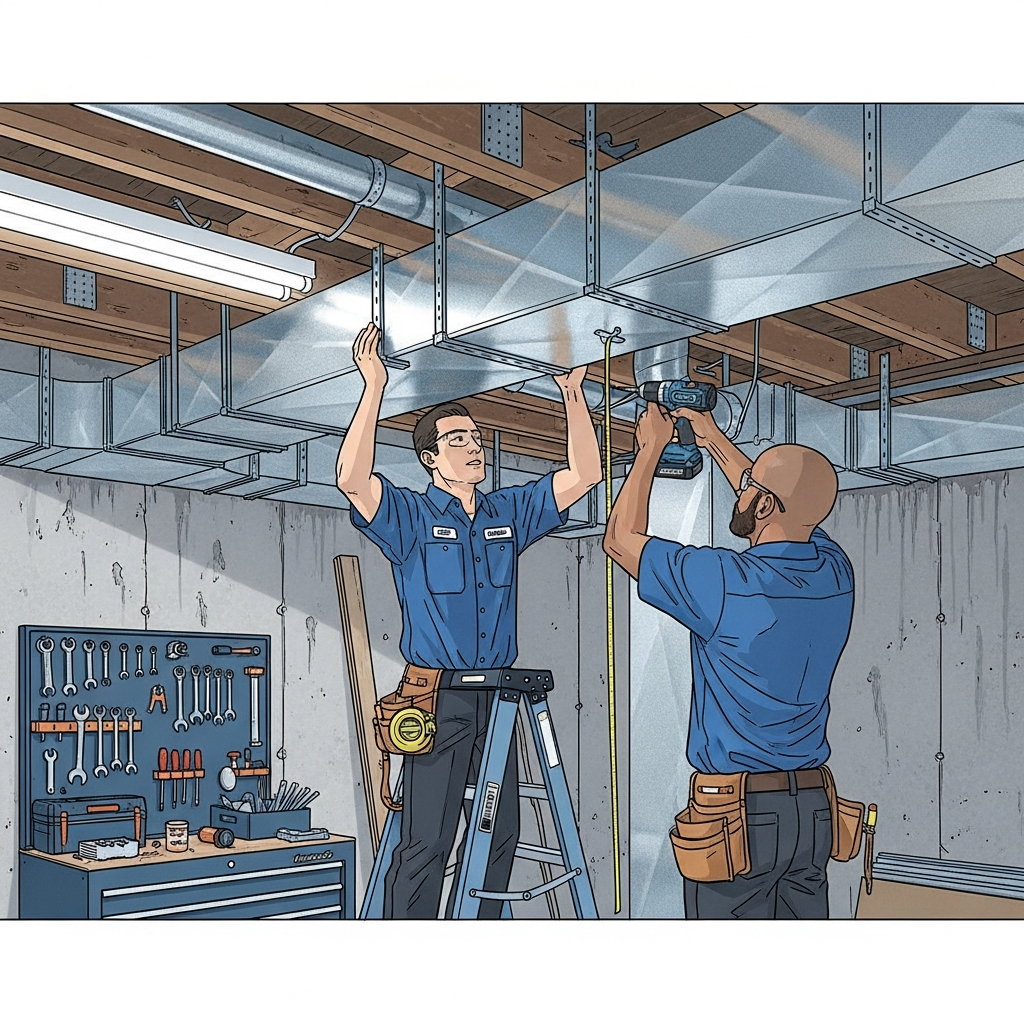
Professional teams plan the sequence to minimize disruption. You will see careful measurements, layout checks, and clean cutting for transitions. Sections are assembled, fastened, sealed, and insulated as they go so no step is left for “later.” Access holes are created neatly and closed properly. Work areas are protected and cleaned during and after the project.
Documentation and Homeowner Walk-Through
Completion includes photo documentation of critical areas and a walk-through. You should understand where new runs were added, how supports are spaced, what was sealed, and why certain choices were made. This clarity helps you protect the system—avoiding storage on top of ducts, watching for unusual sounds, and keeping registers open as intended.
Frequently Asked Questions
Do I need a full replacement, or can I repair? Many homes do well with targeted repairs that stabilize airflow and stop major leaks. If fundamental layout issues exist, a partial rework or new sections may be recommended for lasting balance and quiet.
How long does a typical project take? Timing depends on scope and access. Simple repairs happen quickly; more extensive installation requires planning and staged work. Your provider should outline a clear timeline after inspection.
Will new ducts make my system quieter? Likely. Well-sized, smooth pathways with sealed joints reduce turbulence and whistling. Even repairs can make an immediate difference by shutting down rattle points and leak-induced whistles.
Is flexible duct acceptable? Yes, when installed correctly: minimal length, gentle bends, firm collars, solid sealing, and proper support spacing. Flex should not be a shortcut; it must meet design intent.
What about returns? Returns are as important as supplies. Starved returns reduce performance and can create noise and temperature swings. Right-sizing and proper placement restore balance.
Can I combine cleaning with repair or installation? Absolutely. Cleaning after construction dust or before sealing helps protect air quality and keeps the system running smoothly.
Planning Your Project: Steps to Success
- Assess: Start with a full inspection and discussion of symptoms.
- Prioritize: Stabilize urgent faults first for immediate comfort.
- Design: Size and layout new sections with balance in mind.
- Execute: Fasten, seal, insulate, and support as you go.
- Verify: Check airflow and observe operation through a cycle.
- Document: Keep photos and notes for future maintenance.
This sequence aligns quick wins with long-term stability.
Homeowner Tips for Long-Term Performance
- Replace filters on schedule and match ratings to your equipment.
- Keep registers free of obstructions and avoid closing too many at once.
- Protect attic and basement ducts from storage compression.
- Watch and listen: new noises or airflow changes deserve early attention.
- Schedule periodic checkups, especially before peak seasons.
Small, steady habits preserve the value of both repairs and new installations.
Bring Your Elizabeth Home Back into Balance
If rooms feel inconsistent, airflow is weak, or you are planning a new addition, now is the time to get the ductwork right. A careful evaluation followed by targeted repairs or a well-designed installation can transform daily comfort. For results you can feel across every room, partner with a trusted team that specializes in methodical, results-driven air duct repair and installation. With the right plan, your HVAC runs smoother, quieter, and more effectively—season after season.
