Selecting the right partner for your home’s ductwork is about more than equipment and a calendar date. The best choice blends technical skill, transparent communication, safety-first procedures, and respect for your living space. In Elizabeth, New Jersey—a city with diverse building styles, renovation histories, and busy schedules—those qualities make all the difference. This guide walks you through what matters most: credentials, process, protection of your home, and the indicators of a dependable, results-driven provider. If you are new to the topic or simply refreshing your understanding, a quick primer on professional air duct cleaning can help you build a checklist for your search.
Start with the essentials: verification and standards
Before comparing availability, confirm that prospective providers operate to recognized industry standards. You want a team that focuses on source removal, not shortcuts. Ask how they establish negative pressure, what agitation tools they use for different duct materials, and how they adapt to older ductboard or tight chases. Robust answers signal experience and care.
- Training and experience: How do technicians stay current with best practices? Do they have ongoing training and documented field hours?
- Safety and protection: What methods do they use to protect floors, walls, and furnishings? How do they ensure particulate removal without spreading debris?
- Documentation: Will you receive before-and-after images or a summary report? How do they verify completed sections?
Understand the process from first call to final walk-through
A clear, step-by-step plan helps you anticipate what will happen and how your home will be safeguarded. A dependable provider communicates the flow from assessment to cleanup and invites your questions. The goal is to demystify the work, so you are comfortable every step of the way.
- Initial assessment: A conversation about your home’s layout, recent projects, and any airflow or dust concerns. Many teams request photos to prepare for access and protection needs.
- On-site evaluation: Mapping trunks and branches, counting registers and returns, checking duct materials, and planning access points. Sensitive materials are flagged for special handling.
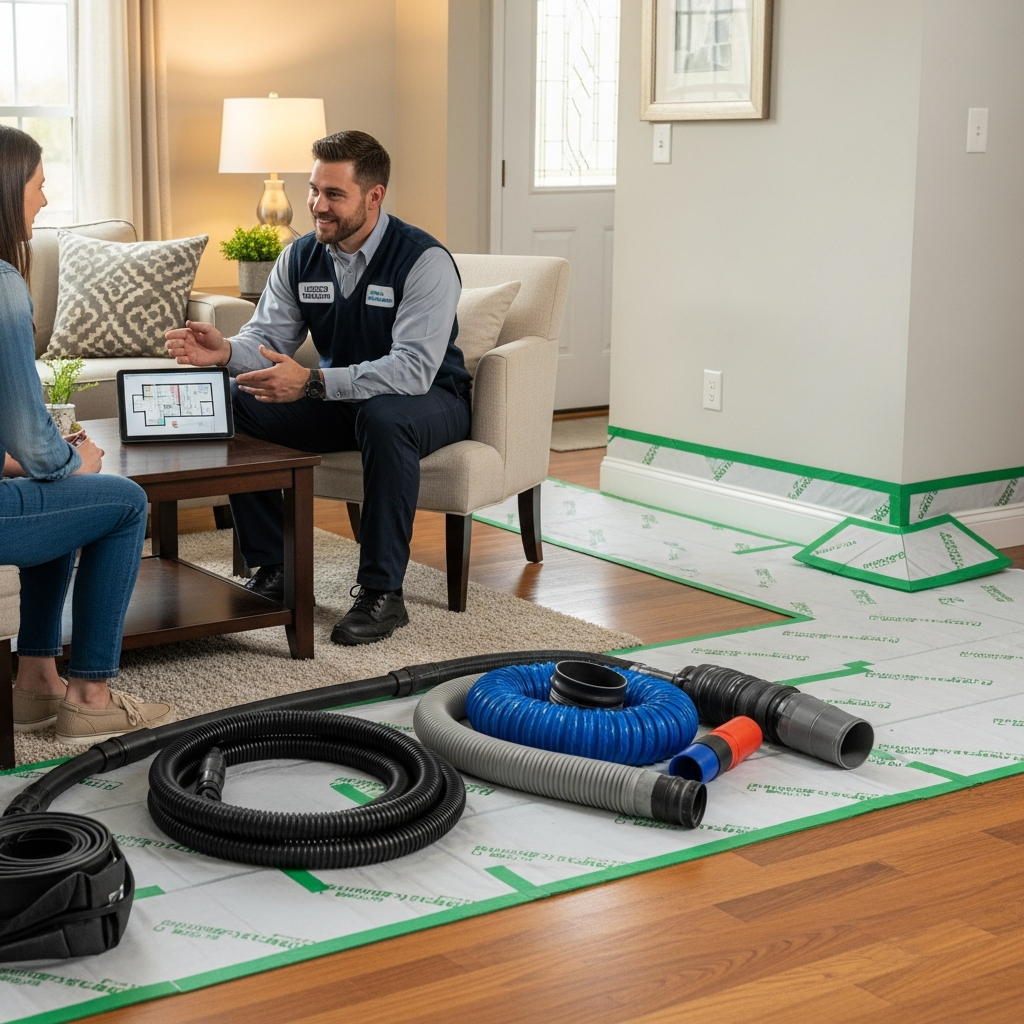
- Protection and setup: Corner guards, drop cloths, and containment are established; negative pressure is set with proper filtration.
- Source removal: Technicians use vacuums, brushes, and air whips suited to your ducts to remove accumulated debris from supply and return paths.
- Quality verification: Visual checks, photos, and measurements as appropriate. The team discusses findings and recommendations with you.
Elizabeth’s housing mix and why it matters
From historic multi-unit buildings to single-family homes and modern townhouses, Elizabeth offers a wide variety of HVAC layouts. Pre-war properties may have tight risers with limited service openings, while newer homes may contain advanced zoning with multiple dampers. A capable provider understands how to plan for both and brings the right tools for each scenario. Local familiarity also helps with logistics such as parking, building access rules, and coordination with property managers for multifamily spaces.
What “professional” looks like in your living space
You can learn a lot by observing how a team treats your home. Professionals communicate arrival times, wear protective gear, and move carefully. They set expectations for noise and duration, explain any necessary temporary removals (like certain grilles), and check in periodically during the appointment. They protect finishes not just at the mechanical room, but throughout living areas where registers and returns are located. When the work is complete, they leave your home tidy and share results.
Evaluating proposals: look for clarity and accountability
When you compare providers, focus on substance over flash. A strong proposal tells you exactly how the team plans to reach each section of the system and how they will verify success. It calls out difficult areas and explains the strategy for addressing them safely, with the right tools. It also notes what is and is not included, so there are no surprises on the day of service.
- System mapping: Clear identification of trunks, branches, returns, and access points.
- Tools and methods: A description of agitation tools matched to your duct materials.
- Protection measures: Details on containment, filtration, and surface protection.
- Quality checks: What documentation you will receive and when.
Questions to ask before you book
Asking smart, specific questions brings useful differences to light and builds confidence that you are choosing the right partner. Consider using the list below as a conversation guide.
- How do you adapt techniques for ductboard or older flex materials?
- What steps do you take to maintain negative pressure throughout the process?
- How do you reach distant or hard-to-access branches without damaging finishes?
- Can you share examples of documentation you provide upon completion?
- How do you protect my home’s floors, walls, and furnishings in every room you work in?
- How do you coordinate in multifamily buildings or properties with limited parking and access?
Red flags to avoid
While evaluating options, watch for signs that a provider may not deliver the results you expect. Vague descriptions, reluctance to explain methods, or a focus on speed over thoroughness are all cautionary. Be wary of anyone who insists that registers alone tell the whole story, or who downplays the need for negative pressure and containment. Quality work is methodical, and professionals are proud to explain how and why they do it.
The importance of fit: matching your goals to the scope
Not every home needs the same level of attention in every area. If your top concern is reducing allergens, ask how the team will prioritize return pathways and filtration strategies. If airflow balance is the issue, flag rooms with persistent hot or cold spots and ask how they will be assessed. If you recently completed a renovation, discuss branches near the work area and how particulate migration will be addressed. A thoughtful provider tailors the plan to your lived experience in the home.
Planning for day-of logistics
A little preparation helps your appointment go smoothly. Clear pathways to registers and returns, secure pets, and move fragile items away from work areas. If access to attics or crawlspaces is needed, provide a clear, safe route. Share any building rules in advance, especially in multifamily environments. Great teams appreciate this cooperation and, in turn, will take extra care to minimize disruption to your routine.
After the work: what success looks like
When the project wraps up, you should feel confident about what was done and why. Expect a walkthrough that explains notable findings—buildup hotspots, repairs to consider, or airflow observations. You should also receive clear guidance on filter maintenance and simple habits that help keep ducts cleaner longer. Many homeowners notice steadier airflow and less dust migration into living spaces following a thorough project.
How to research providers efficiently
In addition to reading reviews and asking neighbors for referrals, look for signals of professionalism in how companies present their process. Do they explain methods in plain language? Do they provide educational resources that align with industry standards? Do they offer to answer questions and discuss options without pressure? Clarity, patience, and respect are meaningful indicators of how your experience will unfold.
Mid-article insight: why methods matter just as much as equipment
High-powered vacuums and robust agitation tools are critical, but outcomes depend just as much on the way those tools are used. The angle and sequence of tool passes, the confirmation that each branch is addressed, and the discipline to maintain containment throughout—those are hallmarks of a meticulous team. If you want to see what best-practice methods look like in context, review a primer on air duct cleaning and use it to frame your conversations with prospective providers.
Frequently Asked Questions
Do I need to be home during the appointment? Being present at the start and finish is helpful for walkthroughs, but many homeowners coordinate access for mid-appointment periods if schedules are tight.
Will my furniture need to be moved? Technicians typically work around furnishings, but clearing immediate access to registers and returns makes the process faster and safer.
How will you protect my home? Expect drop cloths, corner guards, register protection, and containment with proper filtration. Ask for specifics based on your layout.
Can this help with allergies? Reducing particulate buildup and improving filtration can support better indoor air quality. Discuss your goals with both a healthcare professional and your HVAC specialist.
What about older duct materials? Teams adapt methods for ductboard and legacy flex to protect materials while removing buildup effectively.
How long will the appointment take? Duration varies by home size, system complexity, and access. A professional will provide an estimated window after evaluation.
Confidently choose your Elizabeth, NJ partner
A thoughtful selection process pays off with cleaner air, steadier comfort, and a smoother experience in your home. Look for clear methods, strong protective practices, and documented results. The right provider will welcome your questions, tailor the scope to your goals, and communicate from the first call to the final walkthrough.
Ready to move forward?
If you are set to schedule with a professional team that respects your home and delivers thorough results, take the next step. Reach out to a trusted local expert that understands Elizabeth’s housing mix and brings proven methods, careful protection, and clear documentation to every project. For a helpful overview of what quality work entails, explore air duct cleaning and then book a time that fits your calendar.
