Before any brush touches a duct, an effective air duct cleaning begins with a clear, methodical inspection. In Elizabeth, New Jersey, where homes range from historic row houses to newer multifamily units, that first look is essential to set scope, protect materials, and align expectations. This guide explains what inspectors examine, which tools they use, and how findings translate into a cleaning plan. If you are just starting your research, it can be helpful to read a concise overview of air duct cleaning and then come back to this inspection-focused walkthrough tailored to Elizabeth properties.
Goals of a Professional Inspection
An inspection is the roadmap for any responsible cleaning. The objectives include documenting duct materials, confirming system layout, identifying contamination or damage, and ruling out conditions that require special handling. In a four-season climate like Elizabeth’s, inspectors pay attention to condensation risks, attic or crawlspace runs, and aging components that might not tolerate aggressive agitation.
Visual Survey: The Starting Point
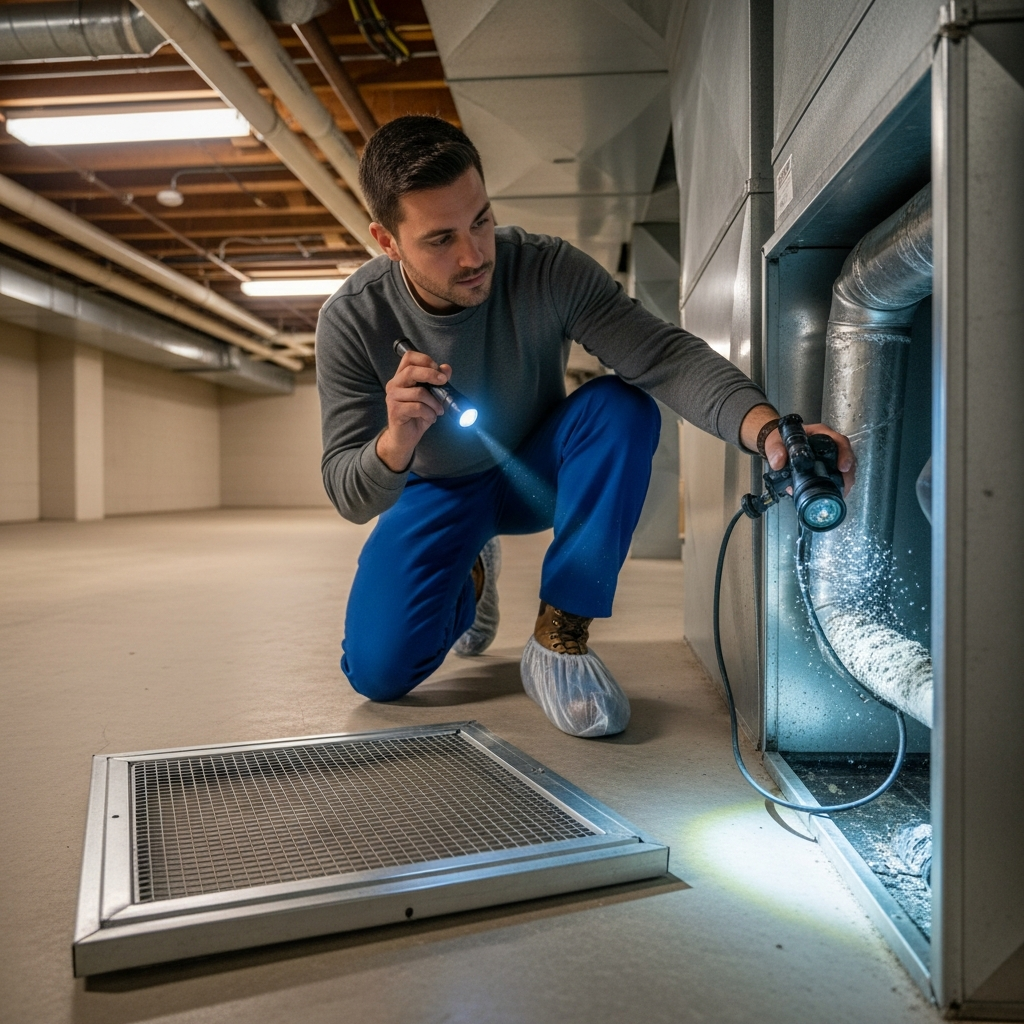
Technicians begin with accessible areas: supply and return registers, the air handler or furnace cabinet, blower compartment, and coil housing. They look for dust loading, lint clumps, construction debris, pest evidence, or staining that can indicate moisture. Registers may be removed to view a short distance inside with flashlights or a small camera. The goal is to establish whether debris is superficial or widespread and to prioritize branches for deeper attention.
Camera-Assisted Review of Interior Surfaces
Where access allows, inspectors use scopes to capture images from trunks and branches. These images show the texture of buildup—fine dust, fibrous lint, or heavier grit—helping to select the right agitation method. For flex duct or lined duct, imagery confirms whether inner layers are intact. Camera shots also provide a baseline for verifying results after cleaning.
System Mapping and Zone Identification
Elizabeth homes may combine basements, attics, and tight closet installations. Inspectors trace the path of main trunks, note branch counts, and identify zones or dampers that control airflow to different levels. This mapping ensures that during cleaning, technicians can isolate and treat each section thoroughly by managing airflow and suction.
Moisture and Odor Assessment
Musty smells, rust on grills, or stains at duct seams can point to condensation or past leaks. Inspectors check for gaps where unconditioned air may enter, for poorly insulated attic runs, and for clogged condensate drains at the air handler. Resolving moisture is a priority, because residues stick to damp surfaces and odors can persist without addressing root causes.
Safety and Material Considerations
Not all ducts are alike. Older sheet metal trunks tolerate robust brushing; flex branches require gentle methods to protect liners; lined ducts call for techniques that lift debris without scouring insulation. Inspectors also look for compromised sections—crushed flex, disconnected boots, or deteriorated mastic—that need repair or cautious handling. Safety extends to power isolation, combustible clearances, and maintaining proper venting for fuel-burning appliances.
Documentation and Communication
Good inspections produce clear notes and representative images. The technician should explain what they found, what that means for cleaning, and any limitations. If a section is inaccessible or damaged, you will know why and how the team plans to adapt. Transparency now avoids surprises later and forms the basis for a tailored service plan.
What Inspectors Commonly Find in Elizabeth
- Fine dust and lint accumulations in returns serving high-traffic rooms or pet areas.
- Construction residues in homes that recently underwent renovation or have older modifications.
- Moisture indicators in attic or crawlspace runs, especially where insulation is sparse or missing.
- Mixed materials: sheet metal trunks with flex branches and occasional lined sections.
- Obstructed returns from furniture placement or closet storage crowding the air handler.
How Findings Translate into a Cleaning Plan
Once the inspection is complete, the cleaning plan addresses three pillars: containment, agitation, and extraction. Containment means creating negative pressure at the main trunk with a vacuum collection unit and masking registers to direct airflow. Agitation tools are chosen by duct type and contamination level. Extraction is verified visually and, when available, with after images. If moisture is a factor, the plan includes steps to manage humidity or insulation so residues do not quickly return.
Timing and Scheduling
Elizabeth’s climate suggests practical windows for duct service: late winter into spring and late summer into fall. Your inspection can be scheduled any time, but pairing it with shoulder seasons often makes it easier to plan and to prepare for the next heavy-use period. Post-renovation inspections are also common, ensuring construction dust does not linger in the system.
Homeowner Preparation for Inspection
- Clear access to the air handler, returns, and key supply registers.
- List rooms with persistent dust, odors, or comfort issues.
- Secure pets and identify parking or entry constraints for equipment.
- Note filter size and replacement date to discuss airflow and maintenance.
Interpreting Photos and Notes
When you review images, look for uniformity of debris: if several branches show similar buildup, a system-wide cleaning is justified. If one branch is dramatically worse—say, a workshop or pet room return—that area may need extra attention or a filter strategy specific to its use. Stains or rust marks signal moisture, which should be addressed alongside cleaning to prevent recurrence.
Coordination in Multifamily and Row House Settings
Shared buildings can complicate access and scheduling. Inspections should clarify whether your unit has an independent system or shares components. The plan must respect building policies for elevator use, parking, and quiet hours. Tight mechanical closets in row houses may require compact tools and meticulous setup to protect walls, doors, and finishes.
Quality Indicators During and After Cleaning
An inspection lays the groundwork for quality, and the cleaning should follow through with sealed access points, clean registers, and even airflow. You should receive a debrief connecting inspection findings to completed tasks: which branches were most loaded, what was discovered at the blower compartment, and any recommendations for sealing, insulation, or filter adjustments.
Mid-Process Check-In
For homeowners who like to be involved, ask for a midpoint update during the service that references initial inspection notes. This confirms that the crew is following the plan, that unexpected issues are documented, and that any new constraints are explained. If you want a fast refresher on methods or terminology, reviewing a plain-language introduction to air duct cleaning can make the conversation clearer and help you ask precise questions.
Frequently Asked Questions
Q: What does an inspection cost? A: While prices are not discussed here, the value lies in preventing surprises and tailoring the job to your system’s needs. Ask about what is included in the inspection deliverables.
Q: How long does an inspection take? A: Often under an hour for straightforward homes, longer for complex layouts or limited access.
Q: Will inspectors remove registers? A: Yes, representative registers are removed to view inside and, when possible, capture images from trunks and branches.
Q: Can inspection reveal mold? A: It can reveal conditions consistent with moisture and residues, but moisture remediation and specialized assessment may be needed for confirmation.
Q: Do I need to be home? A: It is best to be present to grant access and discuss findings; you will also be able to see images and ask questions in real time.
From Inspection to Action
By understanding your system’s layout, materials, and challenges, you can move forward with confidence. Prepare access points, document concerns, and schedule your inspection during a convenient window. When you are ready to proceed, align the service plan with the inspection findings and maintain momentum with timely filter changes and moisture control. To close the loop and enjoy cleaner, more comfortable air, schedule your appointment and rely on experienced air duct cleaning tailored to Elizabeth, New Jersey homes.
