Introduction: Build a Smart Schedule for Elizabeth, NJ
Elizabeth, New Jersey experiences a full sweep of seasons—pollen-heavy springs, humid summers, breezy fall cleanups, and long stretches of heating in winter. Your ducts, returns, and air handler sit at the center of these shifts, carrying air that can move dust, dander, fibers, and outdoor particulates throughout your home. Instead of guessing when to clean, create a practical, repeatable maintenance schedule tailored to local conditions and your household’s needs. If you would rather start with a professional baseline and then follow a calendar afterward, arrange timely air duct cleaning and use this plan to keep results consistent over the long term.
This guide provides monthly, seasonal, and event-driven tasks, with adjustments for pets, allergies, renovations, and multifamily buildings. It also covers recordkeeping and simple quality checks that keep your plan on track without guesswork.
Core Principles for a Duct Maintenance Plan
Three ideas underpin an effective schedule: inspection over assumption, filtration over frequent deep cleaning, and moisture control. First, inspect at set intervals instead of relying on memory or dust levels alone. Second, filters are your front line—change them as your household demands, not just by calendar months. Third, moisture drives odors and microbial concerns; promptly resolve condensate and humidity issues so dust does not become a sticky substrate.
Finally, acknowledge your home’s unique context. Close proximity to high-traffic corridors or ongoing neighborhood construction warrants more frequent checks. Older homes may have gaps or returns that pull in attic or basement air, increasing dust load.
Monthly Micro-Tasks
- Check filter status visually. If the surface looks gray and matted, replace it rather than waiting for the traditional interval.
- Vacuum return grilles and nearby wall or floor areas. Returns often collect the most dust.
- Look into one or two supply registers with a flashlight. Light surface dust is normal; clumps or debris suggest a deeper cleaning is due.
- Listen to airflow. Whistling, rattling, or uneven output can indicate a blocked filter, loose panel, or register issues.
These small checks add up. They take only minutes and prevent you from missing early warning signs. If your household includes multiple pets, smokers, or allergy sufferers, factor that into how often you change filters and perform touch-ups.
Seasonal Tasks: Spring and Early Summer
As spring arrives in Elizabeth, pollen counts rise. Before cooling season kicks in fully, remove a few registers and returns for a brief visual inspection. Vacuum around openings, and confirm your condensate drain is clear. When humidity increases, ensure the drain trap is primed and the line is unobstructed, which helps prevent moisture from lingering in the system.
Switching from heating to cooling can shake loose dust that settled in winter. If you recently finished a home project—new floors, drywall, or painting—anticipate extra dust in returns. In those cases, perform a light duct touch-up and change the filter sooner to keep surfaces from accumulating residue.
Seasonal Tasks: Late Summer and Fall
Late summer heat and humidity may leave the system working hard, while fall introduces leaf debris and cooler, drier air. Before heating season, inspect a few runs again and replace the filter. Check weatherstripping and door sweeps to reduce infiltration of outdoor particulates, which helps keep ducts cleaner. Clear outdoor equipment of leaves and yard debris so the system breathes freely and dust is less likely to reenter through gaps or returns.
If you notice musty odors or visible moisture staining at any point, pause the schedule and address the source. Do not rely on fragrances or surface sprays in ducts; focus on drainage, sealing, and proper airflow.
Event-Driven Maintenance Triggers
- After Renovations: Construction dust is ultra-fine and travels easily. Plan a deeper duct cleaning and two rapid filter changes within the first month post-project.
- After Pest Intrusions: If you discover nesting materials or droppings near returns, consult a professional and consider a comprehensive cleaning once the issue is resolved.
- After Water Issues: Any leak affecting duct chases, basements, or equipment rooms warrants an inspection and, if needed, moisture remediation before standard cleaning resumes.
- When Allergy Symptoms Spike: Inspect filters and returns. A heavier schedule may help during peak pollen or mold spore seasons.
Align Cleaning Depth to What You Find
Not all cleanings are equal. If monthly checks reveal only a thin dust film, a quick vacuum at registers may be sufficient. When deeper debris appears—pet hair clumps, renovation dust deposits, or persistent odors—plan a more thorough session with careful brushing and HEPA vacuuming. Keep agitation gentle on flexible or lined ducts to preserve materials.
If you reach inaccessible sections or you own tools better suited for housekeeping than deep duct care, it can be safer and more efficient to schedule air duct cleaning and then return to your routine plan afterward. Think of professional service as a reset that makes ongoing maintenance lighter.
Filter Strategy for Elizabeth Homes
Choose filters that balance airflow and filtration. Higher MERV ratings capture more particles but can restrict airflow on some systems if not sized and selected properly. Follow your equipment guidance and monitor performance. In homes near busy roads or in households with pets and allergies, shorten the replacement interval. During major pollen spikes or nearby construction, check filters twice as often until conditions normalize.
Record each filter change date and the filter model you used. If airflow seems less robust after a change, verify that the filter is installed in the correct orientation and is not oversized or undersized for its rack.
Humidity, Condensate, and Odor Control
Moisture management is central to a healthy schedule. In summer, confirm that condensate drains freely and the pan is clean. Dehumidification can help keep indoor humidity in a comfortable range, reducing condensation on cool surfaces. In winter, overly dry air can lift fine particles into circulation more easily; regular dusting and humidification within recommended ranges can reduce airborne particulates.
If odors persist after cleaning and filter changes, look for hidden moisture traps: clogged drains, poorly insulated supply runs through unconditioned spaces, or unsealed return chases drawing damp air from basements or crawl spaces.
Apartment and Multifamily Considerations
Many Elizabeth residents live in apartments or condos where HVAC components might be shared or space-limited. Coordinate maintenance with building management to ensure access and avoid conflicts with building systems. In small mechanical closets, clutter quickly becomes a dust reservoir. Keep those spaces tidy and stored items sealed.
When you cannot access certain ducts because they are part of shared infrastructure, focus on what you can control: frequent filter changes, regular grille cleaning, and ensuring doors and windows seal well against outdoor particulates.
Simple Verification Methods
- Visual Spot Checks: Remove a couple of registers quarterly and inspect the first foot or two of duct interior.
- Airflow Listening Test: With the system running, listen near a register for rattles or whistling that suggests obstructions or loose panels.
- Tissue Test: Hold a tissue at a register to confirm steady pull at returns and smooth supply flow.
- Odor Assessment: After cleaning and drying, persistent musty smells point to moisture rather than dust alone.
Recordkeeping: The Backbone of Your Schedule
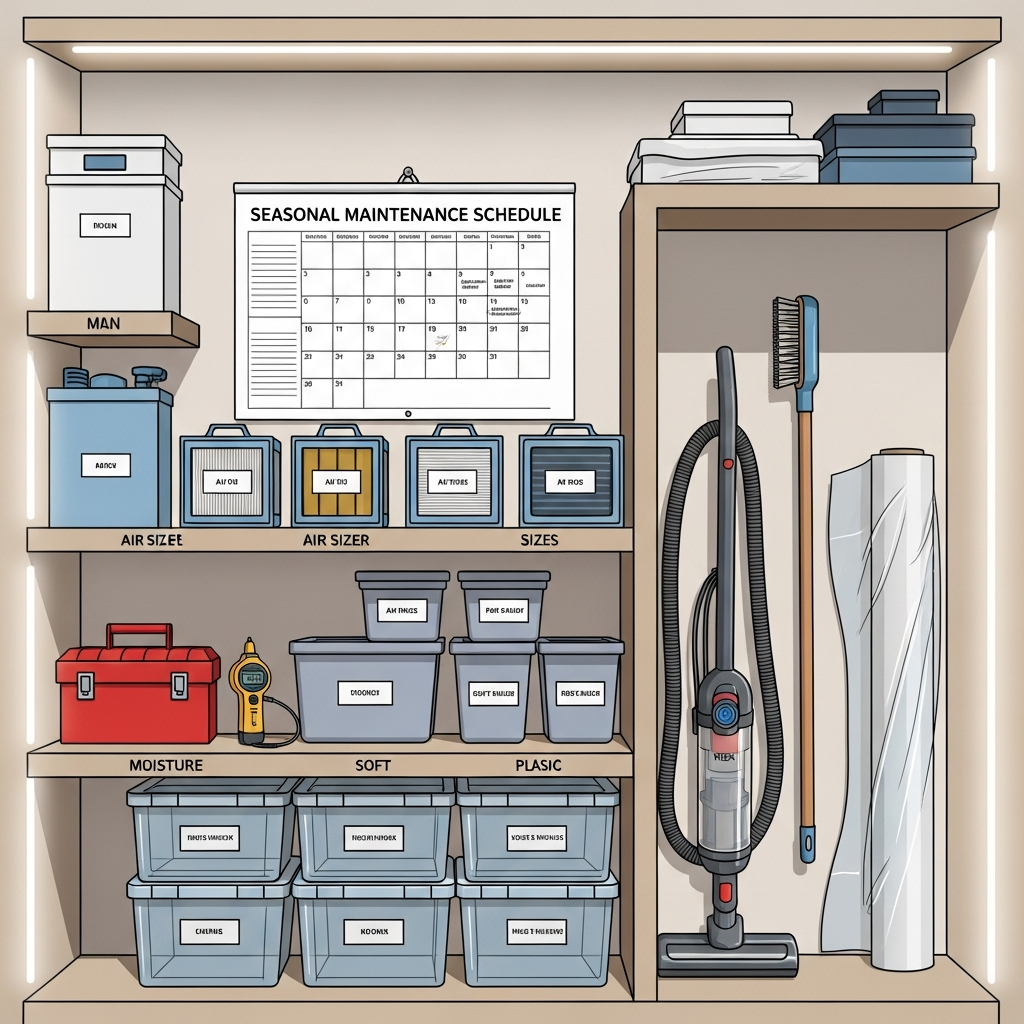
Write down each task’s date, what you observed, and what you changed or cleaned. Include photos if possible. Over time, your log will reveal patterns—perhaps filters load faster in spring, or a particular return collects more debris due to its location. Adjust your schedule to these findings rather than sticking to a rigid timeline that may not fit your home.
Keep filter model numbers in your notes so replacements are easy. Store a small kit—gloves, masks, brushes, and a flashlight—with your records, making monthly checks quick and convenient.
When to Seek Professional Help
Call in a specialist if you discover standing water, heavy debris you cannot reach, evidence of pests, or suspected microbial growth. Likewise, if airflow remains weak after filter changes and basic cleaning, a deeper assessment may uncover duct leaks, crushed flexible runs, or imbalances requiring specialized tools. Periodic professional service complements your schedule, setting a clean baseline that makes routine tasks more effective.
Frequently Asked Questions
Q: How often should ducts be deeply cleaned? A: Base the interval on inspections, not just the calendar. Households with pets, recent renovations, or high outdoor particulates may benefit from more frequent service, while others can go longer between deep cleanings.
Q: What MERV filter should I use? A: Choose the highest MERV your system can handle without compromising airflow, following manufacturer guidance. Monitor performance after changes and adjust as needed.
Q: Are chemical treatments necessary? A: Generally no. Focus on dust removal and moisture control. Apply treatments only when a qualified professional identifies a specific need and approves the method.
Q: Will cleaning affect energy use? A: Clean filters and unobstructed ducts support efficient airflow. The biggest improvements often come from sealing leaks and maintaining equipment.
Q: How does Elizabeth’s climate affect scheduling? A: Seasonal humidity and pollen increase the importance of spring and early summer checks, while fall inspections prepare you for extended heating months.
Q: What if I rent? A: Coordinate with your property manager. You can still maintain filters, clean grilles, and report concerns like odors or moisture promptly.
Keep Your Plan on Track
If you want a reliable baseline before starting this calendar or need help with inaccessible sections, schedule expert air duct cleaning. Then follow your customized monthly and seasonal checklist to keep your Elizabeth home’s air fresh, your system breathing freely, and your maintenance routine simple and consistent all year long.
