Why Westfield Basements Cause a Musty Smell in Vents
Roughly 60 percent of American homes have measurable moisture problems below grade, and in Westfield, NJ, that number skews higher. Union County’s older housing stock, much of it built before modern vapor barriers were standard, sits on full basements that act like humidity sponges through every wet season. When that moisture finds its way into your HVAC system, the first thing you notice is a musty smell in vents, usually right when you flip the system on for the first time in spring or fall. That smell is not random. It has a specific path, and understanding it is the first step toward getting rid of it for good.
Misinformation about musty vent odors is surprisingly common here. Westfield homeowners hear everything from “just change the filter” to “it’ll air out on its own,” and most of it misses the actual cause. The myths below are ones we hear regularly from homeowners across Westfield and the surrounding Union County towns.
Myth: A New Air Filter Will Fix the Musty Smell
Reality: A fresh filter traps particulates at the return air intake. It does nothing to address mold spores, mildew residue, or organic debris already coating the interior walls of your ductwork. Once biofilm establishes itself inside a duct, replacing the filter is like putting a screen door on a submarine. The odor source is downstream of the filter, sitting in the ducts themselves. professional duct cleaning is the only way to physically remove that buildup from inside the system.
Myth: The Smell Comes From the HVAC Unit, Not the Ducts
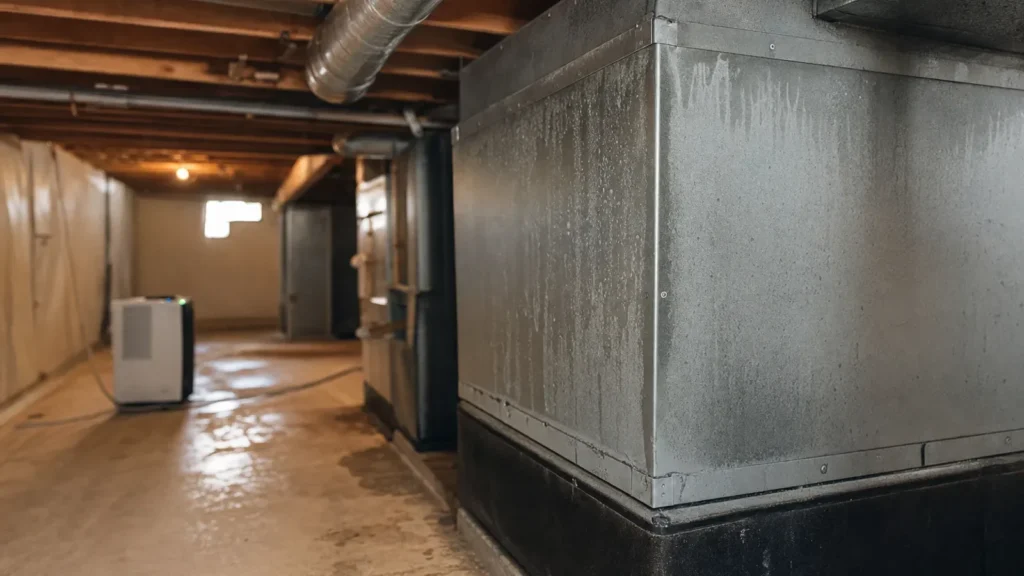
Reality: The air handler and coil can absolutely harbor mold, and that is worth inspecting. But in Westfield homes with unfinished or partially finished basements, the ductwork running through or near the basement is often the primary culprit. Cold supply ducts passing through a warm, humid basement create condensation on the outside of the duct. Over time, that moisture wicks inward through seams and joints, seeding mold growth on the inner duct lining. The smell you notice at the register is traveling the full length of that duct run before it reaches you.
Myth: Musty Odors Only Happen in Old or Neglected Homes
If you want it handled correctly the first time, consider professional air duct cleaning in Westfield.
Reality: Westfield has a significant number of homes built between the 1920s and 1970s, and those properties do carry higher baseline humidity risk because of their construction methods. But newer homes are not immune. A house built in the 1990s with a finished basement that floods once, or a crawl space with a compromised vapor barrier, can develop the same duct contamination pattern within a single season. The age of the home matters less than the moisture management of the space the ducts run through. For more on what physical signs to look for before calling a professional, see how to read the warning signs your ducts are overdue.
Myth: Running the HVAC on High Will Burn Off the Smell
Reality: Higher airflow does not sanitize ductwork. What it actually does is dislodge loosely settled spores and push them into your living space faster. Homeowners sometimes notice the smell seems to fade after a few days of running the system, and interpret that as the problem resolving itself. What has actually happened is that the spore load has redistributed. The underlying mold colony inside the duct is still present and will regenerate the odor, especially the next time the system sits idle for several weeks.
Myth: Basement Humidity Does Not Reach Second-Floor Vents
Reality: This is one of the most persistent misconceptions among Westfield homeowners with two-story colonials, which make up a large share of the housing stock in neighborhoods like Mindowaskin and the historic district near downtown. HVAC systems recirculate air continuously. Return air drawn from lower floors, including basement-adjacent areas, gets conditioned and then distributed to every register in the house. Mold spores and musty odor compounds are airborne particles, not liquids. They travel wherever the air goes. A basement humidity problem will eventually show up at a second-floor bedroom vent if the ductwork connecting them is contaminated.
Myth: Duct Cleaning Is Only Necessary After a Flood or Renovation
Many Westfield homeowners rely on expert air duct cleaning in Westfield for exactly this.
Reality: Visible events like flooding or drywall dust from a renovation are obvious triggers for duct cleaning, but gradual moisture infiltration in Westfield basements produces the same contamination without any single dramatic event. Seasonal humidity cycling, minor foundation seepage after heavy rain, and even the normal operation of an older sump pump can introduce enough moisture over two to three years to create a meaningful mold presence inside the ductwork. You do not need a catastrophe to justify a cleaning. Routine accumulation in this climate is reason enough. understanding which duct service fits your situation can help clarify what type of cleaning addresses which problem.
Myth: You Can Solve This With a DIY Duct Spray or Fogger
Reality: Aerosol duct treatments and fogger products are marketed aggressively, but they share a fundamental limitation: they cannot reach the full interior surface of a duct run. A residential duct system in a typical Westfield colonial has hundreds of linear feet of ductwork, including flex duct, sheet metal, and boot connections. A spray introduced at one register may coat a few feet of duct near the opening and then dissipate. The sections where mold actually concentrates, around joints, in return air plenums, near basement transitions, remain untreated. Some products also leave residue that can flake off and circulate through the home. There is no substitute for mechanical cleaning with proper equipment and negative-pressure containment.
Frequently Asked Questions
How do I know if my basement is the source of the musty smell in my vents?
The most direct test is to stand near your basement return air grille when the system is running and notice whether the odor is stronger there than at supply registers elsewhere in the house. If the return air smells noticeably mustier than the air coming out of upstairs vents, moisture infiltration from the basement into the duct system is a likely contributor. A professional inspection can confirm it.
Ready for the next step? Learn how air duct cleaning services in Westfield can help and reach out to the team.
Does Westfield’s climate make this problem worse than in other parts of NJ?
Union County experiences humid summers and significant rain in spring and fall, which puts consistent moisture pressure on older foundations. Westfield’s housing stock also skews older than many surrounding towns, meaning more homes were built without modern waterproofing techniques. Both factors together make basement-to-duct moisture migration a recurring issue here, not an occasional one.
Will the smell come back after duct cleaning if I do not fix the basement humidity?
Yes, it can. Cleaning removes the existing contamination, but if the moisture source persists, conditions that support mold regrowth remain. Addressing basement humidity through dehumidification or improved drainage alongside a thorough duct cleaning gives you a much longer-lasting result than cleaning alone.
How often should Westfield homeowners schedule duct cleaning given the local humidity?
There is no universal answer, but homes with known basement moisture issues, older ductwork, or a history of musty odors benefit from more frequent attention than the general guidance of every three to five years. A professional assessment of your specific system and basement conditions is the most reliable way to set a realistic schedule.
Getting the Smell Out for Good
A musty smell in vents is not a quirk of older homes or something to accept as normal in Westfield. It is a signal that moisture has found its way into a part of your home you cannot easily see, and that the air your family breathes is moving through contaminated ductwork every time the system runs. The myths above all share a common thread: they treat the symptom rather than the source, or they underestimate how far basement conditions can reach into a home’s air distribution system.
The straightforward path forward is a proper inspection and thorough air duct cleaning performed by someone who understands how Union County homes are built and where moisture typically enters the system. Reach out to schedule an inspection.
