Introduction: Finding Reliable Dryer Vent Help in Elizabeth, NJ
Searching for dryer vent cleaning near me in Elizabeth, New Jersey can feel overwhelming when you are juggling family life, work, and a busy schedule. Between the older multifamily buildings in Midtown, the historic homes in Elmora, and the densely packed blocks of Elizabethport, no two dryer vent setups are exactly alike. That is why it pays to start with a clear understanding of what your home needs, why safety comes first, and how to choose the most effective solution. If you are ready to act, exploring trusted dryer vent cleaning options early in your search can set you on the right path for a cleaner, safer home.
In Elizabeth, the mix of humidity off Newark Bay, salt-laden air from the port, and lint production from frequent laundry cycles can combine to create stubborn buildup inside vents. Even a well-maintained dryer can lose efficiency if the vent line is long, kinked, or routed through older ductwork with sharp turns. The result is longer drying times, hotter laundry rooms, and a higher risk of lint ignition. Knowing your options—in-home DIY, professional cleanings, and hybrid strategies—empowers you to make the safest choice for your household.
This guide breaks down every major “near me” option available to residents across North Elizabeth, Bayway, Peterstown, and the neighborhoods bordering the Turnpike and Route 1&9. You will learn how to assess your vent’s condition, what to expect from different cleaning methods, how to vet local professionals, and how to schedule service that respects your time. By the end, you will have a complete plan for keeping your dryer moving air freely, protecting your home, and eliminating guesswork.
Why Dryer Vent Cleaning Matters in Elizabeth
Elizabeth’s housing stock spans pre-war homes, post-war ranches, garden apartments, and mid-rise condo buildings. Each style presents unique airflow challenges. Older homes may have longer or improvised vent runs routed through basements or crawlspaces. Condominiums often use shared chases that turn and rise vertically. In both cases, lint can accumulate quickly at elbows and terminations, and moisture can condense on duct walls during winter, helping fibers cling together.
Cleaning restores safe airflow, improves drying performance, and reduces heat stress on your appliance. When a vent is restricted, your dryer works harder to push moist air out, increasing internal temperatures and mechanical wear. Over time, that additional strain can shorten the life of your dryer and raise energy consumption. A clear vent helps protect the appliance, reduces cycle times, and minimizes the warm, damp conditions that can foster odors and mildew.
Local conditions matter, too. With maritime influences from the Port Newark–Elizabeth Marine Terminal and seasonal shifts along the Rahway River, humidity can vary widely. High humidity causes lint to mat and adhere; winter cold creates condensation points in poorly insulated duct runs. In short, Elizabeth’s climate and building variety make regular dryer vent cleaning a meaningful, preventive safety step.
Understanding Your “Near Me” Options
When you type dryer vent cleaning near me, you will see everything from independent technicians to broader home service companies that include vent cleaning among many offerings. Your options generally fall into three categories. First, professional dryer vent cleaning performed with purpose-built equipment and safety practices. Second, DIY cleaning using store-bought brushes and vacuum attachments. Third, hybrid approaches, where a homeowner conducts routine light maintenance and periodically hires a pro for a comprehensive cleaning.
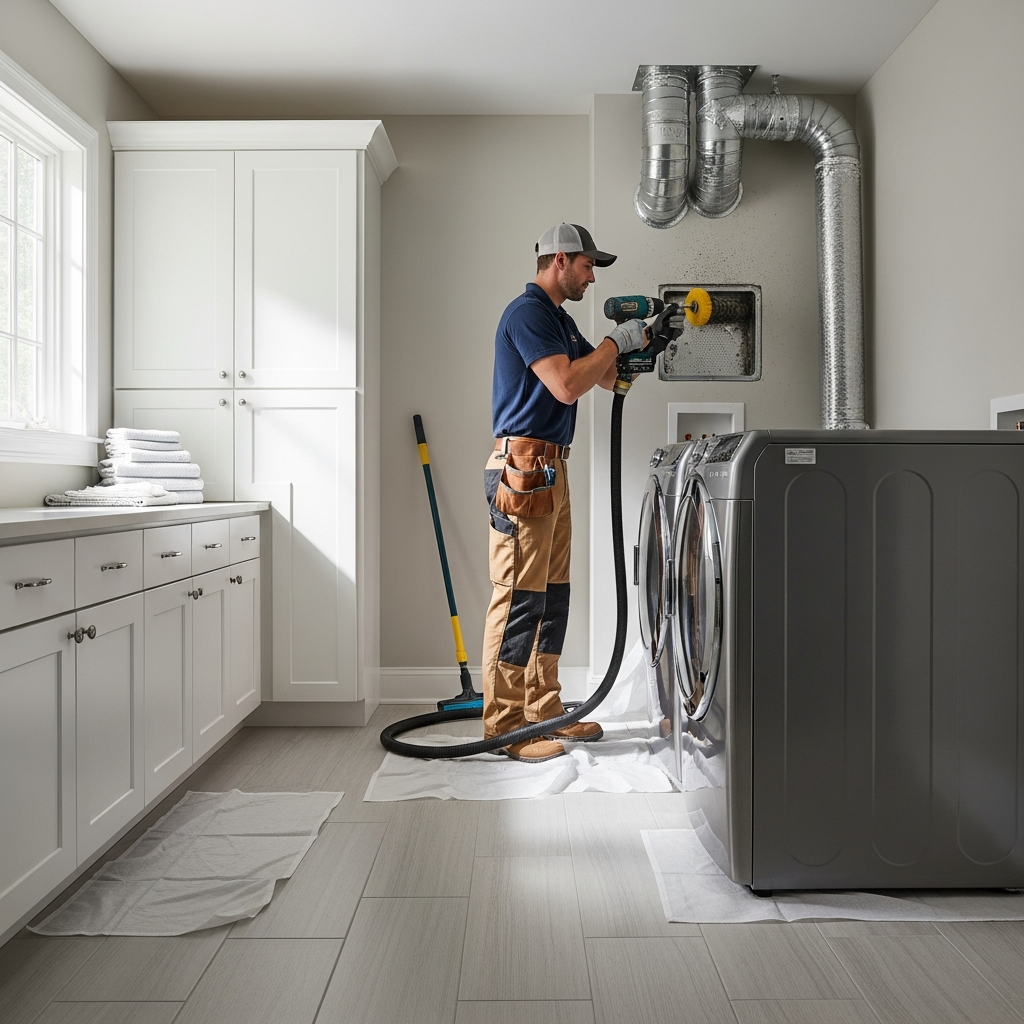
Professional cleaning is designed to handle the full vent path, not just the first few feet. Technicians use high-powered vacuum systems, rotary brush assemblies sized to your duct diameter, and, when needed, air tools that agitate lint so a vacuum can capture it. Pros also check transition hoses behind the dryer, examine wall or roof terminations for bird nests or flapper failures, and evaluate duct materials for safety compliance. This is especially valuable if you live in a multi-unit building or in a home with a long duct run.
DIY cleaning helps with light maintenance—clearing the lint trap housing, gently brushing the first section of duct, and vacuuming around the dryer and floor. But DIY rarely reaches elbows behind walls or terminations on the roof. If your cycles are getting longer despite basic cleaning, a deeper clog may be further along the line or at the exterior hood. That is where a professional service becomes the safer, more thorough option.
How Often to Schedule Cleaning
Most households that do several loads each week benefit from annual cleaning. Larger families, units with long or vertical duct runs, and homes where pets add lint-like dander to the airflow may require twice-yearly attention. Pay attention to warning signs such as longer drying times, excessive heat around the dryer, a musty smell on clothes, or visible lint at the exterior vent. If you notice these indicators, do not wait for the calendar—schedule cleaning right away.
In Elizabeth, scheduling around seasonal extremes can help. A fall visit prepares your vent for windows-closed winter drying, while a spring appointment clears the ductwork after a season of condensation and heavy holiday laundry. If you live near the waterfront or in buildings that share chases, first connect with your property manager or HOA to confirm access requirements and preferred scheduling times.
Comparing Service Methods and Tools
When evaluating providers, ask what equipment they use and how they adapt to different duct materials. For metal ducts, a rotary brush system combined with negative pressure vacuum is typical. For fragile or older ductwork, careful air whips and vacuum capture may be more appropriate than aggressive brushing. If your vent terminates on a roof, confirm that the team is trained and equipped for safe roof access and that they will inspect the termination cap for stuck flappers and nests.
Documentation is another point of comparison. Professional providers should be willing to describe their process step by step and share findings such as crushed transition hoses, unsafe foil or plastic connectors, disconnected joints, or excessive lint beyond normal accumulation. A clear post-cleaning explanation helps you plan any needed repairs and gives you confidence that airflow has been restored.
If you are trying to decide the right balance between convenience and thoroughness, consider this rule of thumb: DIY efforts are good for touch-ups; professional service is best for full restoration and safety verification. Halfway measures can miss hidden elbows or blocked terminations. The right “near me” option is the one that fully clears the line and proves it with noticeable performance improvement.
Choosing Between DIY and Professional Options
Ask yourself a few questions. How long is your vent run? Does it include multiple elbows, a vertical chase, or a roof termination? Are you dealing with an appliance stacked in a tight closet or placed in a narrow utility room where pulling it forward is difficult? If you answer yes to any of these, professional cleaning will likely be more effective and safer. If your dryer sits against an exterior wall with a short, straight duct, then DIY light maintenance between professional visits may suffice.
Even if you start with a DIY approach, set guardrails. If your brush gets stuck, you feel resistance you cannot explain, or you notice lint blowing back into the room, stop and call a professional. Over-rotating a brush can separate older ducts at joints, creating hidden leaks that push lint into wall cavities. A small misstep can turn into an expensive repair. A pro will have the right tools and techniques to prevent collateral damage and ensure complete lint capture.
Midway Check: Finding a Local Team
By the time you reach this point in your evaluation, you will likely want to shortlist a few reputable providers who focus on thorough, code-conscious work. As you compare them, look for clear process descriptions and a focus on safety, airflow testing, and homeowner education. If you are ready to narrow choices, consider an option centered on professional results like professional dryer vent cleaning so you can move forward with confidence.
Ask for details about the inspection: Will they assess the transition hose for kinks? Check for screws that pierce the duct interior? Verify that the termination hood opens freely? Will they advise on replacing crushed foil connectors with a semi-rigid or rigid metal option? Clear answers signal a high level of expertise and respect for your home’s safety.
What to Expect on Service Day
A typical professional visit begins with a walkthrough and questions about symptoms you have noticed. The team will unplug and carefully move the dryer, inspect the transition connection, and set up containment if needed to manage dust. They will connect a vacuum to the duct, feed in a brush or air whip from the appliance side, and, if safe to do so, access the termination to ensure all obstructions are removed. Many teams finish with a quick airflow or temperature rise check, allowing you to see the improvement in performance.
You can prepare by clearing a path to the laundry area, moving fragile items, and providing access to any locked utility rooms. If you live in a multifamily building, confirm elevator availability and any parking or loading requirements. Most visits are efficient and minimally disruptive, and once airflow is restored you should notice better drying times almost immediately.
Maintenance Tips for Elizabeth Homes
Between professional cleanings, empty the lint screen before every load and wash it periodically if fabric softener residue builds up. Vacuum around and under the dryer to pick up stray lint. Ensure your transition hose is a short, smooth path with gentle bends and that the dryer is not pushed so tightly against the wall that the hose kinks. Outside, verify that the termination hood opens freely and that no lattice, shrub, or snow pile is blocking the outlet.
Seasonally, glance at the vent while the dryer runs. You should feel a strong, steady stream of warm air. Weak airflow, fluttering lint, or a flapper that barely opens suggests restriction. In that case, prioritize a cleaning promptly. If you live near busy roads or the port, consider more frequent checks, as airborne dust can mingle with lint and accelerate buildup.
Frequently Asked Questions
Q: How do I know if my vent is clogged? A: Longer drying times, a hot laundry room, or a burnt-lint odor are common signs. You might also see lint collecting near the exterior hood or find that clothes feel hot but still damp after a full cycle.
Q: Can I clean the vent myself? A: Light maintenance is fine, but full cleanings are best left to trained technicians with proper brushes, vacuums, and safety practices, especially for long or complex duct runs.
Q: How often should I schedule service? A: Many Elizabeth homes do well with annual cleanings. Larger households, pet owners, and homes with vertical or long duct runs may benefit from more frequent service.
Q: Is foil or plastic ducting safe? A: Foil and plastic are more prone to crushing and, in some cases, may not meet current safety recommendations. Smooth-wall metal or semi-rigid metal transitions are generally preferred for durability and airflow.
Q: What about birds or nests in the vent? A: Termination hoods can attract nesting. A professional can remove obstructions and suggest appropriate, code-conscious screening solutions that maintain airflow.
Q: Will cleaning help my energy use? A: Yes. Restored airflow shortens cycles and reduces the heat load on your dryer, which can lower energy consumption and mechanical wear.
Q: My dryer is new—do I still need cleaning? A: New dryers can still suffer from restricted vents. The duct system, not the appliance, is usually the limiting factor. Cleaning focuses on the vent path and termination, not just the machine.
Q: Do apartment and condo residents need special coordination? A: Often yes. Coordinate with your property manager for access to chases, roofs, or shared spaces and to follow building policies on service visits.
Ready to Improve Airflow and Safety in Elizabeth?
If you have noticed longer drying times or you simply cannot remember your last service, now is the time to act. A professional visit restores safe airflow, protects your appliance, and gives you peace of mind that lint is removed from the entire line—not just the first few feet behind the dryer.
Reach out to a local team that understands Elizabeth’s housing styles, climate, and access needs, and schedule a convenient appointment that fits your calendar. For a solution centered on thorough, code-conscious results, consider booking with a trusted provider of expert dryer vent cleaning so your clothes dry faster and your home stays safer throughout the year.
